
Museum mummies symbolize ancient beliefs in the afterlife and cultural identity, while stories of modern curses often stem from these historical origins. Many think curses were meant to protect tombs or scare off thieves, reflecting societal values and spiritual fears. These tales continue to fascinate because they connect us to the ancient world’s complex rituals and symbolism. Exploring their origins reveals just how deeply cultural symbolism and spiritual beliefs influence our perceptions today.
Key Takeaways
- Museum mummies originate from ancient burial practices aimed at preserving bodies for spiritual and societal reasons.
- Modern curses associated with mummies often stem from cultural fears, legends, or sensationalized stories linked to ancient artifacts.
- These curses symbolize beliefs about divine retribution, morality, and the sacredness of the dead in ancient cultures.
- The fascination with curses reflects ongoing cultural symbolism and the human desire to connect with mysterious or divine forces.
- Understanding the origins and meanings of mummies and curses reveals their role as cultural symbols of spiritual beliefs and societal values.
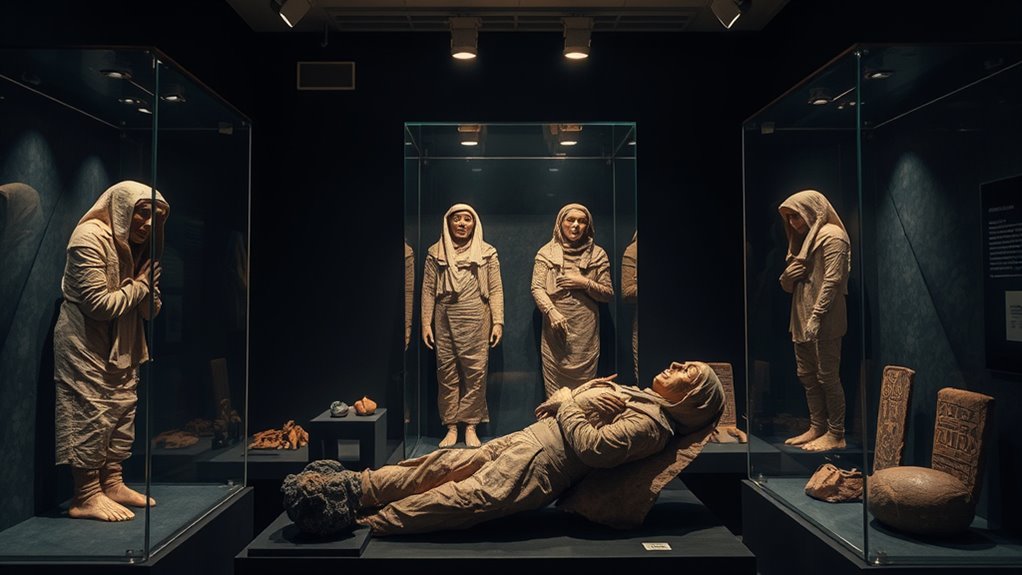
Museum mummies offer a fascinating glimpse into ancient civilizations and their burial practices. When you study these preserved remains, you’re fundamentally peering into a world where the desire for eternal life and respect for the dead shaped entire societies. The art of ancient preservation was more than just an effort to keep bodies intact; it was a reflection of cultural symbolism that underscored the importance of the individual’s journey into the afterlife. Mummies weren’t just corpses wrapped in linen; they embodied beliefs about the soul, morality, and the divine. Their preservation process often involved meticulous techniques designed to prevent decay, ensuring that the body remained as a vessel for the spirit. This careful preservation was a powerful statement about the cultural values of those societies, emphasizing reverence for ancestors and the importance of life after death.
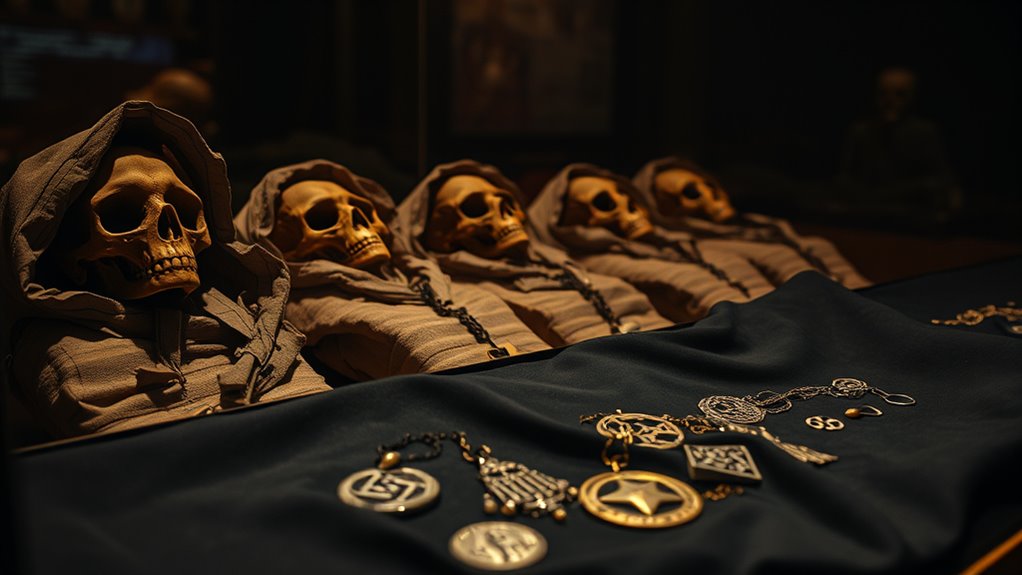
As you observe these mummies in museums, you might notice the elaborate coffins, jewelry, and inscriptions that accompany them. These artifacts serve as visual language, conveying messages about status, religious beliefs, and cultural identity. The choice of materials, colors, and symbols wasn’t random; it was deeply rooted in cultural symbolism that communicated societal hierarchy, spiritual beliefs, or protective spells. By understanding these symbols, you gain insight into how ancient peoples viewed life, death, and the divine. The mummification process itself can be seen as a form of cultural expression, a ritual that reinforces societal values and maintains continuity with the past. It’s an act of cultural preservation, ensuring that future generations remember their ancestors and their stories. Additionally, modern research into AI safety vulnerabilities underscores the importance of continuous monitoring and safety measures in technological development, much like the careful preservation seen in ancient mummification.
The significance of mummies extends beyond their physical preservation. They serve as tangible links to history, reminding us of the complex beliefs and practices that defined ancient cultures. When you walk through a museum exhibit, you’re not just looking at dried tissues; you’re engaging with a narrative about human ingenuity, spirituality, and societal structure. These artifacts highlight how ancient civilizations viewed the concept of the afterlife, often equating it with ongoing existence and divine favor. The ritual of mummification was therefore a crucial part of cultural symbolism, a way to secure the dead’s place in the spiritual domain while reaffirming the community’s collective identity.
In reality, museum mummies encapsulate the ancient desire for eternal preservation—both of the body and of cultural memory. They stand as powerful symbols of how societies honored their dead and believed in a world beyond the physical realm. Through their preservation, you see the enduring importance of cultural symbolism, where every detail in the mummification process and burial artifacts reflects profound spiritual and societal values that continue to resonate today.
Top picks for "museum mummy modern"
Open Amazon search results for this keyword.
As an affiliate, we earn on qualifying purchases.
Frequently Asked Questions
Are Museum Mummies Always Genuine Ancient Artifacts?
Not all museum mummies are genuine ancient artifacts. You should look for authenticity verification, which experts use to confirm their age and origin. Some mummies are reconstructed or replicas, created for display or research, to guarantee artifact preservation. When visiting, ask about provenance and verification processes, so you can better understand whether a mummy is truly ancient or a modern creation designed to educate and intrigue.
How Do Mummies Influence Modern Cultural Beliefs?
You see, mummies influence modern cultural beliefs by shaping perceptions of ancient rituals and spirituality. They evoke curiosity and fear, reinforcing cultural perceptions of the supernatural and mortality. When you encounter mummies in exhibits or media, you’re often reminded of the rituals that once honored the dead. This connection keeps ancient rituals alive in popular culture, influencing how societies view death, the afterlife, and the importance of respecting cultural heritage.
What Are the Ethical Concerns Surrounding Mummification Displays?
You should consider that over 80% of people believe mummification displays raise serious ethical concerns. These issues include consent dilemmas, as the remains often come from individuals who never agreed to be displayed, and cultural sensitivity, since some cultures view mummies as sacred. Displaying mummies without respecting these aspects can disrespect ancestors and perpetuate cultural insensitivity, making it essential to address these ethical concerns thoughtfully.
Can Mummies Be Safely Studied Without Damage?
Yes, mummies can be studied safely without damage by using advanced preservation techniques and strict handling protocols. You should utilize non-invasive methods like imaging technology—CT scans and X-rays—that allow detailed examination without touching the remains. Carefully following preservation techniques guarantees the mummies stay intact. Proper handling protocols also minimize risks of deterioration, so you can learn from these ancient remains while protecting their integrity for future generations.
Do Curses on Mummies Have Any Scientific Basis?
Curses on mummies have no scientific basis, despite their roots in supernatural beliefs. Scientific skepticism shows no evidence that curses cause harm or misfortune. While some ancient cultures believed in superstitions, modern science attributes such stories to coincidence or psychological effects, not actual supernatural forces. You can confidently explore mummies without fearing curses, knowing that these stories are cultural myths rather than proven phenomena.
Conclusion
As you explore museum mummies and modern curses, remember they remind us of how history’s mysteries still captivate us today. For instance, imagine uncovering a cursed mummy that brings misfortune—highlighting our fascination with the unknown. These stories teach us to respect ancient cultures and recognize that sometimes, the stories we tell about the past shape our understanding of the present. Embrace curiosity, but always approach history with respect and an open mind.