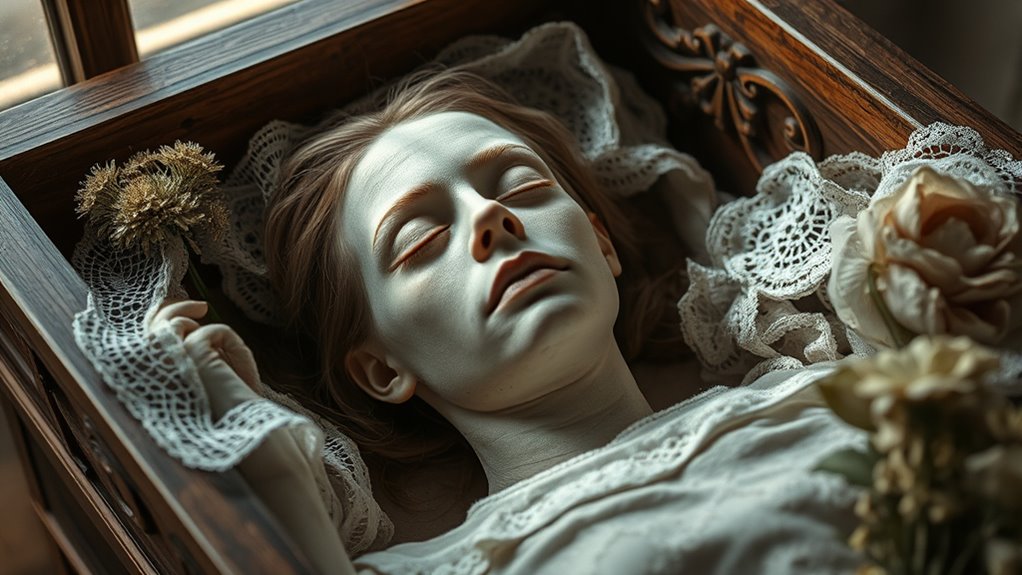

Post-mortem photography began in the Victorian era, serving as a way to preserve the memory of loved ones who had passed away. Families believed these images helped maintain a connection beyond death, often posing the deceased to lie peacefully or look asleep. The practice reflected societal views of death as a natural part of life and was widely accepted at the time. If you want to explore how these customs shaped mourning, there’s more to discover ahead.

Get books and cozy reading nights delivered free with Prime
- Fast, free delivery on millions of items
- Prime Video, Amazon Music and more included
- Member-only deals all year
Key Takeaways
- Post-mortem photography originated in the 19th century Victorian era as a way to memorialize deceased loved ones.
- It involved posing bodies to resemble sleeping or peaceful individuals, serving as “final portraits.”
- The practice reflected cultural acceptance of death, emphasizing mourning, remembrance, and familial bonds.
- Technological advances in early photography made post-mortem images accessible and widespread.
- These photographs provided comfort, closure, and historical insight into Victorian death and mourning customs.
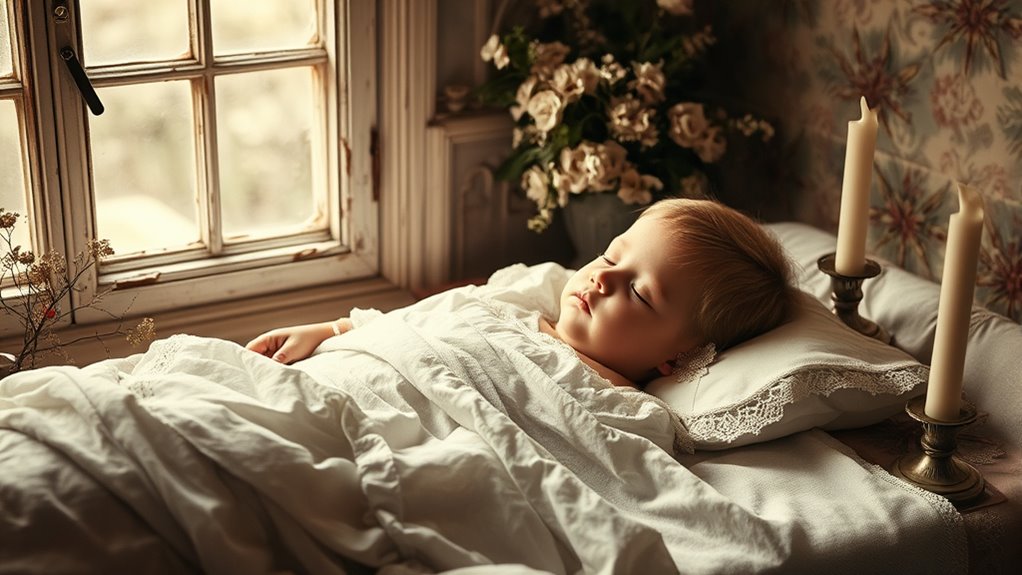
Post-mortem photography, a haunting yet historically significant practice, captures the deceased shortly after death, often posed to resemble life. You might wonder why people went through such lengths, especially during times when mourning rituals played a central role in expressing grief. In Victorian customs, death was not only a somber event but also a communal experience. Families believed that preserving the image of their loved ones helped maintain a connection beyond death, easing the pain of loss. These photographs served as tangible memories, a way to honor and remember those who had passed away, particularly when death occurred suddenly or unexpectedly.
As you explore Victorian mourning rituals, you’ll notice that photographs became an essential part of the grieving process. They allowed mourners to keep a portrait of the departed prominently displayed in the home, often alongside other mourning memorabilia. The practice of post-mortem photography emerged from a desire to memorialize loved ones in a way that conventional portraits couldn’t capture. Since photography was still a relatively new technology during the 19th century, it fascinated families as a modern method of remembrance. You might find it surprising that, in some cases, the deceased were photographed with living relatives, creating a composite image that reinforced familial bonds even after death.
Victorian customs dictated specific approaches to post-mortem photography. The deceased were often dressed in their best clothes, sometimes adorned with symbolic items like flowers or religious symbols. Photographers carefully posed the body to resemble a sleeping person, sometimes propped up with support to maintain a natural appearance. You could say that these images functioned as a final portrait—an image that would be cherished long after the loved one was gone. The practice also reflected a cultural acceptance of death as a natural part of life, contrasting with today’s tendency to avoid direct contact with mortality. Additionally, the advent of early photographic technology played a crucial role in making these images accessible and widespread among Victorian families.
The significance of these photographs extended beyond individual mourning. They reinforced social norms around death and grief, emphasizing the importance of remembrance and respect. Post-mortem photography became a ritual that helped families process their loss, providing a sense of closure. It also served as a historical record, offering future generations a glimpse into how their ancestors faced death. As you analyze these images, you’ll see that they are not just photographs of the dead but visual testimonies of Victorian customs and the universal human need to memorialize loved ones in the face of mortality.
As an affiliate, we earn on qualifying purchases.
Frequently Asked Questions
How Did Post-Mortem Photography Influence Modern Funeral Practices?
Post-mortem photography influenced modern funeral practices by shaping mourning rituals and emphasizing photographic symbolism. You see this in today’s memorial photos that honor loved ones, helping you process grief and celebrate their lives. These images serve as lasting symbols of remembrance, blending tradition with personal memory. The legacy of post-mortem photography encourages you to cherish meaningful moments, turning photographs into powerful tools for mourning and connection.
Were Post-Mortem Photographs Considered Respectful or Taboo in Society?
You might think post-mortem photographs were simply respectful, but society viewed them as powerful symbols of love and mourning. In their time, cultural perceptions often saw these images as touching, yet societal taboos made them controversial. Some considered them a necessary part of remembrance, while others saw them as morbid or inappropriate. Despite differing views, these photos deeply reflected how people coped with loss and honored their loved ones.
How Did Families Choose Which Post-Mortem Images to Keep?
You likely selected post-mortem images based on their significance in mourning rituals and family memory preservation. You might choose the most peaceful or idealized photo, aiming to honor the deceased and keep their memory alive. Sometimes, you keep multiple images to document different moments, creating a visual record for future generations. This process helps you process grief and guarantees that loved ones remain part of your family’s ongoing story.
Did Post-Mortem Photography Vary Across Different Cultures?
Yes, post-mortem photography varies across cultures, reflecting diverse customs and beliefs. You’ll notice different rituals and symbolic gestures, emphasizing respect or spiritual significance. In some societies, these images serve as memorials, honoring the deceased’s journey or status. Cultural variations shape how families approach these photographs, often aligning with rituals that highlight the ritual significance of remembering loved ones, making each image a meaningful tribute rooted in tradition.
What Technological Advancements Impacted Post-Mortem Photography Techniques?
You’ll find that camera innovations and improved lighting techniques truly revolutionized post-mortem photography. These advancements allowed for sharper images and more natural poses, making the photos more meaningful. As technology evolved, cameras became more accessible, and lighting techniques improved, capturing details that once were impossible. It’s like turning the page to a new chapter, giving mourners a more intimate and respectful way to remember loved ones forever.
Conclusion
Understanding post-mortem photography reveals a window into the past, where love and grief intertwined like threads in a tapestry. You see, it’s more than just a photograph; it’s a heartfelt goodbye frozen in time. These images remind us that even in death, the bonds we share remain unbroken, echoing softly across history. By exploring their origins, you gain a deeper appreciation for how our ancestors honored their loved ones—preserving memories like delicate blooms in an eternal bouquet.
Halloween Picks
halloween
As an affiliate, we earn on qualifying purchases.