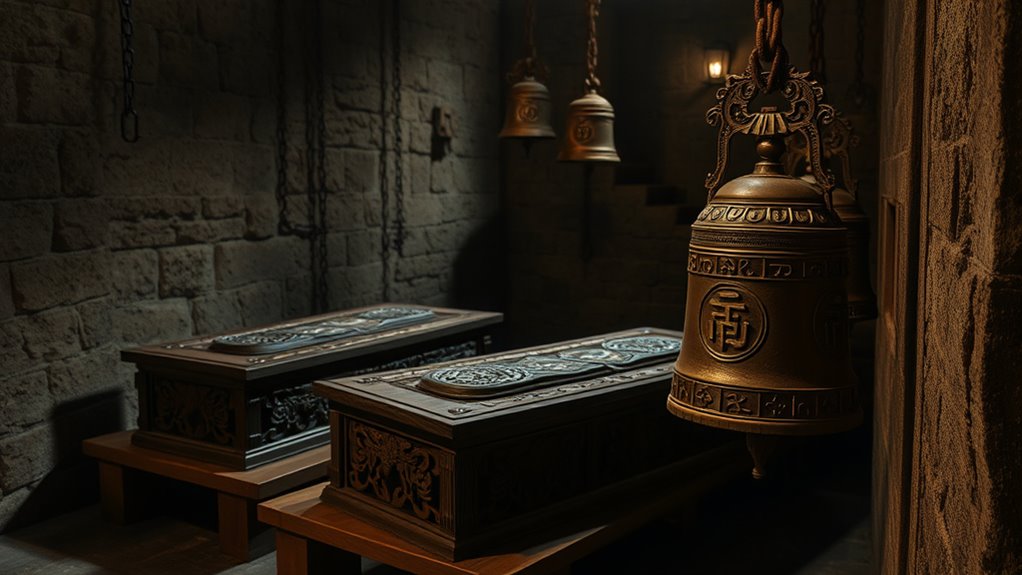

Safety coffins and burial bells originated from deep fears of being buried alive due to limited medical knowledge and funeral customs. People wanted devices with air supplies, signaling mechanisms, and communication tools to alert others if they woke up underground. Bells were often attached to coffins as a safety measure and reflected spiritual beliefs. These innovations reveal humanity’s efforts to prevent premature burial and blend safety with cultural traditions. Exploring more will show how these inventive solutions shaped funeral history.
Key Takeaways
- Safety coffins and burial bells originated from fears of premature burial, aiming to alert others if the buried individual was still alive.
- These devices often included air supply systems and signaling mechanisms to ensure the person’s safety and communication.
- Burial bells were traditionally attached to coffins or placed nearby, allowing the trapped to ring if alive.
- Cultural beliefs and superstitions linked bells to spiritual protection and warding off evil spirits.
- Over time, advances in medicine reduced the need for such devices, which now serve as historical symbols of human fears and ingenuity.
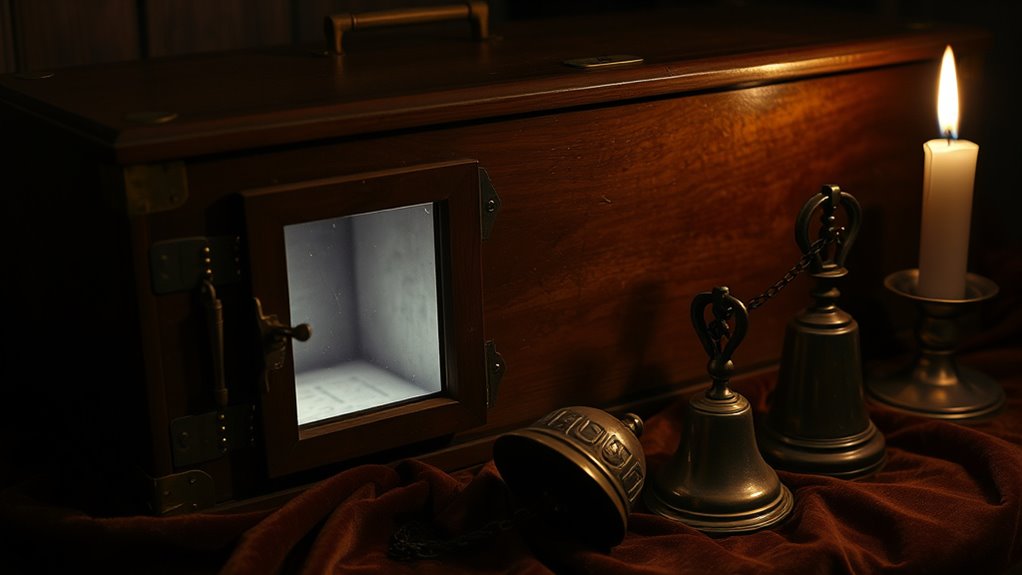
Throughout history, fears of premature burial led inventors and communities to develop safety coffins and burial bells, devices designed to alert loved ones if someone was mistakenly buried alive. These innovations stemmed from deep-seated anxieties about funeral customs and the accuracy of death determinations. In earlier centuries, medical knowledge was limited, and ensuring that a person was truly deceased was often uncertain. As a result, many believed that individuals might wake up trapped in coffins, buried alive, leading to tragic and terrifying scenarios. To counter this danger, inventors crafted safety coffins equipped with various features—air supply systems, signaling devices, and even mechanisms to allow communication with the surface. Burial bells became a common feature in many funeral customs, particularly in Europe, where a bell was attached to the coffin or placed nearby, allowing the buried to signal if they were still alive.
Historical practices reflected these fears profoundly. In some regions, coffins were designed with a system of cords connecting to a bell above ground. If someone regained consciousness or was mistakenly thought dead, they could pull the cord to ring the bell, alerting mourners or grave workers. These bells often had elaborate mechanisms to prevent accidental ringing, but their primary purpose was to provide a safety net for those who might awaken in their coffins. The design of these devices reveals how much importance was placed on verifying death and protecting individuals from the horrors of premature burial. Over time, the safety coffins and burial bells became symbols of innovation driven by genuine concern, as well as a reflection of the funeral customs of the era.
Many of these historical practices also had cultural and superstitious elements. For example, some believed that the sound of a bell could ward off evil spirits or that a loud signal could be a sign of life beyond death. The use of funeral customs like these underscores how societies historically balanced scientific understanding with spiritual beliefs. The invention of safety coffins and burial bells was a response to both practical fears and cultural traditions, aiming to bring peace of mind to grieving families. While modern medicine and better death-determination methods have largely rendered these devices obsolete, they remain a fascinating part of funeral history and a testament to humanity’s desire to avoid premature burial at all costs.
Frequently Asked Questions
When Did Safety Coffins First Become Popular?
Safety coffins first became popular during the Victorian era, around the 19th century, as a response to Victorian fears of premature burial. You’ll see funeral art reflecting these anxieties, with elaborate safety coffins and burial bells designed to alert loved ones if the deceased was mistakenly buried alive. This trend shows how cultural fears influenced innovations in burial practices, providing reassurance and a sense of safety in uncertain times.
Are Safety Coffins Still Used Today?
Yes, safety coffins are still used today, like a modern lighthouse guiding loved ones through uncertain waters. You see, today’s safety features, such as automatic alarms and breathable air supply, give peace of mind. Cultural perceptions have shifted, making these coffins more of a precaution than a necessity. People now view them as a thoughtful way to prevent tragic accidents, blending tradition with technological safety in a comforting embrace.
How Effective Were Burial Bells in Preventing Premature Deaths?
Burial bells weren’t very effective in preventing premature deaths, despite the funeral superstition that they could save someone from being buried alive. People believed that ringing the bell signaled life, but often it was too late or unreliable. While these bells gave some peace of mind, they didn’t truly prevent death, just offered a comforting illusion that help was available if needed.
What Materials Were Used to Make Historical Safety Coffins?
Like artisans of old forging legends, you see that historical safety coffins were crafted from sturdy materials such as wrought iron, cast iron, and sometimes wood lined with metal. Skilled metal craftsmanship shaped these coffins, emphasizing durability and security. The design often included small ventilation holes and a secure lid, reflecting a focus on safety. These materials guaranteed the coffin could withstand pressure while serving as a powerful symbol of protection against premature burial.
Were There Any Famous Incidents Involving Safety Coffins?
Yes, some famous incidents involved safety coffins equipped with rescue mechanisms. For example, there are stories of people buried alive who used bells or flags to signal rescuers. These events often caused psychological impacts, highlighting fears of premature burial. Such incidents spurred innovations in rescue mechanisms, like breathing tubes or alarm systems, aiming to prevent tragic misunderstandings and ease public fears about being buried alive.
Conclusion
You might think safety coffins and burial bells are just old-fashioned fears, but they reveal a deep desire to protect loved ones even after death. While it’s easy to dismiss them as superstition, they reflect genuine concern for avoiding premature burial. So, next time you see these devices, remember they stem from real anxieties—showing how humanity has always sought reassurance, even in the face of death. It’s a demonstration to our enduring need for peace of mind.