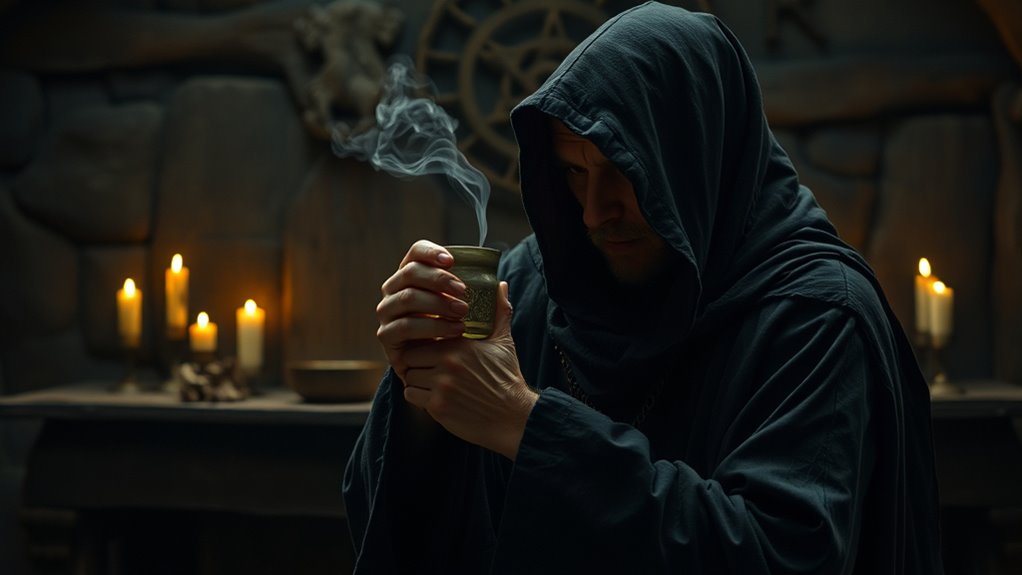

In folklore, sin-eaters are mysterious figures who perform rituals to absorb the sins of the deceased, acting as spiritual mediators between life and death. They serve as community healers, symbolizing societal beliefs about morality, guilt, and redemption. Their origins trace back to regions like Wales and England, where these figures played a crucial role in funeral rites. If you want to explore how these traditions reflect our views on morality and community, there’s more to discover ahead.
Key Takeaways
- Sin-eaters are folklore figures who perform rituals to absorb the sins of the deceased, symbolizing moral cleansing.
- Their origins trace back to European traditions, especially in Britain and Ireland, where they played a role in funeral customs.
- The practice reflects societal beliefs in spiritual accountability, community responsibility, and the moral significance of death.
- Sin-eaters often consumed symbolic meals like bread or wine to take on the dead’s sins, serving as a bridge between life and afterlife.
- The role of sin-eaters embodies themes of guilt, redemption, and the cultural importance of maintaining spiritual balance after death.
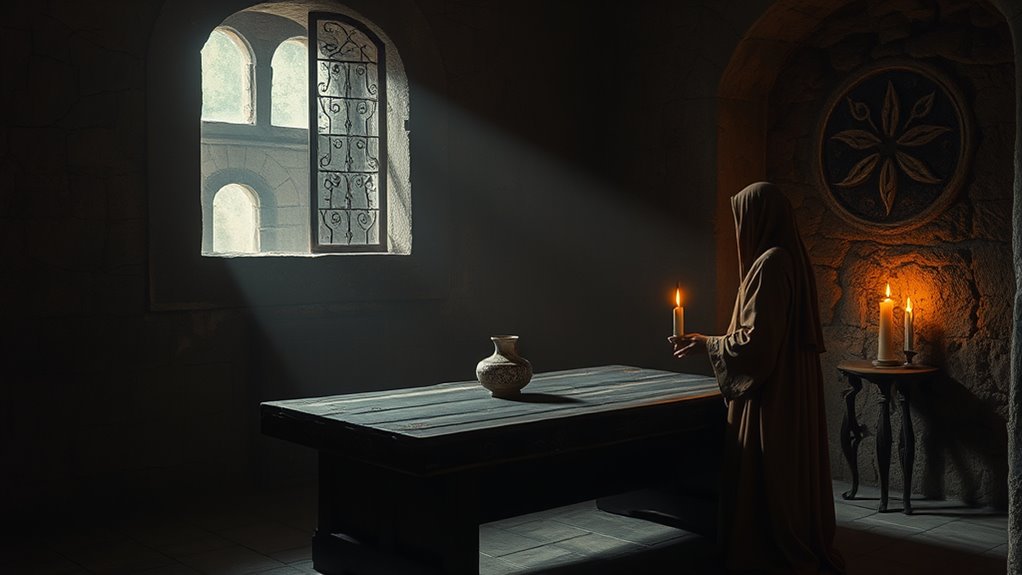
Sin-eaters are mysterious figures rooted in folklore who perform a unique and somber ritual: taking on the sins of the deceased to free their souls. This act isn’t just about spiritual cleansing; it has deep ritual significance that varies across cultures and regions. When you learn about sin-eaters, you see how their role reflects societal beliefs about death, morality, and community responsibility. The ritual itself often involves a symbolic meal, where the sin-eater consumes bread and wine or other offerings meant to absorb the sins attached to the departed. By doing so, they serve as a bridge between the living and the dead, ensuring the soul’s journey to the afterlife isn’t hindered by sins that would otherwise trap it. This tradition underscores a collective effort to maintain spiritual order, emphasizing that salvation or peace in death isn’t solely a personal matter but a communal duty. Additionally, the use of floral arrangements in funeral rituals often enhances the solemn atmosphere and symbolizes respect for the departed. Cultural variations reveal just how widespread and adaptable this practice was. In some regions, sin-eaters were seen as necessary figures, often called upon by families who believed their loved ones needed help in cleansing their sins before the funeral rites. In others, they might have been viewed with suspicion or even disdain, seen as social outcasts or individuals who profited from others’ misfortunes. The role could be voluntary or involuntary, depending on local customs—sometimes performed by a designated community member, other times by someone who accepted payment for their service. In certain communities, the act of sin-eating was integrated into broader funeral practices, symbolizing not just atonement but also communal mourning and remembrance. You should also recognize that the ritual’s significance extends beyond just the act of consuming food. It embodies a belief in spiritual reciprocity and moral accountability. The sin-eater’s act is seen as a way to balance moral debts, helping the soul move on without the burden of sin. Over time, many of these practices faded or transformed, but the core idea—that death involves a moral dimension that must be addressed—remains a compelling aspect of folklore. Whether viewed as a sacred duty or a grim necessity, sin-eaters symbolize a universal human concern: how societies handle death, guilt, and redemption. Their stories remind you of how different cultures interpret the idea of atonement and the importance of community in *navigating* life’s most profound *transition*.
Frequently Asked Questions
How Did the Role of Sin-Eaters Originate Historically?
You can see that the role of sin-eaters originated in medieval customs where they performed a ritual with significant cultural and spiritual meaning. They would consume bread or food symbolizing the sins of the deceased, providing ritual significance by helping souls move on. This practice allowed communities to shift blame and guilt, giving the sin-eater a unique, though often stigmatized, place within local traditions and beliefs.
Are Sin-Eaters Still Practiced in Any Cultures Today?
Like relics of a bygone era, sin-eaters are rarely practiced today. You might find modern practices resembling their role in some cultures, such as rituals where individuals take on guilt or burden for others. Cultural parallels can be seen in certain spiritual or community ceremonies worldwide, but these are often symbolic rather than literal. Overall, the traditional practice has mostly faded, replaced by contemporary methods of coping and communal support.
What Rituals Did Sin-Eaters Perform During Ceremonies?
During ceremonies, you perform rituals that involve consuming food or drink over the deceased’s body, symbolizing the transfer of sins through burial customs. You might recite prayers or chants, emphasizing ritual symbolism that connects you to the spiritual world. These acts serve to absolve the departed’s sins, helping their soul rest peacefully. The sin-eater’s role is deeply rooted in cultural beliefs about death and morality, emphasizing community support and spiritual cleansing.
How Did Societal Views on Sin-Eaters Change Over Time?
Think of society’s view on sin-eaters like a tide shifting over time. At first, they were accepted as essential, their roles seen as morally necessary. Over time, however, societal acceptance waned, and moral implications painted them as outcasts or morally ambiguous figures. As beliefs evolved, many viewed sin-eaters negatively, reflecting changing attitudes about morality, religion, and social status, causing their role to fade into history.
Are There Similar Roles in Other Cultural or Religious Traditions?
You’ll find comparable atonement roles in various cultures, where ritual intermediaries perform acts to cleanse sins or spirits. For instance, in Japanese Shinto traditions, priests act as intermediaries during purification rites. Similarly, in African and Caribbean communities, spiritual healers or shamans serve as ritual intermediaries, helping individuals reconcile with spiritual forces. These roles emphasize communal atonement, much like sin-eaters, facilitating spiritual healing through symbolic acts.
Conclusion
Understanding sin-eaters reveals how society once grappled with death and guilt, often turning to these figures to ease spiritual burdens. Their story shows that sometimes, the past is buried deep, and what’s done cannot be undone. You see, it’s clear that folklore reflects the fears and beliefs of its time, and uncovering these traditions helps us grasp how cultures coped with life’s heavy truths. In the end, history’s lessons are often hiding in plain sight.