
Victorian mourning rituals originated from societal values that emphasized respect, solemnity, and maintaining social order after a loved one’s death. You would notice specific clothing like black dresses and jewelry made from dark stones used to display grief. Rituals such as grave visits and sending mourning cards helped express respect and preserve social decorum. These customs created a tangible connection to the deceased and symbolized societal support. Keep exploring to uncover how these traditions shaped societal views on mourning.
Key Takeaways
- Victorian mourning rituals originated from strict societal codes emphasizing respect, grief, and social order after a loved one’s death.
- Clothing and jewelry served as visual symbols of mourning status and emotional loss.
- Mourning periods were formal, lasting months or years, with specific customs like wearing black and displaying tokens of remembrance.
- Rituals included sending mourning cards, visiting graves, and wearing mourning attire to honor the deceased.
- These practices reinforced societal values of respect, solemnity, and the importance of collective mourning.
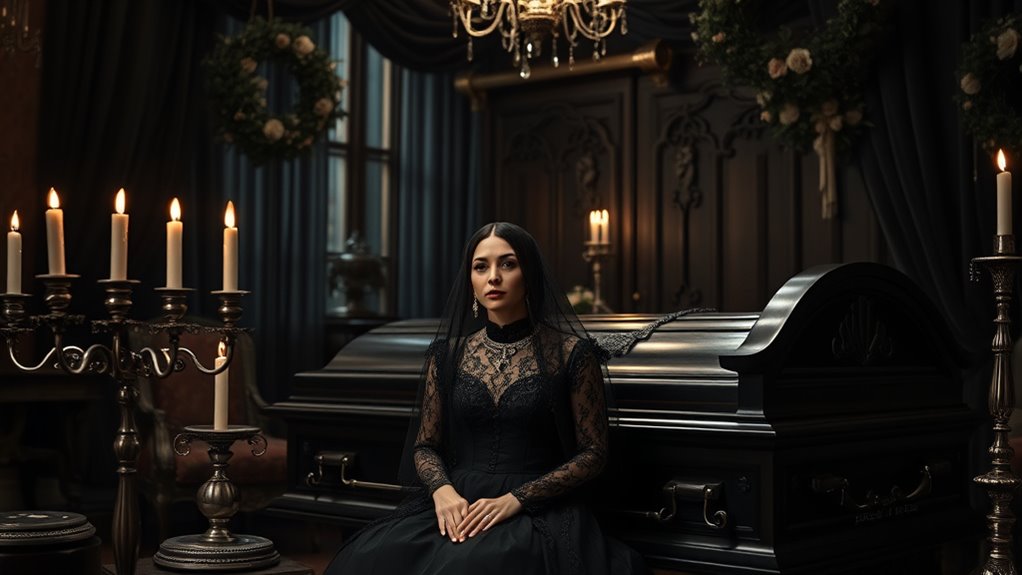
Victorian mourning rituals were elaborate ceremonies that reflected society’s deep respect and grief for the deceased. When someone in your community passed away, you were expected to participate in a series of mourning practices that conveyed your sorrow and maintained social decorum. One of the most visible aspects of these rituals was your funeral attire. You would don specific clothing that signaled your relationship to the departed and your mourning status. For close family members, this meant wearing all black, often made from heavy fabrics like crepe or velvet, which symbolized mourning’s solemnity. Women typically wore long, modest dresses, sometimes with crape veils covering their faces, while men dressed in black suits with high-collared shirts. These garments weren’t just about modesty—they served as a visual marker of your grief, showing others that you were in mourning and respecting the departed.
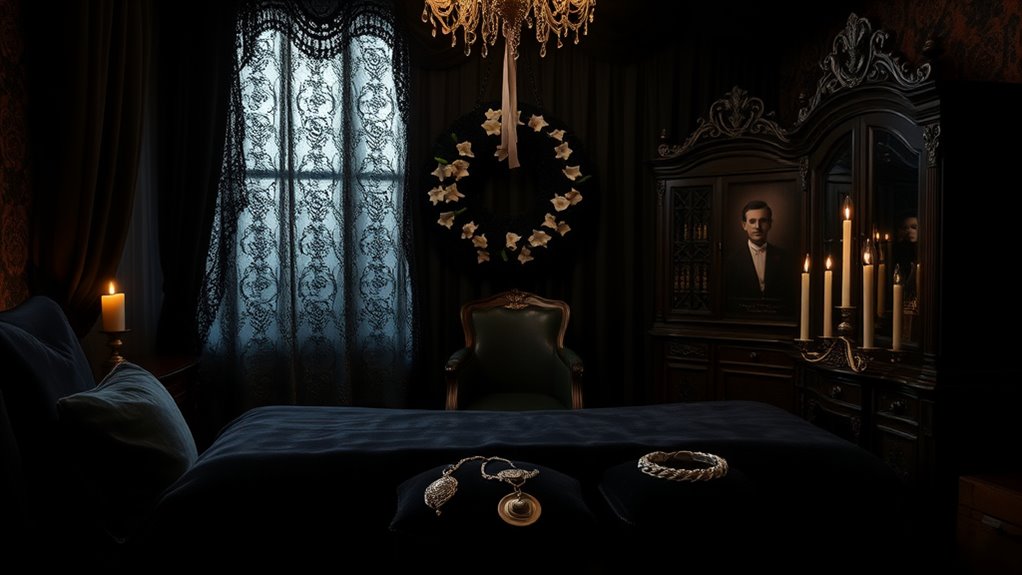
Alongside your funeral attire, mourning jewelry played a significant role in Victorian mourning rituals. This jewelry, often made from jet, onyx, or other dark stones, was worn as a constant reminder of the loss. You might wear a mourning ring inscribed with the deceased’s initials or the date of their passing, or a brooch decorated with a lock of hair from the loved one. Mourning jewelry was more than adornment; it was a tangible connection to those who had died. Wearing it publicly showed your ongoing grief and served as a symbol of your respect and remembrance. These pieces often carried somber motifs like weeping willows or crosses, emphasizing the somber tone of mourning. Additionally, digital platforms and social media are now used to commemorate loved ones, reflecting how mourning practices evolve with technology.
The rituals extended beyond clothing and jewelry. During the funeral service, you would observe strict customs, such as observing periods of mourning that could last months or even years, depending on your closeness to the deceased. You might send or receive mourning cards and notes, which were often decorated with mourning symbols and black borders. Visiting the gravesite was an important act of mourning, often accompanied by prayers or silent reflection. The entire process was designed to honor the departed while demonstrating your own grief in a socially accepted manner. Victorian mourning rituals, through their elaborate attire and symbolic jewelry, helped maintain social order during times of loss and expressed the profound respect the society held for those who had passed away.
Top picks for "victorian mourn ritual"
Open Amazon search results for this keyword.
As an affiliate, we earn on qualifying purchases.
Frequently Asked Questions
How Did Victorian Mourning Customs Vary Across Social Classes?
You’ll notice that Victorian mourning customs vary across social classes through distinctions in mourning attire variations and social expectations. Higher classes wear more elaborate, expensive mourning dress and follow strict rituals, emphasizing status and wealth. Lower classes adopt simpler clothing and less formal mourning practices. These social class distinctions highlight how wealth and social standing shaped mourning customs, with the upper classes maintaining elaborate traditions that reinforced social hierarchy.
What Role Did Mourning Jewelry Play in Victorian Society?
Mourning jewelry played a essential role in Victorian society by serving as a personal, symbolic reminder of loved ones. You wear pieces with symbolic motifs like hair, crosses, or urns, crafted from materials such as jet, onyx, or hair. These pieces help you express grief, honor the deceased, and stay connected emotionally, making mourning jewelry both a sentimental keepsake and a social statement of mourning.
How Were Children’s Mourning Practices Different From Adults’?
You notice children’s mourning attire was simpler and more delicate than adults’, reflecting their innocence. Childhood grief was often expressed openly, with small, symbolic tokens, yet society encouraged them to remain resilient. Unlike adults, children’s mourning practices aimed to shield them from overwhelming sorrow, blending innocence with loss. This juxtaposition highlights the stark contrast between their vulnerability and the structured, often somber rituals adults observed.
Did Victorian Mourning Rituals Influence Modern Funeral Customs?
Victorian mourning rituals definitely influenced modern funeral customs by shaping fashion symbolism and funeral etiquette. Today, black attire and respectful behavior at funerals echo Victorian notions of mourning propriety. You might notice that certain dress codes and rituals still honor the tradition of expressing grief through clothing and conduct. These customs have evolved but remain rooted in Victorian ideas about mourning, showing the lasting impact of their approach to honoring the deceased.
Were There Regional Differences in Victorian Mourning Practices?
Yes, Victorian mourning practices varied regionally, reflecting local customs and beliefs. You might notice differences in regional attire, where some areas preferred specific colors or styles, and ceremonial variations, such as unique funeral rites or mourning durations. These differences highlight how local culture influenced mourning traditions, making each community’s observances distinct. By recognizing these regional variations, you gain a deeper understanding of Victorian society’s diversity and the importance placed on honoring the deceased.
Conclusion
As you imagine Victorian mourning rituals, picture somber black dresses and quiet streets shrouded in sorrow’s hush. The delicate crape veils and mourners’ bowed heads evoke a world wrapped in reverence and loss. These rituals, born from deep respect and grief, transform everyday life into a solemn tribute. You can almost hear the soft whispers of remembrance and feel the weight of history’s tender, mournful embrace lingering in the air.