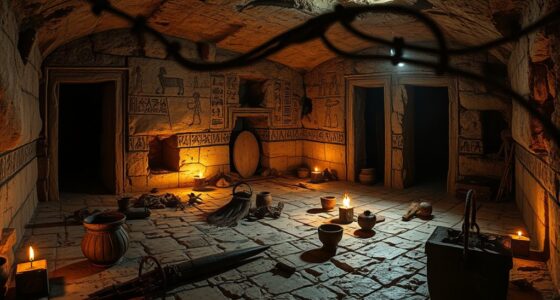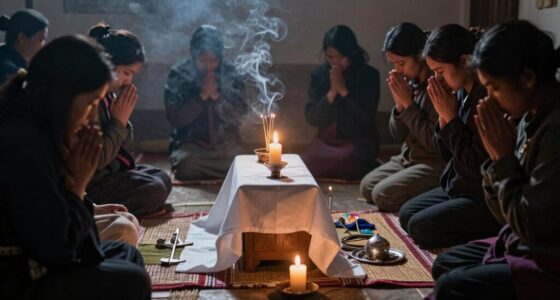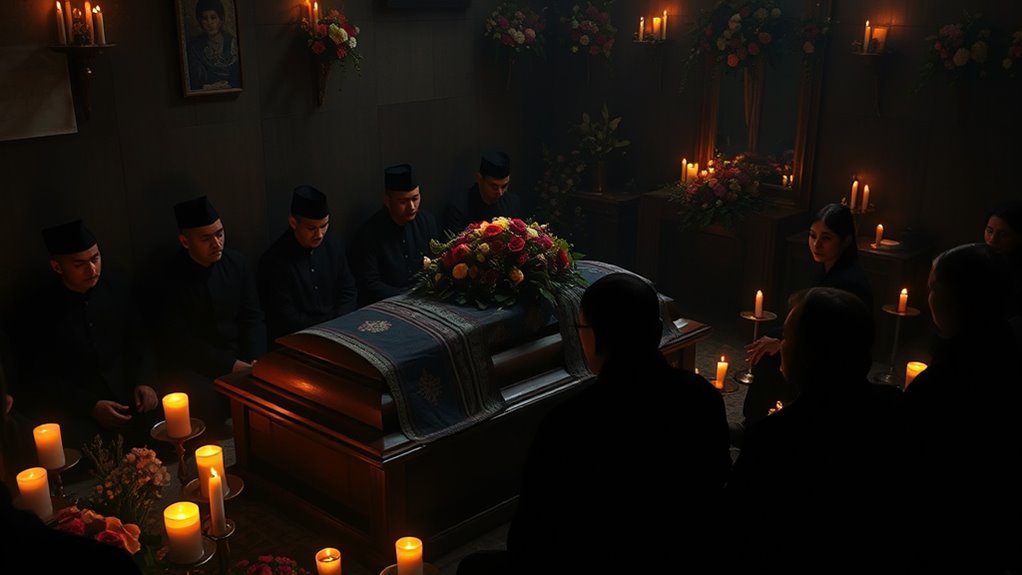

Wakes and all-night vigils have roots in ancient traditions that honor the dead and provide a sacred space for mourning. Across cultures, these rituals include lighting candles, offering prayers, and creating a respectful atmosphere to guide the departed’s journey and comfort the living. They serve as a powerful way to connect loved ones, reflect on life, and uphold spiritual beliefs. Exploring more reveals how these practices continue to reinforce community bonds and spiritual symbolism.
Key Takeaways
- Wakes and vigils originated from ancient cultural practices to honor and watch over the deceased during their transition to the afterlife.
- They serve as sacred gatherings for mourning, reflection, and spiritual connection between the living and the departed.
- Ritual elements like candles, prayers, and symbolic objects deepen spiritual significance and provide comfort.
- These customs vary across cultures but consistently emphasize reverence, protection, and remembrance.
- The practices reflect beliefs in ongoing spiritual existence and aim to offer hope, solace, and community support.
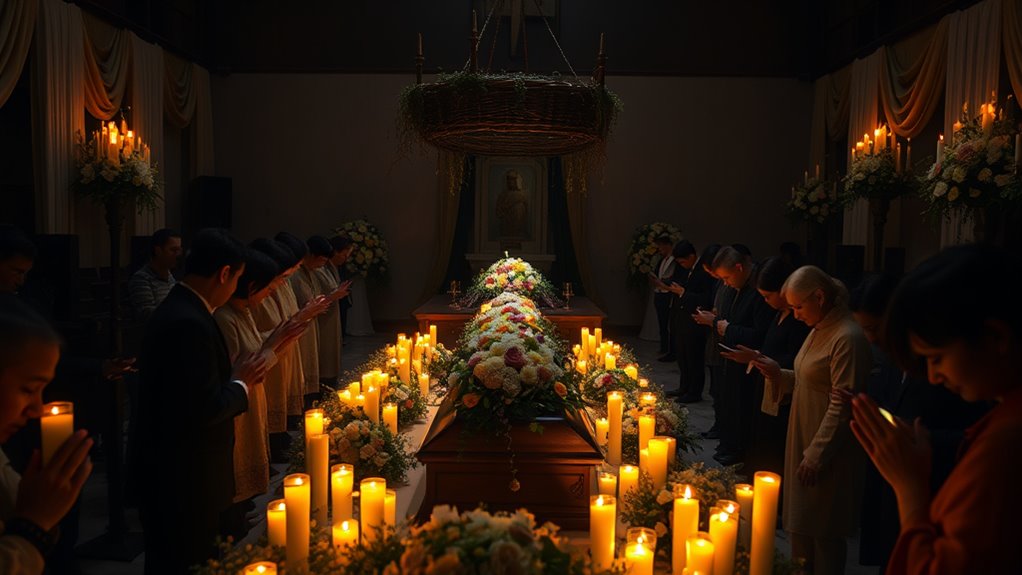
Wakes and all-night vigils are time-honored traditions that bring communities together to honor and remember the deceased. These customs have deep roots in various cultures and serve as a sacred space for mourning, reflection, and connection. When you participate in a wake or vigil, you’re engaging in a ritual that has been passed down through generations, often blending funeral customs with spiritual symbolism to provide comfort and meaning. These practices are not just about paying respects; they act as a bridge between the living and the departed, offering a chance to express grief and find solace among friends, family, and community members.
Wakes and vigils unite communities in meaningful mourning and spiritual connection across generations.
The funeral customs surrounding wakes and vigils often involve specific rituals designed to honor the dead and facilitate spiritual transition. For example, the arrangement of the body, the lighting of candles, and recitation of prayers are common elements that carry symbolic significance. Candles symbolize the light guiding the soul toward peace, while prayers serve as spiritual offerings that help ease the journey of the departed. These customs create a sacred atmosphere, emphasizing respect and reverence, and help participants process their grief in a meaningful way. You might notice that many cultures incorporate specific objects or gestures during these gatherings, each carrying spiritual symbolism meant to invoke protection, blessings, or eternal remembrance.
Spiritual symbolism plays a central role in these traditions. The vigil often becomes a visual and emotional expression of faith, where symbols like crosses, religious icons, or ancestral artifacts reinforce the spiritual connection between the living and the dead. The act of keeping vigil through the night can be seen as a way of offering continuous prayer or watchfulness, emphasizing the importance of spiritual safeguarding during the soul’s transition from this life. Additionally, understanding the cultural significance of funeral customs can deepen the appreciation for these meaningful practices. Through these customs, communities affirm their beliefs in an afterlife or spiritual continuation, providing comfort to mourners and reinforcing shared faiths. You may find that the duration of these vigils varies, but the underlying purpose remains the same: to honor the spiritual journey of the deceased and to bring collective strength to those left behind.
Ultimately, wakes and all-night vigils are profound rituals rooted in centuries of tradition. They serve to honor the deceased in accordance with cultural funeral customs while embedding rich spiritual symbolism that offers hope and reassurance. Participating in these practices allows you to connect deeply with your community, uphold sacred traditions, and find a measure of peace amid grief. Whether steeped in religious or cultural significance, these gatherings remind us that mourning is not only about loss but also about celebrating life, faith, and the enduring bonds that unite us across generations.

Video Camera, 1080P 30MP Camcorder IR Night Vision Vlogging Camera for YouTube,3.0" LCD Screen 18X Digital Zoom Recorder Camera with Remote Control, Microphone, Mini Tripod, 2 Battries, 32GB SD Card
【Video Camera Camcorder】--This 30FPS video camera recorder movies in 1080P resolution.It includes remote control, microphone, mini tripod, 2...
As an affiliate, we earn on qualifying purchases.
Frequently Asked Questions
How Have Wakes Evolved Over Different Cultures?
You’ll notice that wakes have evolved through cultural adaptations, reflecting diverse beliefs about death and remembrance. In some cultures, they focus on honoring the deceased with rituals, music, or storytelling, emphasizing communal support. Others see wakes as a way to keep vigil and provide comfort, highlighting their ritual significance. Over time, these practices incorporate local customs, creating unique traditions that honor the departed while reinforcing cultural identity.
What Are Common Customs During All-Night Vigils?
During all-night vigils, you typically wear respectful funeral attire, reflecting reverence for the departed. You may gather around with family and friends, sharing food and drinks to honor the loved one’s memory. People often sing, pray, or tell stories, creating a comforting atmosphere. These customs foster connection and remembrance, helping everyone process grief together while maintaining traditions that celebrate the life and legacy of the deceased.
Are Wakes Practiced in Modern Secular Societies?
Did you know that about 30% of secular societies still practice wakes? While many modern cultures shift towards cremation, some communities preserve traditional funeral customs, including wakes. These practices serve as cultural symbolism, honoring the deceased and providing communal support. Even in secular societies, wakes remain a meaningful way to connect with tradition, offering comfort and remembrance amidst changing funeral traditions.
How Do Wakes and Vigils Influence Grieving Processes?
Wakes and vigils help you process grief by offering emotional support and fostering communal bonding. Participating in these rituals allows you to share memories, express feelings, and feel less isolated in your mourning. They create a safe space where loved ones come together, strengthening your emotional resilience. This shared experience helps you find comfort, acceptance, and healing as you navigate the difficult journey of loss.
What Are the Variations of Wakes Worldwide?
Wakes worldwide are like diverse tapestries woven with unique funeral traditions and cultural rituals. In Ireland, mourners gather in homes, while in Mexico, vigils involve colorful celebrations honoring the dead. In the Philippines, family members stay vigil at the casket. These variations reflect local beliefs, customs, and histories, showcasing how different cultures honor their loved ones. Each tradition shapes the grieving process, making it meaningful and deeply personal.

VETEK Video Camera 8k Camcorder 48MP UHD WiFi IR Night Vision Vlogging Camera for YouTube, 18X Digital Zoom 3.0“ LCD Screen Digital Camera with Microphone, 32G SD Card, Remote Control and 2 Batteries
【8K 48MP Video Camera】It adopts for newest upgraded sensor.This vlog camera max supports 8K(7680X4320)15fps video resolution,(It also supports...
As an affiliate, we earn on qualifying purchases.
Conclusion
So, next time you attend a wake or stay up all night for a vigil, remember their roots. These traditions honor loved ones, offering a space for mourning and remembrance that spans centuries. Even amid modern hustle, they remind us of the timeless need to connect, grieve, and find comfort. Like a heartfelt letter in a dusty old inbox, these customs keep our memories alive, proving some traditions truly stand the test of time.

Video Camera, Full HD 1080P 30MP Camcorder, Vlogging Camera for YouTube with Infrared Night Vision, 18X Digital Zoom 3.0“ LCD Screen Digital Camera, Video Recorder with Remote Control and Battery
【Full HD 1080P 24MP Video Camcorder】This video camera supports up to 1080P video resolution and 24.0MP image resolution....
As an affiliate, we earn on qualifying purchases.

4K Camcorder ORDRO Night Vision Video Camera Vlog Ghost Hunting Camera Camcorder for YouTube 3.1’’ IPS Touch Screen Camcorder with IR Light Handheld Holder 64G Memory Card and 2 Batteries
As an affiliate, we earn on qualifying purchases.