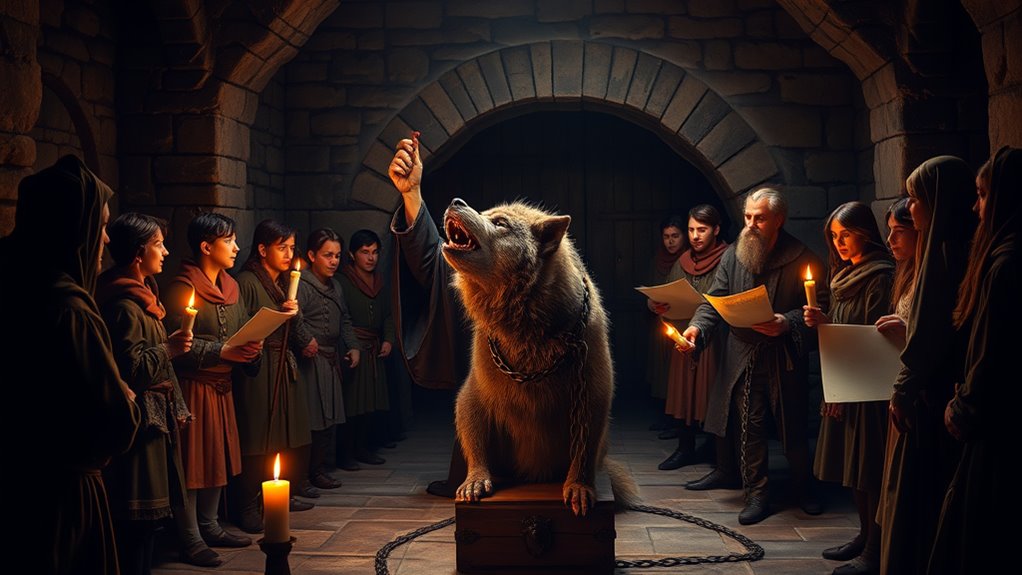

During early modern Europe, fears of werewolves grew from existing witch hysteria, social tensions, and superstition, leading to brutal trials. People believed werewolves were agents of evil working with the devil, justifying harsh justice based on hearsay, dreams, or confessions obtained under torture. These trials often targeted innocent individuals, fueling community paranoia. If you want to understand how these fears shaped justice and society, there’s more to uncover behind these tragic events.
Key Takeaways
- Werewolf trials originated from fears of witchcraft and supernatural threats during early modern Europe.
- Accusations linked werewolves to evil pacts with the devil, fueling legal persecutions.
- Trials relied on dubious evidence like confessions under torture and hearsay, reflecting biased justice.
- They served to reinforce social order by punishing perceived threats amid widespread superstition.
- These trials illustrate how hysteria and fear distorted justice and caused tragic consequences.
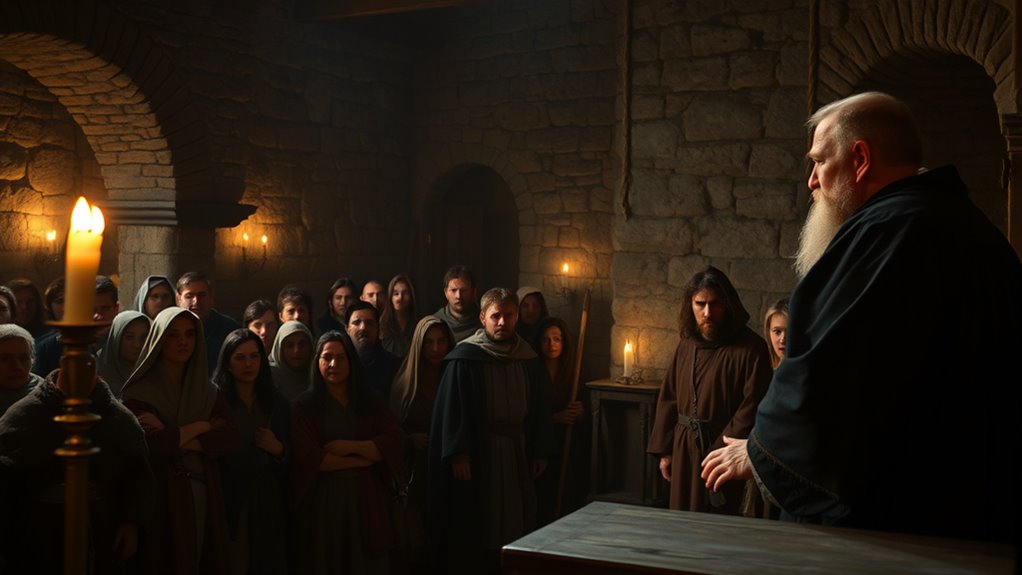
During the early modern period in Europe, accusations of werewolf activity led to a series of infamous trials that reveal much about the fears and social tensions of the time. These trials weren’t just about finding supposed monsters; they reflected widespread panic, superstition, and a desire to control perceived threats within communities. One of the key drivers behind these events was witch hysteria, a phenomenon where fears of witches, magic, and heresy fueled intense suspicion. When accusations shifted from witches to werewolves, it wasn’t a leap in logic but a continuation of the same fear-based mindset. People believed that these creatures were agents of evil, working with the devil or engaging in dark pacts, which justified harsh legal proceedings against them.
Werewolf accusations reflected widespread fear, superstition, and social tensions during Europe’s early modern trials.
In these trials, the legal proceedings were often characterized by a lack of fairness and reliance on dubious evidence. Accusers would claim to have seen or experienced werewolf attacks, often based on hearsay, dreams, or confessions extracted under torture. You might imagine how confessions—obtained through brutal methods—were taken as irrefutable proof of guilt, further fueling the hysteria. The legal process often lacked impartiality; suspects were presumed guilty from the outset, and the emphasis was on confirming the existence of werewolves rather than ensuring justice. Accusations could spread rapidly, turning neighbors against each other, and the courtroom drama was less about truth and more about stamping out perceived evil. This period exemplifies how social fears can distort justice and lead to tragic consequences.
The societal implications of these trials are profound. They reveal how fear and superstition can be weaponized within a legal framework to target vulnerable individuals or marginalized groups. You see, the idea of the werewolf served as a scapegoat for societal anxieties—fear of the unknown, concern over moral decay, or even political dissent. The trials became a mechanism to reinforce social order by punishing those seen as threats, whether real or imagined. As a result, many innocent people faced brutal interrogations, and executions often followed, all justified by a combination of superstition and flawed legal processes.
Ultimately, these werewolf trials illuminate how deeply intertwined fear, superstition, and law were during this period. They show that what was considered “justice” then was heavily influenced by the collective anxieties of society. Understanding these events helps you see how social tensions manifest in legal proceedings, often with tragic consequences. They serve as a reminder that justice, when driven by hysteria rather than rationality, can lead to devastating injustices that echo through history.
Top picks for "werewolf trial early"
Open Amazon search results for this keyword.
As an affiliate, we earn on qualifying purchases.
Frequently Asked Questions
How Did Local Folklore Influence the Trials?
You see, local folklore heavily influenced the trials through folklore influence and cultural symbolism. Tales of shape-shifting wolves and evil spirits shaped people’s fears, making accusations seem more convincing. These stories provided a framework where alleged werewolves embodied evil, leading authorities to interpret suspicious behaviors as evidence of witchcraft or pact with the devil. Folklore consequently fueled hysteria, turning cultural symbolism into real-world consequences during the trials.
Were Women More Frequently Accused Than Men?
Like a mirror reflecting society’s fears, gender disparities shaped accusations, with women more frequently targeted than men. Societal perceptions cast women as inherently closer to evil or temptation, making them prime suspects in werewolf trials. This bias reveals how deeply ingrained stereotypes influenced justice, turning cultural anxieties into accusations. You see, women’s perceived vulnerability and moral weakness made them easy scapegoats, embodying societal fears of deviation and chaos.
What Role Did Religious Authorities Play?
Religious authorities played a pivotal role in the werewolf trials by enforcing medieval theology that viewed such beliefs as heretical. They wielded ecclesiastical power to investigate, interrogate, and prosecute accused individuals, often framing werewolf accusations as moral threats to society. Their influence shaped trial procedures and outcomes, reinforcing religious doctrine and authority while fueling fear and superstition within communities.
How Did Legal Procedures Differ Across Regions?
You’ll notice that regional legal systems influenced how werewolf trials proceeded, with some areas emphasizing torture and confession, while others relied on evidence and witnesses. Trial documentation varies, reflecting local procedures and standards of proof. In certain regions, formal protocols shaped the process, whereas in others, accusations led to swift confessions. This regional diversity highlights how legal practices impacted the severity and outcomes of these historic trials.
Are There Modern Equivalents to These Trials?
Think of modern society as a courtroom where witchcraft accusations sometimes spark social hysteria. Today, these trials are less literal and more symbolic, often seen in sensational media or online shaming. While no one faces werewolf hunts, debates over privacy, misinformation, and moral panic act like allegories, revealing how fear and suspicion still influence us. These modern equivalents serve as reflections of past fears, transformed into digital or cultural dramas.
Conclusion
As you step back from these trials, you see them as haunting mirrors reflecting fears woven into Europe’s tapestry. These hunts for werewolves reveal more than superstition; they expose society’s shadowy quest for control amidst chaos. Like flickering candles in a darkened chamber, they cast eerie light on human nature’s fragile veneer. Ultimately, these trials remind you that beneath the veneer of civility lurks a primal wilderness, forever whispering through history’s shadowed corridors.