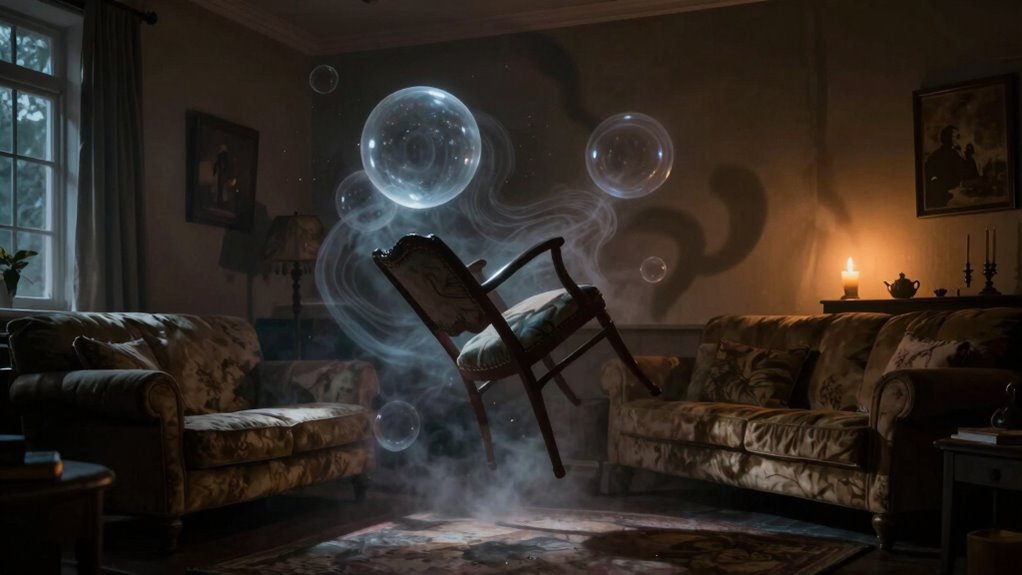
Many people believe all poltergeist activity involves ghostly spirits of the dead, but this is a common misconception. In reality, these disturbances often stem from subconscious energy and emotional states rather than spirits. High stress or trauma can trigger physical effects like knocking, moving objects, or strange noises without supernatural cause. Understanding this can help you see that internal feelings and environment play a larger role than you might think. To discover more, explore how psychology influences these phenomena.

Get books and cozy reading nights delivered free with Prime
- Fast, free delivery on millions of items
- Prime Video, Amazon Music and more included
- Member-only deals all year
Key Takeaways
- Many poltergeist phenomena are caused by subconscious energy, not spirits of the dead.
- Emotional and psychological states can produce physical disturbances mistaken for ghosts.
- Not all poltergeist activity involves ghostly apparitions or supernatural entities.
- Psychological influences and internal stress often trigger the disturbances.
- Understanding energy manifestation shifts explanations away from ghostly causes.
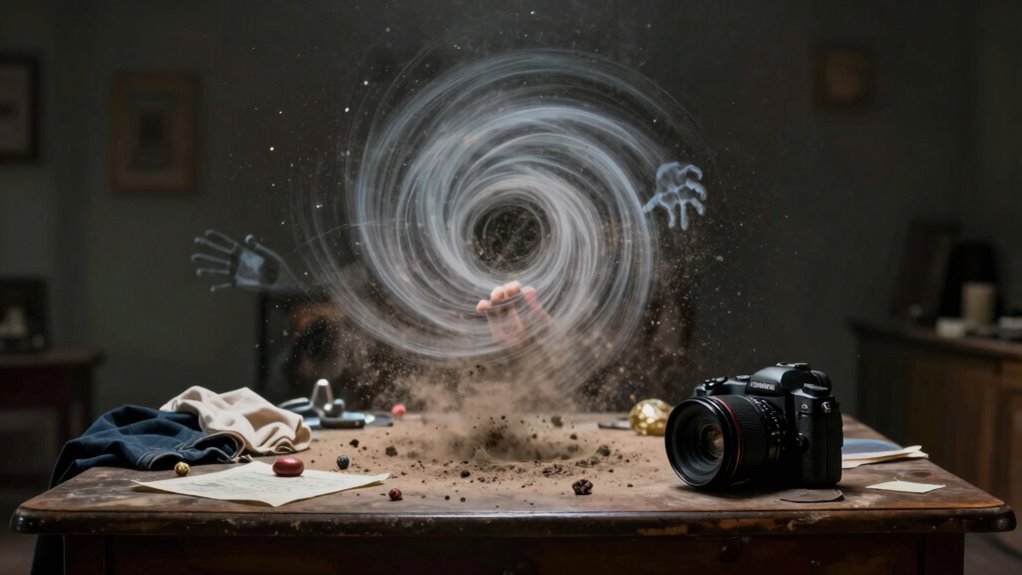
Many people believe that poltergeists are mischievous spirits causing chaos through supernatural means, but this common misconception oversimplifies a much more complex phenomenon. While tales of ghostly apparitions often dominate the narrative, many experts argue that poltergeists aren’t necessarily spirits of the dead. Instead, some believe that these disturbances are rooted in energy manifestation, where intense emotional or psychological states translate into physical phenomena. In this view, what appears as a supernatural event may actually be a product of subconscious energy, released through various forms like knocking sounds, moving objects, or even loud noises.
Poltergeist phenomena may stem from subconscious energy, not spirits, driven by emotional or psychological states.
Understanding the role of psychological influence is essential here. People experiencing high levels of stress, anxiety, or trauma might unconsciously trigger events that seem inexplicable. These individuals may not even realize they’re contributing to the disturbances, as their subconscious mind channels emotional energy into physical manifestations. This process doesn’t involve spirits or ghosts but instead highlights how the mind can influence the environment in subtle yet tangible ways. It’s possible that the phenomenon is a manifestation of internal psychological states, making it more about human psychology than supernatural activity.
Furthermore, the idea that all poltergeists are ghosts dismisses the complex interplay between mind and environment. When you consider energy manifestation, it becomes clear that emotional energy can sometimes produce observable effects—like objects moving or unexplained noises—without any supernatural intervention. These effects are often amplified in environments where tension is high or individuals are emotionally vulnerable. It’s not about spirits lurking around, but rather about the power of human emotion and subconscious influence shaping reality in unexpected ways. Recognizing the influence of psychological factors can help demystify these occurrences and shift the perspective away from supernatural explanations.
In many cases, what’s labeled as poltergeist activity can be explained through a combination of psychological influence and physical circumstances. For instance, a person under extreme stress might unknowingly cause vibrations or movements, which others interpret as paranormal activity. This perspective shifts the focus from supernatural entities to human psychology, emphasizing that these incidents may be rooted in internal states rather than external spirits. Additionally, recognizing the role of energy manifestation helps to explain how emotional energy can produce physical phenomena without supernatural intervention. This approach helps demystify the phenomenon, revealing the complex ways in which mind and environment interact. A deeper understanding of psychological influence can also aid in addressing these occurrences through emotional and mental health support. Recognizing the interplay of mind and environment emphasizes that these phenomena are often the result of internal psychological processes rather than external supernatural forces.
As an affiliate, we earn on qualifying purchases.
Frequently Asked Questions
Are Poltergeists Capable of Physical Harm?
Poltergeists can indeed cause physical harm, often through psychic interference and environmental factors. You might experience objects suddenly moving, loud noises, or even injuries without clear explanation. These disturbances are believed to result from intense emotional energy or unseen forces rather than traditional ghostly hauntings. While not always dangerous, it’s wise to stay cautious and seek professional help if you feel threatened or if the activity escalates.
Can Poltergeists Be Linked to Specific Individuals?
Yes, you can link poltergeists to specific individuals through psychic influence and psychological projection. Often, these disturbances stem from a person’s subconscious emotions or stress manifesting physically, rather than an external ghostly presence. You might notice that certain behaviors or tensions trigger the activity. Recognizing this connection helps you understand that poltergeist phenomena could be more about human psychology than supernatural entities.
Do All Cultures Interpret Poltergeists Similarly?
You’ll find that cultural variations shape how different societies interpret poltergeists, with some viewing them as mischievous spirits, while others see them as manifestations of emotional distress. Ritual practices often reflect these beliefs, aiming to banish or appease the entities. While similarities exist, like disturbances being linked to emotional energy, interpretations and responses vary widely, influenced by cultural beliefs and traditional rituals.
What Scientific Explanations Exist for Poltergeist Activity?
You might think poltergeist activity is pure supernatural drama, but science offers explanations like quantum fluctuations and electromagnetic anomalies. These phenomena can cause objects to move or sounds to appear without ghostly intervention, fooling even the most skeptical. So, next time you hear mysterious noises or see things shift, remember—your home’s just playing tricks thanks to the weird quirks of physics, not supernatural spirits pulling pranks.
Are Poltergeists Ever Proven to Be Real Entities?
Historical cases suggest that some poltergeist activity might be explained by psychological or physical factors rather than real entities. Cultural folklore often attributes these phenomena to spirits or mischievous forces, but there’s no scientific proof they’re actual entities. You should keep in mind that many supposed experiences can be linked to stress, suggestibility, or environmental causes, making the existence of genuine poltergeists unproven by scientific standards.
Conclusion
Remember, not all poltergeists are ghosts; some are simply unexplained energy in motion. Imagine a storm brewing quietly on the horizon—sometimes, what seems like a haunting is just nature’s unseen forces at work. Take the case of the teenage girl whose furniture moved without a ghostly presence—just a burst of pent-up energy. So, next time you hear strange noises, consider that it might be a natural phenomenon, not a ghostly apparition, lurking in the shadows.
Fall Picks
fall essentials
As an affiliate, we earn on qualifying purchases.