
Many people believe basements are portals to supernatural domains, but that’s just a myth. In reality, basements serve practical purposes like storage, laundry, or extra space, rooted in history and utility. Their dark, isolated nature fuels superstitions, yet they are simply functional parts of a home. If you stay curious, you’ll discover how these underground spaces truly connect to our everyday lives.
Key Takeaways
- Myth: Basements are portals to supernatural worlds; Reality: They are functional spaces designed for storage and utility.
- Myth: Basements harbor ghosts and evil spirits; Reality: They are ordinary parts of homes with no supernatural properties.
- Myth: Dark, isolated basements are gateways to other realms; Reality: Their darkness and isolation are cultural fears, not evidence of portals.
- Myth: Legends link basements to hidden treasures or secret societies; Reality: These stories are mythological, with no factual basis.
- Myth: Entering a basement at night invites bad luck or evil spirits; Reality: Properly maintained basements are safe and practical, not superstitiously dangerous.
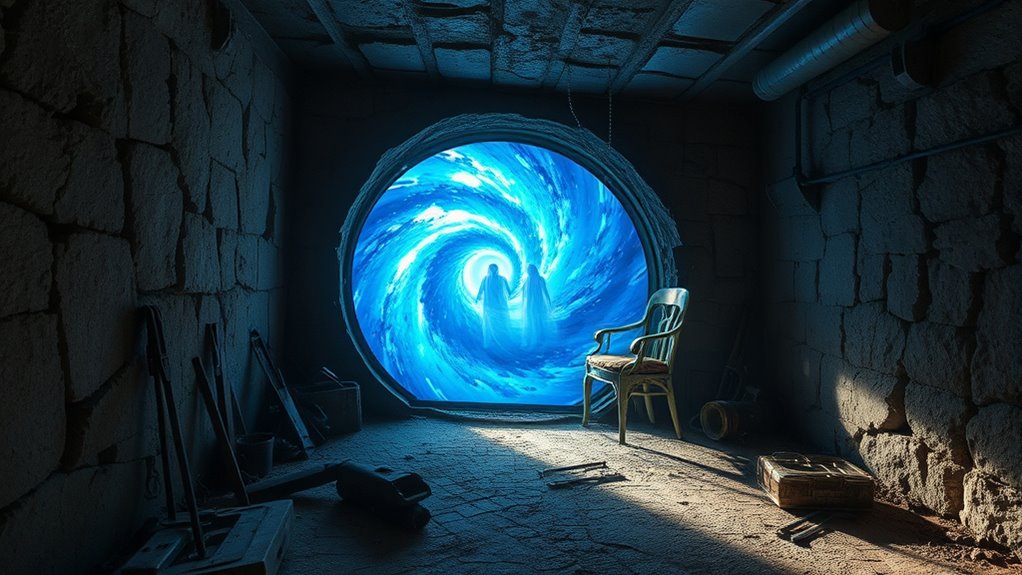
Have basements always been considered a myth, or are they a real feature of modern homes? For many, basements seem almost mythical—something you hear about in stories or see in movies, but rarely encounter in everyday life. Superstitions about basements have long fueled this mystique. Some believe that basements harbor ghosts or evil spirits, fueling fears that they’re portals to other worlds or haunted chambers. Others think basements are cursed spaces, best avoided after dark. These superstitions often stem from cultural stories and fears of the unknown, transforming these underground spaces into symbols of mystery and danger. Yet, historically, basements served very practical purposes, far from the supernatural tales. In early times, they were used for storage of food, wine, and supplies, helping households survive harsh winters. They provided cool, stable environments before modern refrigeration, making them essential for preserving perishables. During the 19th and early 20th centuries, basements became workshops, laundry rooms, or even small home offices. Homeowners saw these underground spaces as extensions of their living areas, useful for chores, storage, or even as bomb shelters during wartime. Far from being mystical portals, they were functional parts of the home, designed to maximize space and utility.
Despite their practical origins, the superstitions surrounding basements persisted and evolved. Some believed that entering a basement at night could invite bad luck or evil spirits, fueling fears that these spaces were portals to the supernatural domain. Others saw them as gateways to hidden treasure or secret societies, adding layers of intrigue and fear. These stories often grew from the darkness and isolation of underground spaces, which can evoke unease in anyone. However, in reality, basements are simply part of modern architecture—spaces that provide valuable room for storage, utilities, or even recreational areas. They are not portals to supernatural worlds, but rather, practical additions designed to improve your home’s functionality. Understanding their true purpose helps demystify these subterranean spaces, shifting the perception from myth to reality. So, next time you step into a basement, remember that what might seem like a portal to another dimension is just an ordinary part of your house, built for convenience and practicality—not supernatural phenomena.
Top picks for "myth reality basement"
Open Amazon search results for this keyword.
As an affiliate, we earn on qualifying purchases.
Frequently Asked Questions
Can Basements Truly Serve as Portals to Other Dimensions?
Basements can’t truly serve as portals to other dimensions, despite supernatural legends and paranormal investigations suggesting otherwise. While eerie stories and unexplained phenomena might make you think there’s more than meets the eye, scientific evidence doesn’t support the idea of portals in basements. Instead, these spaces often amplify sounds and shadows, fueling ghost stories and myths. Trust logic over legends, and remember, most paranormal tales are just that—stories.
Are Basement Portals Scientifically Proven or Purely Fictional?
You might be surprised to learn that basement portals aren’t scientifically proven; paranormal research hasn’t provided conclusive evidence, and scientific skepticism remains strong. Only about 4% of scientists believe in the existence of portals to other dimensions. While stories of mysterious doorways persist, current science views these claims as fictional. So, until credible proof emerges, you can consider basement portals as fascinating myths rather than proven phenomena.
How Do Myths About Portals in Basements Originate?
You might wonder how myths about portals in basements originate. Urban legends and folklore often spark these stories, blending local history, fears, and imagination. People share tales to explain strange noises or disappearances, fueling the myth. Over time, these stories get exaggerated, creating a sense of mystery around basements. Such legends persist because they tap into universal fears and curiosity, making them a fascinating part of cultural folklore.
Are There Any Known Cases of Basement Portals Causing Harm?
You might think basement portals cause harm, but there’s no solid proof. Coincidentally, some cases of basement flooding or structural damage get blamed on mysterious forces, yet they’re usually due to poor drainage or foundation issues. While tales of portals causing harm are intriguing, real harm typically involves water damage or structural problems, not supernatural entities. Stay cautious about real risks, but don’t worry about portals lurking in your basement.
What Precautions Exist to Prevent Supernatural Basement Portal Issues?
You can implement security measures like reinforced doors and surveillance cameras to prevent unauthorized access to your basement. For paranormal prevention, consider sealing any cracks or openings that could serve as entry points. Additionally, using protective symbols or spiritual safeguards can help reduce supernatural risks. Regularly monitoring your basement and staying aware of unusual activity ensures you’re proactively addressing any potential portal issues.
Conclusion
So, whether basements are portals or just underground storage, remember not to jump to conclusions. The truth is often hidden beneath the surface, waiting to be uncovered. Don’t let myths cloud your judgment—sometimes, you’ve got to see it to believe it. Keep your eyes open and don’t be afraid to explore the unknown. After all, sometimes the biggest surprises are just beneath your feet, ready to turn your world upside down.