
The idea that Friday the 13th is unlucky is a widespread superstition with no scientific proof. It stems from historical and cultural myths, such as Norse tales and Christian stories about the last supper. While many in Western countries see Friday the 13th as misfortune, others like Italy don’t share this fear. Cultural differences shape beliefs, but if you keep exploring, you’ll uncover why this superstition persists despite lacking real evidence.
Key Takeaways
- The belief that Friday the 13th is unlucky is rooted in historical, religious, and cultural superstitions, not scientific evidence.
- Cultural perspectives vary; some cultures see 13 and Fridays positively or neutrally, challenging Western superstitions.
- Psychological factors and media reinforce the superstition, making negative events on that day seem more significant.
- There is no scientific proof that Friday the 13th causes more accidents, misfortune, or bad luck.
- The superstition persists mainly through cultural transmission and societal narratives, not factual basis.
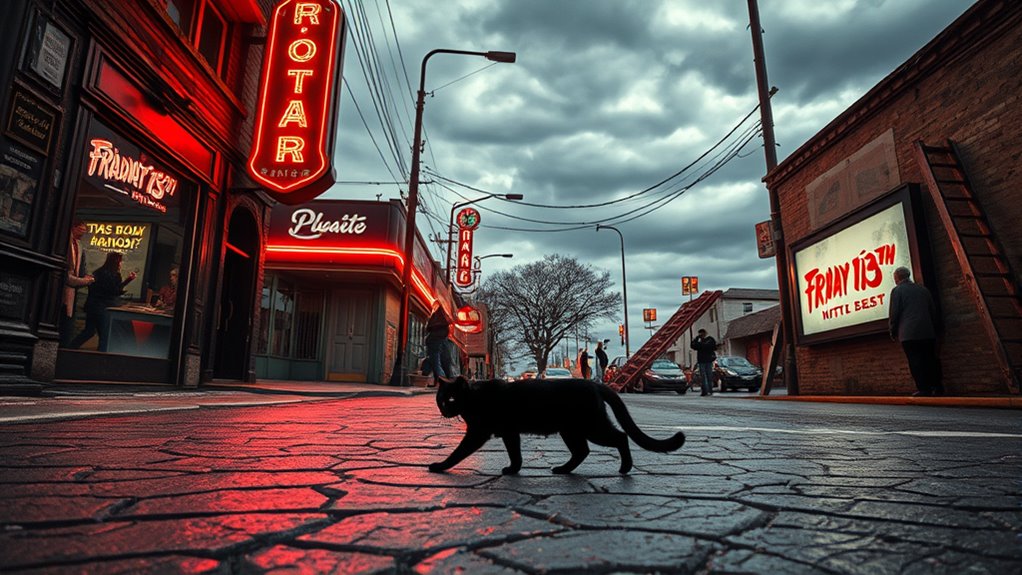
Have you ever wondered why Friday the 13th is considered the unluckiest day? The roots of this superstition go deep into superstitions origins, blending history, religion, and cultural differences. Many believe that the fear of the number 13, known as triskaidekaphobia, dates back centuries. Some argue that it stems from ancient Norse mythology, where a banquet of 12 gods was disrupted by an uninvited 13th guest, Loki, leading to chaos. Others trace the superstition to the Last Supper, where Jesus dined with his 12 apostles, and Judas, the 13th guest, betrayed him. This event, central to Christian belief, contributed to the negative perception of the number 13 in Western culture.
Cultural differences also shape how various societies view this day. For instance, in many Western countries, Friday is often associated with bad luck, possibly because of its connection to the crucifixion of Jesus, which is believed to have occurred on a Friday. Combining this with the ominous number 13 creates a potent superstition that many still hold today. However, not everyone perceives Friday the 13th as unlucky. In some cultures, the number 13 is considered lucky, and Friday doesn’t carry the same superstitious weight. For example, in Italy, the number 13 is often viewed positively, and Friday isn’t necessarily seen as a day of misfortune. Meanwhile, in Spain and Latin America, the number 13 isn’t as heavily associated with superstition, and Friday is considered just another day.
Despite these differences, the superstition surrounding Friday the 13th has persisted because of its deep cultural roots and psychological reinforcement. People tend to notice and remember negative events that happen on this day more than on others, reinforcing the idea that it’s unlucky. Moreover, the psychological reinforcement of superstitions plays a significant role in maintaining these beliefs over generations. Movies, media, and popular culture have further cemented the idea that Friday the 13th is cursed, often depicting it as a day of horror and misfortune. Yet, in reality, there’s no scientific evidence that this day is inherently unlucky. It’s a product of centuries of superstitions origins and cultural differences that have been passed down and amplified over generations.
Top picks for "myth reality friday"
Open Amazon search results for this keyword.
As an affiliate, we earn on qualifying purchases.
Frequently Asked Questions
How Did Friday the 13TH Become Associated With Bad Luck?
You might wonder how Friday the 13th became associated with bad luck. It stems from superstitious origins and unlucky symbolism, combining the number 13’s reputation for misfortune with Friday’s historical link to bad events. Over time, this pairing reinforced superstitions, making Friday the 13th seem especially unlucky. People’s fears grew, fueled by stories and cultural beliefs, solidifying its reputation as a day to avoid or be cautious.
Are There Cultural Differences in Friday the 13TH Superstitions?
You’ll find that cultural beliefs greatly influence superstitious practices surrounding Friday the 13th. In some countries, like Italy and Spain, they see the number 13 as lucky, so the day isn’t feared. Conversely, in the United States and Greece, many hold superstitions about the day being unlucky. These cultural differences shape how people respond, with some avoiding certain activities or rituals based on their superstitious practices.
Has Friday the 13TH Ever Been Considered a Lucky Day?
You might find it surprising, but Friday the 13th has been considered lucky in some cultures. For instance, in Italy, 13 is a lucky number, and Friday the 13th can be seen as a day of good fortune. Superstitious beliefs vary widely across cultures, showing that what’s unlucky in one place might be lucky in another. So, it’s not universally seen as an unlucky day—cultural variations shape these perceptions.
What Historical Events Contributed to Friday the 13th’s Superstition?
You should know that superstition origins and historical influences, like the arrest of the Knights Templar on Friday, October 13, 1307, fueled the belief that this day is unlucky. Additionally, the number 13’s reputation as a bad omen, combined with Friday’s association with bad luck in some cultures, reinforced these superstitions. These events and cultural beliefs shaped the negative perception of Friday the 13th over centuries.
Do Insurance Companies See Higher Claims on Friday the 13TH?
Insurance companies generally don’t see higher claims on Friday the 13th. Studies show accident rates and insurance claims stay consistent with other days. While some believe the superstition might influence behavior, data suggests it doesn’t considerably impact accident rates or claim frequency. So, if you’re worried about Friday the 13th affecting your insurance, rest assured, the numbers typically don’t support an increase in claims on this day.
Conclusion
So, next Friday the 13th rolls around, will you let fear hold you back? Remember, the myth is just that—myth. But the true story is yours to write. Will you face the day with courage or let superstition control you? The choice is yours. And as the clock ticks closer, ask yourself: what if the real luck lies in your mindset? The mystery remains—will you uncover it?