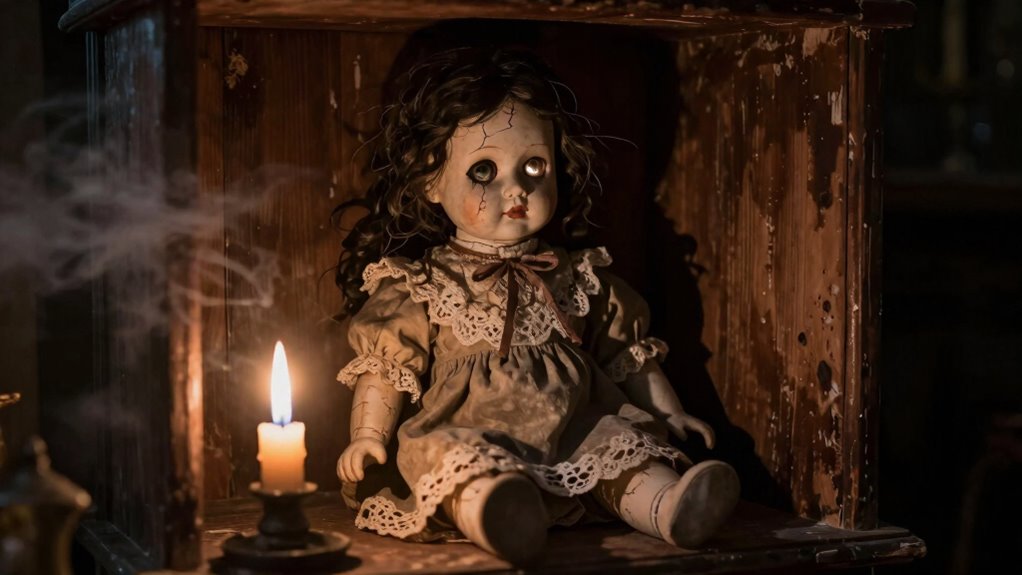

The myth of a guaranteed haunted doll is just that—a myth. Many stories link dolls to curses or spirits, but there’s no real evidence to support these claims. Cultural narratives, media, and psychological biases create the illusion of paranormal activity around dolls. Often, events are natural coincidences or misunderstandings. If you’re curious, you’ll discover how legends grow and why these stories persist, even without factual proof behind them.

Get books and cozy reading nights delivered free — and shop member deals
- Fast, free delivery on millions of items
- Access to Prime Big Deal Days deals on October 6–7
- Prime Video, Amazon Music and more included
Key Takeaways
- There is no scientific evidence confirming any doll as genuinely haunted or possessed.
- Many haunted doll stories are exaggerated or based on coincidental events and natural causes.
- Cultural narratives, media, and superstition heavily influence beliefs in haunted dolls.
- Psychological factors like suggestion and confirmation bias shape perceptions of paranormal activity.
- Most haunted doll tales are myths or folklore, not factual occurrences.
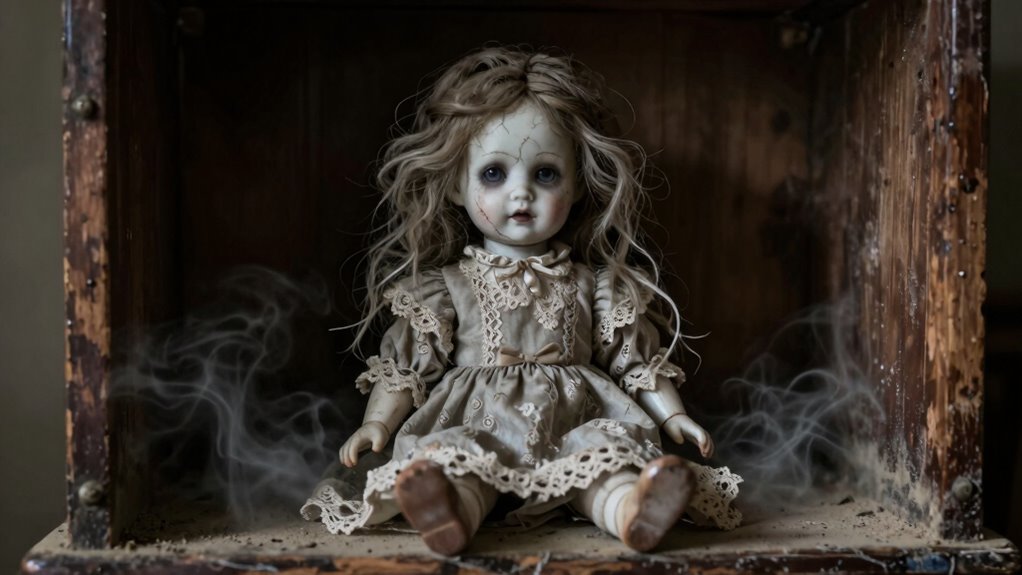
Many people believe haunted dolls are vessels for spirits or curses, but often, these stories are just myths fueled by fear and misinterpretation. Throughout history, there have been numerous claims of dolls possessed by malevolent spirits, but many of these tales lack credible evidence. In fact, some of the most famous “haunted” dolls, like Robert or Annabelle, have intriguing histories rooted in cultural representations rather than supernatural activity. These dolls often become infamous because of sensational stories, movies, and folklore, which amplify their eerie reputations.
Looking back at historical instances, some dolls gained notoriety due to tragic or mysterious circumstances surrounding their origins. For example, certain dolls were linked to deaths, accidents, or illnesses, leading people to believe they possessed supernatural power. However, closer examination often reveals natural causes or coincidences rather than any paranormal activity. These instances get exaggerated over time, transforming into legends. The cultural representations of haunted dolls also contribute to this mythos. Films, horror stories, and urban legends depict them as cursed objects harboring spirits, feeding into collective fears about the unknown. This portrayal reinforces the idea that dolls can serve as portals for spirits, even when there’s little factual basis.
Many of these stories are shaped by cultural perceptions of innocence and the uncanny. Dolls symbolize childhood and purity, yet their lifeless appearance can evoke discomfort or fear. When something goes wrong—like unexplained noises or misfortune—people often attribute these events to supernatural influences, especially if the doll is linked to tragic history or folklore. In reality, psychological factors such as suggestion, expectation, and the power of belief play significant roles in perceiving dolls as haunted. Additionally, cultural narratives perpetuate superstitions that associate dolls with spirits, which can influence how people interpret unusual occurrences. Interestingly, psychological phenomena like pareidolia also cause people to see faces or patterns in objects, fueling beliefs in paranormal activity. The cultural representations of haunted dolls also contribute to this mythos.
The human tendency toward confirmation bias can lead individuals to interpret ambiguous events as evidence of paranormal activity. Ultimately, the idea of a guaranteed haunted doll is a mixture of historical myths, cultural storytelling, and human psychology. While some dolls may have fascinating backgrounds, there’s no scientific proof that they’re possessed or cursed. Instead, the fear surrounding haunted dolls often reflects broader anxieties about death, spirits, and the unknown. So, when you hear stories of haunted dolls, remember that many of these tales are rooted in cultural narratives and misinterpretations rather than actual supernatural phenomena. The truth is, most haunted doll stories are just that—stories, not reality.
As an affiliate, we earn on qualifying purchases.
Frequently Asked Questions
Are Haunted Dolls More Common Than People Think?
Haunted dolls are more common than you might think, rooted in historical folklore and cultural symbolism. Many believe these dolls carry spirits or energies, making them seem haunted. However, much of the fear stems from stories passed down over generations, blending cultural beliefs with superstition. While some dolls may seem eerie, actual haunted dolls are rare, and much of the fascination comes from fear of the unknown and cultural storytelling.
Can Haunted Dolls Be Safely Displayed in Homes?
You can display haunted dolls safely in your home if you respect cultural beliefs and handle them with care. Many see these dolls as part of modern collections, appreciating their history and uniqueness. However, it’s essential to set boundaries, like keeping the doll in a designated area and maintaining positive energy. Trust your instincts, and if you feel uneasy, consider consulting cultural or spiritual guidance for peace of mind.
Do Haunted Dolls Have a Specific Origin Story?
You might find it intriguing that haunted dolls often have mysterious origins rooted in history and culture. Historically, many believe these dolls gained their haunted reputation through stories passed down over generations, blending folklore with real events. Their cultural significance varies worldwide, symbolizing protection, spirits, or warnings. Coincidences, like a doll’s eerie history aligning with local legends, add to their mystique, deepening the belief that some dolls are truly haunted.
How Do Experts Differentiate Real Hauntings From Hoaxes?
You can differentiate real hauntings from hoaxes through thorough paranormal investigations, where experts look for consistent, unexplained phenomena. They analyze evidence like EMF readings, EVP recordings, and physical disturbances. Psychological explanations also play a role, as skeptics consider suggestibility and hallucinations. If the phenomena persist beyond rational explanations and show credible, repeatable signs, experts are more likely to deem it genuine rather than a fabricated or staged event.
Are There Documented Cases of Haunted Dolls Causing Harm?
You might think haunted dolls are harmless, but some cultural beliefs and historical cases suggest otherwise. In rare instances, documented cases report dolls causing harm—though skeptics dismiss these as trickery or hysteria. Still, paranormal enthusiasts argue these stories prove that certain haunted dolls aren’t just toys but possibly vessels for malevolent spirits. Whether true or not, the idea keeps horror fans on edge.
Conclusion
You might think haunted dolls are everywhere, but the truth is, only about 4% of reported paranormal experiences involve dolls. Most stories are rooted in imagination or hoaxes, not supernatural forces. So, next time you see a creepy doll, remember it’s probably just a myth. Don’t let fear convince you otherwise—trust the facts and enjoy the spooky fun without believing in guaranteed hauntings. After all, skepticism keeps your mind open and your fears in check.
Fall Picks
fall essentials
As an affiliate, we earn on qualifying purchases.