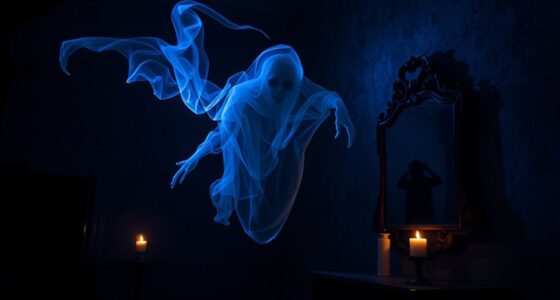
Mirrors have long been seen as mystical gateways to other worlds in myths and traditions, symbolizing self-awareness, truth, and the unknown. However, scientifically, mirrors simply reflect light and don’t open portals. The idea of mirrors as portals is rooted in stories and cultural symbolism, not reality. If you look deeper, you’ll discover how these beliefs influence our perceptions and the lasting mystery surrounding mirrors. Keep exploring to understand what lies behind the myth and the truth.
Key Takeaways
- Myths portray mirrors as gateways to other worlds, while science confirms they only reflect light.
- Cultural beliefs link mirrors to spiritual passageways, but scientifically, they lack any portal properties.
- The myth taps into human curiosity about supernatural realms; scientifically, mirrors are mere reflective surfaces.
- Cultural symbolism persists, reinforcing mirrors as symbols of mystery and spiritual connection despite lacking scientific evidence.
- The myth influences imagination and stories, but reality shows mirrors do not function as portals or access points to other dimensions.
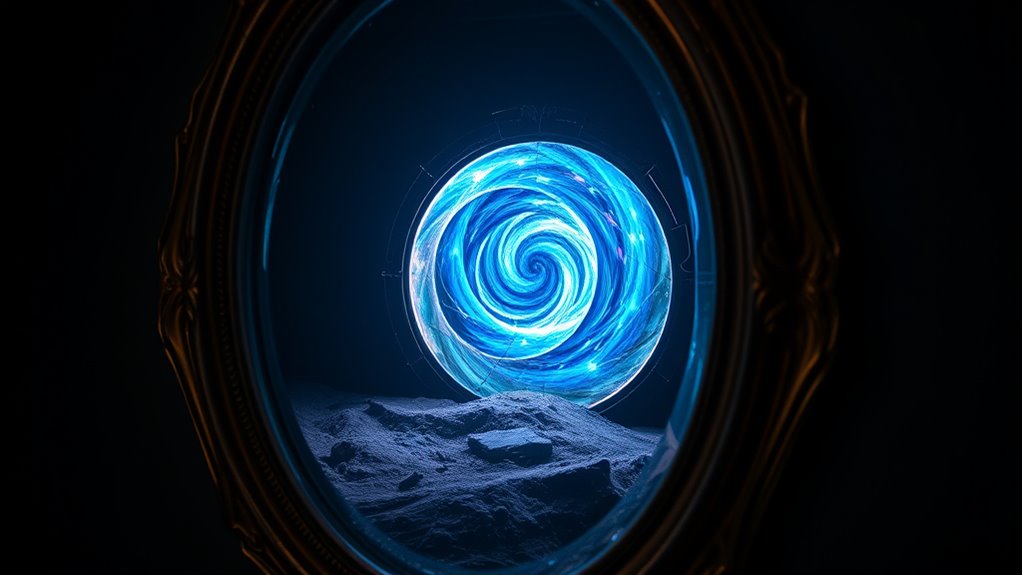
Have you ever wondered if mirrors are more than just reflective surfaces? It’s a fascinating question because, throughout history, mirrors have carried deep symbolism and cultural interpretations that go far beyond their practical use. In many traditions, mirrors symbolize self-awareness, truth, or even the soul. Some believe they serve as gateways to other worlds, a concept rooted in ancient folklore and myth. But is there any truth behind these ideas, or are they just stories created to explain the mysterious nature of reflection? As you explore this topic, you’ll find that cultural interpretations of mirrors vary widely, shaping how different societies perceive their purpose and power.
Mirrors symbolize self-awareness, truth, and portals to other worlds across diverse cultural traditions.
In some cultures, mirrors are seen as portals to the spiritual domain. For example, in Chinese tradition, mirrors are believed to ward off evil spirits and attract positive energy. They’re thought to be more than objects—they’re spiritual tools that can trap or reflect unseen forces. Similarly, in European folklore, mirrors often serve as gateways to alternate dimensions or the afterlife. These cultural interpretations give mirrors a mystical quality, fueling myths about their ability to connect worlds beyond our physical reality. It’s no surprise that stories of mirror portals persist, as they tap into universal fears and hopes about crossing boundaries into unknown realms. This cultural symbolism influences how people view mirrors—not just as objects but as symbols of hidden truths or spiritual passageways.
However, when you look at the myth versus reality debate, it’s clear that much of the idea of mirrors as portals stems from storytelling and symbolism rather than scientific fact. The myth suggests that gazing into a mirror could reveal a different world or allow you to step through into another dimension. But in reality, mirrors work by reflecting light; they don’t have the ability to open portals to other worlds. Their symbolism, however, persists because it taps into the human desire for connection with the supernatural and the unknown. These cultural interpretations shape our collective imagination, leading us to see mirrors as more than just reflective surfaces—they become symbols of mystery, transformation, and potential passage.
Despite the lack of scientific evidence, the myth of mirrors as portals remains compelling. It plays into our fascination with the unseen and the desire to believe in something beyond the physical world. While mirrors are scientifically simple devices that reflect light, their cultural symbolism continues to inspire stories of magic and mystery. Whether you believe they can open portals or not, it’s undeniable that mirrors have a special place in your imagination, serving as mirrors of truth, gateways to the spiritual, or symbols of the unknown. This blend of myth and reality keeps the idea alive, making mirrors much more than just reflective surfaces—they become powerful symbols rooted in human history and cultural interpretation. Additionally, the antioxidant content in green juices can support your overall wellbeing, which further emphasizes how cultural symbolism often aligns with health and vitality themes.
spiritual mirrors for energy protection
As an affiliate, we earn on qualifying purchases.
As an affiliate, we earn on qualifying purchases.
Frequently Asked Questions
Can Mirrors Truly Connect Different Dimensions or Worlds?
You might wonder if mirrors can truly connect different dimensions or worlds. Scientific evidence doesn’t support this idea, and most experts see it as a myth debunking of paranormal phenomena. While mirrors are fascinating and often linked to supernatural stories, they don’t act as portals to other realities. Instead, these beliefs reflect cultural myths or psychological interpretations, not proven scientific facts. So, no, mirrors can’t genuinely link different worlds.
What Scientific Evidence Supports Mirror as Portal Theories?
Like Schrödinger’s cat, scientific evidence for mirrors as portals remains uncertain. Quantum entanglement shows particles can influence each other instantly over distances, but this doesn’t prove mirrors connect different worlds. Instead, psychological perception plays a role in how we interpret reflections. Current science lacks concrete proof that mirrors serve as portals; they’re more about perception and illusion than actual gateways.
Are Mirror Portals Dangerous or Harmful in Any Way?
Mirror portals aren’t proven to be dangerous or harmful in reality, but you should consider mirror safety and psychological effects. If you spend too much time staring or become obsessed, it could impact your mental health or cause anxiety. Always use mirrors in well-lit areas and avoid using them in ways that distort perception. Staying aware of your psychological state helps prevent potential negative effects from intense mirror interactions.
How Do Cultural Beliefs Influence Perceptions of Mirror Portals?
Cultural beliefs deeply shape how you perceive mirror portals, with superstitious rituals fueling fears or fascination. In some societies, mirrors symbolize mystery and mysticism, making portals seem potent and perilous. Others see them as symbolic gateways to spirits or the supernatural, influencing perceptions of danger or divine connection. These cultural symbols and rituals color your understanding, blending belief with curiosity, shaping your reactions to the idea of mirror portals.
Can Anyone Access a Mirror Portal, or Only Certain Individuals?
You might wonder about mirror access and portal eligibility, but typically, only certain individuals can access a mirror portal. Cultural beliefs, personal intentions, or specific rituals often determine who is eligible. You usually need to meet particular criteria or possess special qualities, like focus or spiritual awareness, to activate the portal. So, it’s not open to everyone—only those deemed capable or prepared in the context of the mirror’s mystical properties.
decorative mirrors with mystical symbolism
As an affiliate, we earn on qualifying purchases.
As an affiliate, we earn on qualifying purchases.
Conclusion
So, remember, mirrors might seem mysterious, but they’re simply surfaces reflecting your surroundings. Don’t let doubts distort your view or distort your sense of reality. Instead, see mirrors as mere mediums, not magical portals. By believing in their beauty and banishing baseless fears, you’ll break the barriers between myth and truth. Embrace the evident, erase the exaggerated, and experience the essential truth: mirrors mirror, nothing more, nothing mystical.
Chinese feng shui mirrors
As an affiliate, we earn on qualifying purchases.
As an affiliate, we earn on qualifying purchases.
European folklore inspired mirrors
As an affiliate, we earn on qualifying purchases.
As an affiliate, we earn on qualifying purchases.