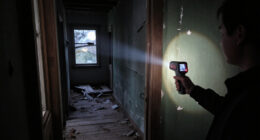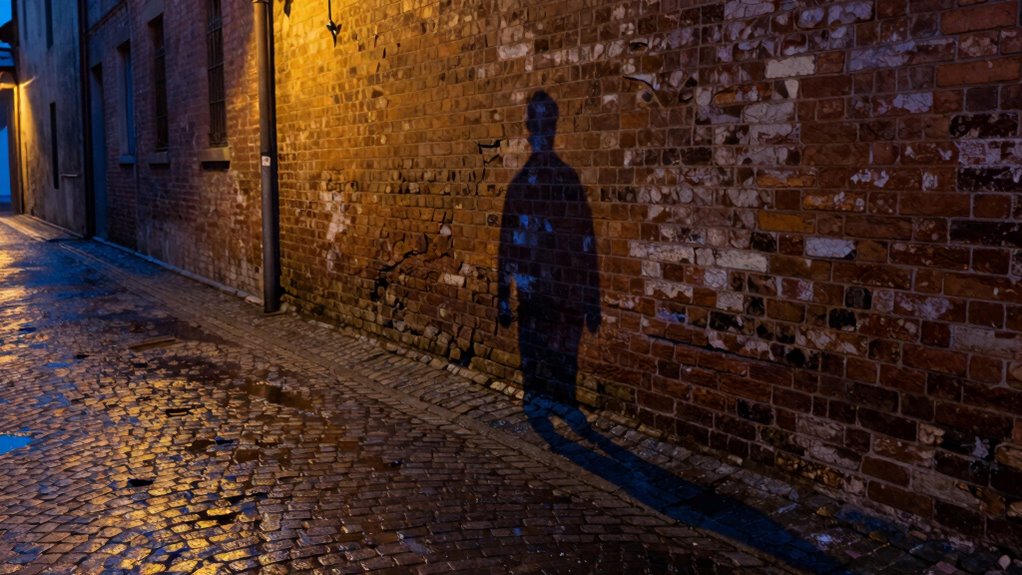

Not every shadow figure points to something dark; often, they are just illusions caused by lighting, movement, or environmental factors. Your brain tends to fill in gaps when your senses are tired or distracted, leading you to see shapes that aren’t really there. Emotional states like anxiety can make shadows feel more threatening. Understanding how perception works helps you see these shadows for what they truly are—common, harmless phenomena. If you stay curious, you’ll discover more about how your mind interprets these mysterious shapes.

Get books and reading essentials delivered free — and shop member deals
- Fast, free delivery on millions of items
- Access to Prime Big Deal Days deals on October 6–7
- Prime Video, Amazon Music and more included
Key Takeaways
- Many shadow figures are caused by natural environmental factors like lighting, movement, or objects, not supernatural or threatening entities.
- The brain often interprets ambiguous shadows as figures, especially during fatigue or heightened emotion.
- Shadows are reflections of subconscious fears or stress, not actual external threats.
- Rational analysis of lighting and surroundings can help distinguish between real threats and illusions.
- Perception distortions can make benign shadows appear menacing, but understanding this reduces unnecessary fear.

You might often notice shadow figures in your surroundings or in your dreams, but not every dark shape carries a sinister meaning. Sometimes, these shadows are simply phantom sightings— fleeting impressions that your mind interprets as figures but lack any real physical presence. They often appear during moments of heightened emotion or fatigue, and understanding their origin can help you see these images in a new light. Often, shadow figures are just your subconscious reflections, revealing how your mind processes stress, fears, or unresolved thoughts rather than indicating any hidden danger.
Shadow figures are often just your mind’s way of processing stress, fears, and unresolved thoughts, not signs of danger.
When you see a shadow in the corner of your room or drifting across your vision, it’s tempting to jump to frightening conclusions. Yet, many of these sightings are nothing more than your brain’s way of filling in gaps, especially when your senses are compromised by darkness, tiredness, or distraction. It’s your subconscious trying to make sense of ambiguous stimuli—a natural response that doesn’t necessarily point to anything supernatural or malevolent. These phantom sightings are frequently caused by ordinary factors like flickering lights, shadows cast by everyday objects, or even your own movements. Your mind, enthusiastic to find patterns, might interpret these fleeting images as figures, especially if you’re already feeling anxious or vulnerable.
Understanding that not every shadow figure has dark origins can help reduce unnecessary fear. Recognize that your mind is powerful, but it’s also prone to misinterpretation. When you encounter these images, try to ground yourself with rational thought. Ask yourself if there’s a logical explanation—dim lighting, fatigue, or stress—and remember that your subconscious reflections often reveal more about your inner state than any external threat. Not every shadow is a warning from the beyond; many are just your mind’s way of making sense of the world around you during moments of uncertainty. Recognizing the power of perception and how it can distort reality is key to overcoming irrational fears related to shadow figures. Being aware of how your brain interprets visual stimuli can help you maintain a clearer perspective and reduce unnecessary worry. Additionally, understanding the nature of perception can empower you to distinguish between real threats and benign illusions. Developing a rational mindset when faced with these images can further assist in dispelling unnecessary fears. Cultivating awareness of these perceptual processes is vital to understanding the common causes behind phantom sightings.
night light with adjustable brightness
As an affiliate, we earn on qualifying purchases.
As an affiliate, we earn on qualifying purchases.
Frequently Asked Questions
Can Shadow Figures Be Caused by Medical Conditions?
Yes, shadow figures can be caused by medical conditions. Sometimes, neurological disorders or issues seen in medical imaging, like migraines or hallucinations, lead to visual disturbances resembling shadow figures. These are often linked to brain activity or neurochemical imbalances. If you notice persistent shadow figures, it’s important to consult a healthcare professional to explore underlying medical conditions that might be contributing to these visual experiences.
Are Shadow Figures More Common in Certain Cultures?
Shadow figures dance across cultural landscapes like whispers from folklore traditions. In some cultures, these silhouettes symbolize ancestors or spirits guiding you, while others see them as omens or guardians. Their presence often reflects deep-rooted cultural symbolism, making shadow figures more common in societies rich with myth and tradition. You might notice these mysterious shapes more frequently where stories and beliefs intertwine, turning shadows into symbols of cultural identity and spiritual connection.
Do Children Perceive Shadow Figures Differently From Adults?
You see, children perceive shadow figures differently from adults because of their heightened imagination and developing perception. Child perception often interprets shadows as familiar or even friendly, but it can also trigger childhood fears, making these figures seem more threatening. As an adult, you tend to rationalize or dismiss these shadows, but children’s vivid imaginations can turn ordinary shadows into mysterious or frightening figures, fueling their childhood fears.
Can Environmental Factors Influence Shadow Figure Appearances?
Like a painter’s brushstrokes, environmental factors can shape shadow figures you see. Lighting effects, such as flickering or dim lights, create illusions, while psychological influences, like fear or imagination, heighten perception. These elements combine, making shadows appear more defined or mysterious. You might notice that changing your environment’s lighting can alter what you perceive, demonstrating how external conditions influence your interpretation of shadow figures, often blending reality with perception.
Are Shadow Figures Always Linked to Supernatural Activity?
Shadow figures aren’t always linked to supernatural activity; they can be influenced by environmental factors or psychological states. Sometimes, what you see might be a trick of light, or urban legends and mythical creatures shaping your perception. Not every shadow figure is a sign of something dark or paranormal — often, they’re just our minds interpreting ambiguous visuals. Keep an open mind, and remember that not everything mysterious has supernatural roots.
Conclusion
So, next time you notice a shadow figure, remember it might just be a fleeting flicker of your mind’s many mysteries. Shadows can be shy, simply seeking some sunlight or silent solace. Don’t dread the dark details; instead, decipher the subtle signals your senses sense. Shadows are seldom sinister; sometimes, they’re just shy silhouettes, softly stirring in the silence. Embrace the enigma, and let curiosity conquer the creeping corners of your consciousness.
Halloween Picks
halloween
As an affiliate, we earn on qualifying purchases.