Many people believe poltergeists are ghosts, but science suggests they’re more likely caused by psychological, environmental, or human factors. Phenomena like objects moving or loud noises often result from natural causes such as drafts, vibrations, or structural issues. Perception and suggestion also play a role in how we interpret these events. If you want to uncover the truth behind these mysterious occurrences, you’ll find more revealing insights ahead.
Key Takeaways
- Poltergeists are often mistaken for ghosts, but many incidents have natural or psychological explanations.
- Scientific research indicates most poltergeist activity results from environmental factors or human perception.
- Typically linked to emotional stress or adolescence, poltergeists are seen as subconscious stress responses, not spirits.
- Physical causes like structural issues or drafts often explain supposed paranormal disturbances.
- Beliefs and suggestions influence perceptions, but scientific evidence largely attributes poltergeist phenomena to natural causes.
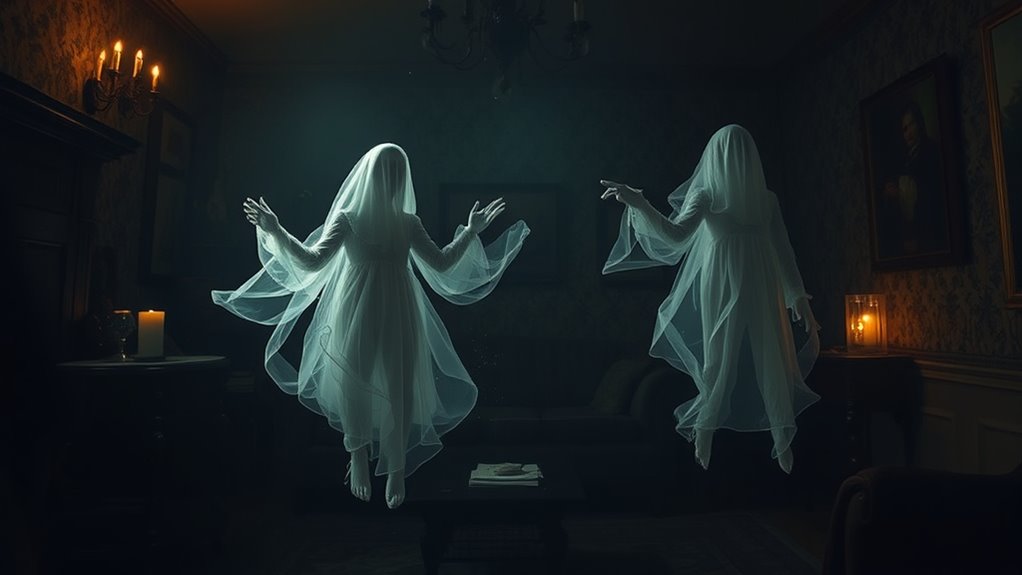
Many people believe that poltergeists are simply ghosts, but in reality, the truth is more complex. When you hear about objects moving on their own, loud noises, or unexplained disturbances, it’s tempting to think of spirits or spirits inhabiting a space. These are classic examples of paranormal activities, which have fascinated and terrified humanity for centuries. However, scientists and researchers have studied these phenomena extensively, offering explanations rooted in science rather than the supernatural. Rather than being supernatural entities, many of these incidents can often be traced back to psychological, environmental, or physical causes. This doesn’t mean all claims are easily explained, but it does suggest that you shouldn’t jump to supernatural conclusions without considering scientific explanations first.
Poltergeist activity is often characterized by noisy, disruptive events, but these occurrences tend to happen in specific contexts. For instance, young adolescents, especially during periods of emotional turmoil, have been linked to what is called “psychokinetic” phenomena—actions seemingly caused by the mind without physical interaction. In such cases, the disturbances are believed to be manifestations of subconscious stress rather than spirits. Scientific investigations have shown that sometimes these events are the result of natural causes like structural issues in buildings, drafts, or vibrations from nearby machinery. For example, a loose window latch or settling of a house can generate knocking sounds or cause objects to shift unexpectedly. When you look at reports of poltergeist activity through a scientific lens, many of these events can be replicated or explained through physical means or human perception biases.
Additionally, understanding the influence of perception and suggestion on interpretation is crucial, as it can significantly distort how phenomena are perceived and reported. If someone strongly believes in ghostly activity, they might interpret normal sounds or movements as paranormal. This is reinforced by the power of suggestion, folklore, and media portrayals, which can make ordinary phenomena seem extraordinary. Psychological factors like hallucinations, sleep paralysis, or heightened states of anxiety can also cause individuals to perceive paranormal activity that isn’t actually happening. Researchers have found that in many reported cases, rational explanations such as faulty wiring, drafts, or psychological states fit the evidence better than any supernatural hypothesis.
Top picks for "myth reality poltergeist"
As an affiliate, we earn on qualifying purchases.
Frequently Asked Questions
Are Poltergeists More Common Than Other Ghosts?
You might think poltergeists are more common than other ghosts because of their dramatic paranormal activity and ghostly manifestations. While reports vary, poltergeist activity tends to be more noticeable and disruptive, making it seem more frequent. However, many believe that these phenomena are often linked to psychological factors or other explanations. Overall, poltergeists are relatively rare compared to the widespread ghostly manifestations reported across different cultures.
Can Poltergeists Cause Physical Injuries?
Think of paranormal energy as a wild storm—sometimes it can cause physical injuries. Yes, poltergeists can cause physical harm, especially if their energy is strong enough. They’re believed to manipulate objects and release force, which might lead to bumps, bruises, or worse. While evidence isn’t definitive, many believe that the chaotic energy they generate can indeed result in real, tangible injuries. Stay cautious if you encounter unexplained phenomena.
Do All Cultures Believe in Poltergeists?
You’ll find that not all cultures believe in poltergeists, as belief systems vary widely around the world. Some cultures see them as mischievous spirits, while others don’t recognize them at all. Cultural variations influence how people interpret strange phenomena, so your view on poltergeists depends heavily on your cultural background. Understanding these differences helps you see why some societies embrace these spirits, and others dismiss them entirely.
How Do Scientists Explain Poltergeist Activities?
Scientists explain poltergeist activities as results of environmental factors and quantum anomalies. You might notice unexplained noises or objects moving because of natural causes like electrical issues, drafts, or structural vibrations. Some researchers suggest quantum anomalies could influence physical matter in strange ways, but these theories remain unproven. Generally, scientific explanations focus on tangible, observable phenomena rather than supernatural forces, emphasizing environmental and physical factors over ghostly explanations.
Are Children More Susceptible to Poltergeist Phenomena?
You might wonder if children are more susceptible to poltergeist phenomena, and they often are. Child psychology suggests that kids are more emotionally reactive and impressionable, which could make them more prone to perceived paranormal susceptibility. Their vivid imaginations and less-developed critical thinking skills mean they’re more likely to interpret strange noises or movements as supernatural, even if those experiences have natural explanations.
Conclusion
So, next time you hear a loud bang or see objects move on their own, remember: you might be witnessing a ghost, or perhaps just the myth of poltergeists alive and well. Ironically, what we fear as supernatural might simply be misunderstood phenomena. Whether ghosts or not, the mystery endures, proving that sometimes, the truth is more elusive than the specter haunting your mind. After all, belief often shapes what we see—and what we refuse to see.