![The Flat Earth Space Program [OC]](https://moleopedia.com/wp-content/uploads/2026/09/the-flat-earth-space-program-oc-featured-200x110.jpg)
TL;DR

Get books and cozy reading nights delivered free with Prime
- Fast, free delivery on millions of items
- Prime Video, Amazon Music and more included
- Member-only deals all year
Robert F. Kennedy Jr. recently referenced chemtrails, a conspiracy theory dismissed by scientists. His comments have reignited debate amid rising public interest, though experts confirm the theory is unfounded.
During a recent public appearance, Robert F. Kennedy Jr. publicly referenced chemtrails, a conspiracy theory claiming that governments or agencies are secretly spraying chemicals from aircraft for undisclosed purposes. This statement has attracted significant media attention and concern among scientists and public health officials, as the theory has been thoroughly debunked by experts.
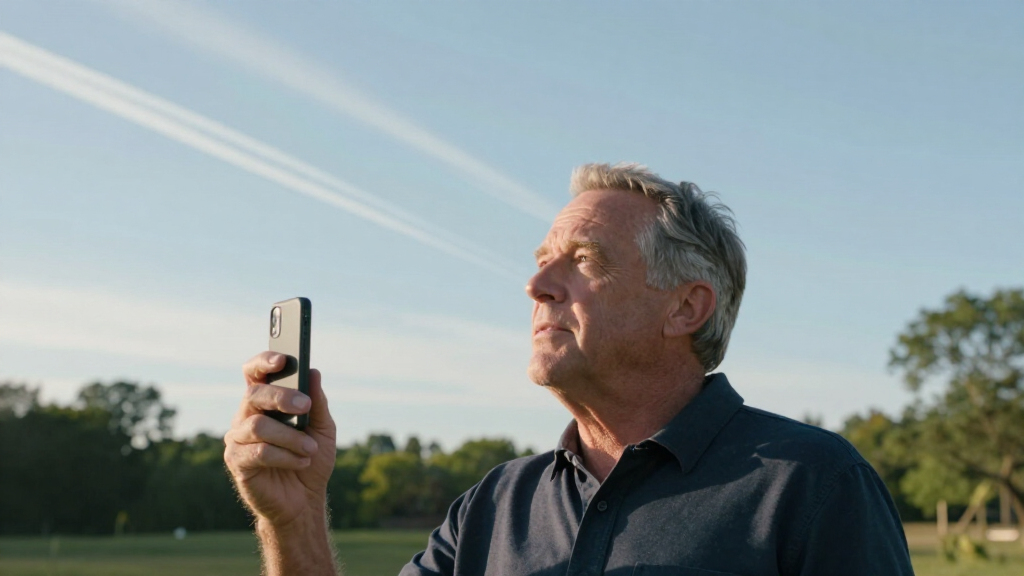
Kennedy’s remarks came during a speech where he questioned the transparency of government activities related to weather modification and environmental control. While he did not explicitly endorse the conspiracy, he mentioned examining the phenomenon of aircraft contrails and suggested that some might be evidence of chemical spraying. Experts, however, confirm that chemtrails are a myth, and what Kennedy alluded to are scientifically explained contrails—water vapor trails produced by aircraft engines at high altitudes.
Scientists and authorities have repeatedly stated that there is no credible evidence to support claims that governments are secretly dispersing chemicals via aircraft for nefarious purposes. The U.S. Environmental Protection Agency (EPA), the Federal Aviation Administration (FAA), and numerous scientific studies have dismissed chemtrail theories as baseless. Kennedy’s comments have thus reignited a long-standing controversy rooted in misinformation.
Why RFK Jr.’s Comments on Chemtrails Matter Now
This development matters because Kennedy’s prominence as a political figure and environmental advocate lends credibility—at least in perception—to conspiracy theories that have been scientifically debunked. His comments could influence public opinion, potentially spreading misinformation about environmental and health safety issues. This is particularly relevant amid ongoing debates over government transparency and health policies, where conspiracy theories often gain traction.
Moreover, the resurgence of interest in chemtrails underscores the challenge of combating misinformation in the digital age. Public figures referencing such theories can inadvertently legitimize them, making it harder for scientists and policymakers to communicate accurate information about environmental phenomena and health risks.
As an affiliate, we earn on qualifying purchases.
Background on Chemtrail Conspiracy Theory and Public Discourse
The chemtrail conspiracy theory emerged in the late 1990s, claiming that governments or secret agencies are spraying chemicals from aircraft for purposes such as mind control, weather manipulation, or population control. Despite widespread skepticism, the theory gained popularity on social media and among certain advocacy groups. Scientific consensus dismisses chemtrails as a myth, explaining that visible aircraft trails are simply contrails—condensed water vapor that forms at high altitude.
Kennedy’s prior statements on environmental issues have sometimes been controversial, but referencing chemtrails is a new development that aligns with a pattern of questioning official narratives. Historically, public officials and scientists have repeatedly clarified that there is no evidence supporting chemtrail claims, emphasizing transparency and scientific integrity.
The current spike in interest may be linked to broader concerns about government secrecy and environmental manipulation, which often fuel conspiracy theories. However, experts warn that such theories can distract from real environmental issues and undermine public trust in science and institutions.
Unconfirmed Aspects of Kennedy’s Remarks and Public Reaction
It is not yet clear whether Kennedy endorses the chemtrail theory or is merely raising questions. His comments have sparked debate, but he has not provided evidence supporting the claims. The full context of his statements and whether he will clarify his position remains unknown. Public reactions are mixed, with some supporters echoing his concerns and others dismissing them as misinformation.
Experts warn that without clarification, Kennedy’s remarks could be misinterpreted or exploited to spread conspiracy theories further. The extent of his influence on public opinion and whether he will address the controversy remains to be seen.
Next Steps in Addressing the Chemtrail Controversy
Kennedy is expected to face increased scrutiny, and there may be calls for him to clarify his statements or retract any implications supporting the chemtrail theory. Scientists and public health officials are likely to reinforce the scientific consensus through public statements and educational outreach.
Media coverage may focus on analyzing the impact of his remarks and the broader issue of misinformation. Additionally, policymakers and advocacy groups could use this incident to push for greater transparency and fact-checking in political discourse.
In the coming weeks, it remains uncertain whether Kennedy will further address the topic or if the controversy will fade as new issues emerge.
Key Questions
Did RFK Jr. endorse the chemtrail conspiracy theory?
There is no clear evidence that Kennedy explicitly endorsed the theory; he mentioned examining contrails and raised questions, but did not confirm the existence of chemtrails.
What do scientists say about chemtrails?
Scientists and authorities have repeatedly stated that chemtrails are a myth, and what people see are simply contrails—water vapor trails produced by aircraft engines.
Could Kennedy’s comments influence public beliefs?
Yes, given his prominence, his remarks could lend credibility to conspiracy theories among his followers or the broader public, potentially spreading misinformation.
Will Kennedy clarify his position on chemtrails?
It is currently unknown whether Kennedy will issue further statements or clarify his remarks. His future comments will likely influence the ongoing controversy.
Why is this controversy significant now?
The renewed attention to chemtrails amid Kennedy’s comments highlights ongoing challenges in addressing misinformation and maintaining public trust in scientific explanations.
Source: fediverse
Fall Picks
fall essentials
As an affiliate, we earn on qualifying purchases.