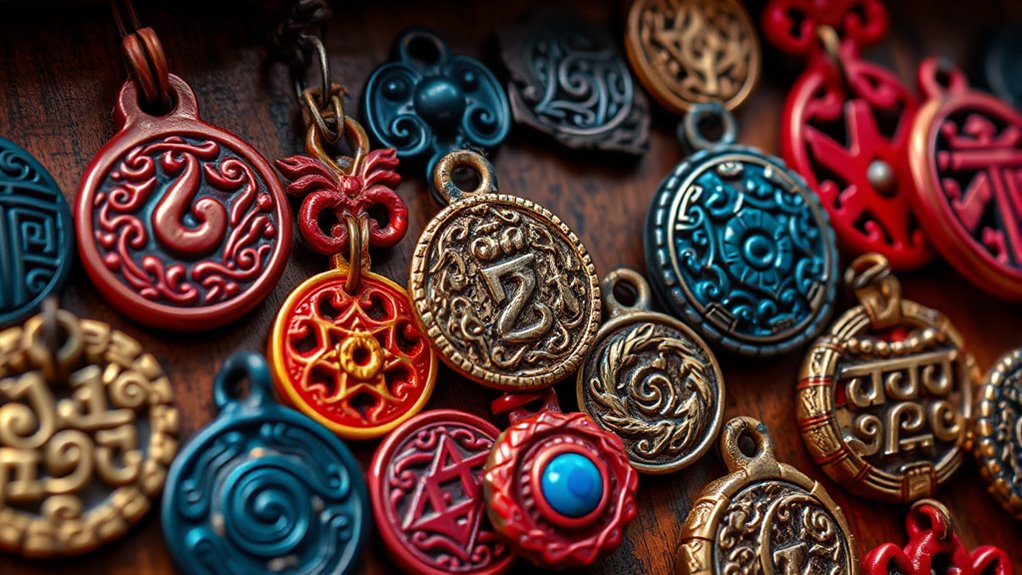

Protective talismans have been used across many cultures for centuries to ward off evil, bring good luck, and evoke safety. They are crafted from materials like stones, metals, or natural elements and often feature symbols with spiritual significance. These objects serve as tangible links between the physical and spiritual worlds, embodying hopes and cultural values. Their enduring power lies in their ability to connect personal beliefs with collective traditions—exploring their history reveals even more fascinating insights.
Key Takeaways
- Protective talismans are culturally significant objects believed to ward off evil and bring good fortune across diverse societies.
- They are crafted from materials like stones, metals, bones, or cloth, each carrying specific symbolic meanings.
- Historically, civilizations used amulets, such as scarabs, crosses, or eye charms, to invoke divine protection and health.
- The symbolism of talismans varies by culture but generally represents spiritual connection, luck, and safety.
- Their enduring appeal lies in their role as tangible links to collective beliefs, hopes, and spiritual safeguarding.
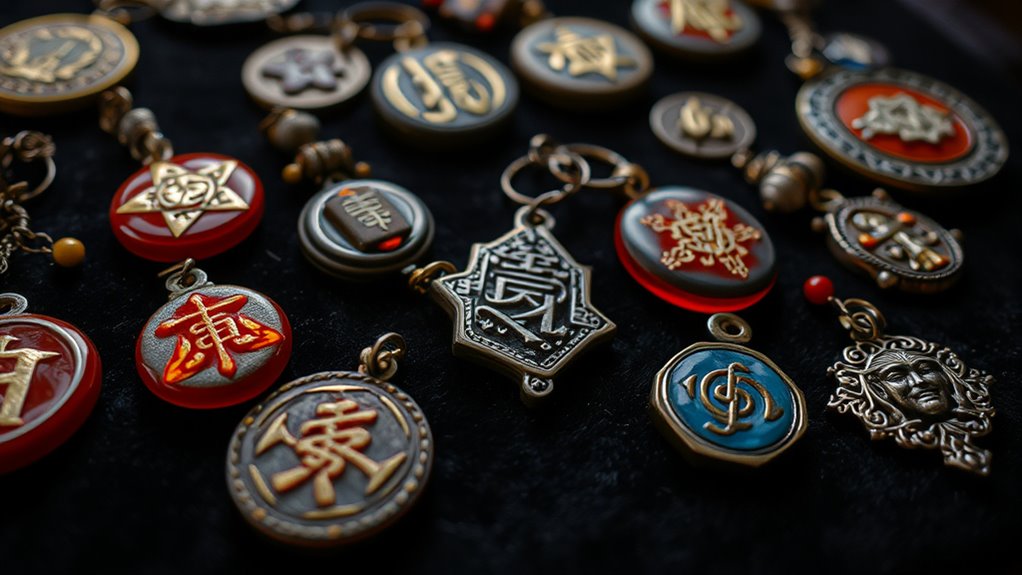
Protective talismans have been used across cultures for centuries as symbols of safety and good fortune. When you wear or carry such objects, you’re participating in a tradition that spans thousands of years, rooted in deep beliefs about protection and luck. The amulets symbolism embedded in these items often reflects cultural values, spiritual beliefs, and hopes for safeguarding against harm. Understanding the history of talismans reveals that they weren’t just decorative; they were powerful tools believed to influence your destiny, ward off evil, and bring blessings. Throughout history, people have crafted amulets from various materials—stones, metals, bones, or cloth—each with specific meanings. For example, ancient Egyptians used scarabs and eye charms to protect travelers and ensure health, while Europeans relied on symbols like the horseshoe or the evil eye to ward off negativity.
The history of talismans shows that nearly every civilization created objects meant to serve as protective charms. In ancient China, jade talismans represented purity and spiritual protection, often worn during rituals or as jewelry. The Babylonians and Persians also used amulets inscribed with symbols or prayers to invoke divine protection. During the Middle Ages, Christian relics and crosses became popular amulets believed to shield wearers from sickness or evil spirits. In Africa, amulets crafted with specific symbols and natural elements hold spiritual power, acting as barriers against misfortune. Across these cultures, the consistent theme is that talismans serve as tangible links between the physical and spiritual worlds, embodying hopes and fears in a form that can be held, worn, or displayed.
You might find that the amulets symbolism varies based on cultural context, but the core idea remains the same: these objects act as protective talismans that channel spiritual energy toward your safety. Whether it’s a simple charm or an elaborate artifact, the history of talismans underscores their significance beyond mere ornamentation. They carry stories, beliefs, and intentions that resonate across generations. When you choose a talisman, you’re not just selecting a pretty object—you’re engaging with a tradition that recognizes the power of symbols to influence your well-being. The enduring appeal of protective talismans lies in their ability to connect you to a collective sense of hope and security, rooted in a rich history that recognizes the profound influence of symbolism in shaping your life and safeguarding your journey.
protective talisman amulet
As an affiliate, we earn on qualifying purchases.
As an affiliate, we earn on qualifying purchases.
Frequently Asked Questions
Can Protective Talismans Be Personalized for Specific Individuals?
Yes, you can personalize protective talismans for specific individuals using various personalization techniques. By tailoring symbols, materials, or inscriptions to reflect the person’s unique energies or intentions, you augment their effectiveness. Personalization empowers you to create a stronger connection between the talisman and its wearer, making it more meaningful and potent. This individual empowerment ensures that the talisman resonates deeply, offering better protection and positive energy tailored precisely to the person’s needs.
Are There Any Cultural Restrictions on Using Certain Talismans?
Think of protective talismans as delicate threads woven into the fabric of cultural beliefs. You should be mindful of cultural taboos and regional beliefs, as some symbols might carry deeper meanings or sacred significance. Using certain talismans without understanding their cultural context can cause offense or spiritual imbalance. Respect the traditions behind them, and you’ll honor the energy they’re meant to protect, ensuring your intentions align with local customs.
How Do I Cleanse or Recharge My Protective Talisman?
To cleanse or recharge your protective talisman, start with energy clearing by holding it under running water or smudging it with sage or incense. Incorporate ritual practices like visualizing positive energy or setting intentions while doing so. You can also leave it in moonlight overnight for recharging. Regularly performing these steps helps maintain the talisman’s protective power and keeps its energy vibrant and effective.
Can Protective Talismans Be Combined for Enhanced Protection?
Yes, you can combine protective talismans for enhanced protection through talisman combinations. When you create a protective synergy, the energy of each talisman amplifies the others, strengthening your overall defense. To do this effectively, select talismans with complementary energies and focus your intention on unified protection. Trust your intuition in choosing the right combinations, and regularly recharge or cleanse them to maintain their effectiveness.
Do Protective Talismans Have Any Scientifically Proven Effects?
Scientific studies haven’t proven that protective talismans have direct, measurable effects. Instead, their perceived benefits often stem from the placebo effect, where your belief in their power boosts your confidence and sense of safety. While many find comfort and reassurance using talismans, it’s important to remember that their actual protective abilities lack scientific validation. Trust your intuition, but also rely on proven safety measures for genuine protection.
spiritual protection stone charm
As an affiliate, we earn on qualifying purchases.
As an affiliate, we earn on qualifying purchases.
Conclusion
Now that you know the basics of protective talismans, you can start choosing one that resonates with you. Think of it as a personal shield, like an anchor in a storm, providing comfort and strength. Remember, the power of a talisman lies in your belief and intention. Trust in its energy, and it’ll become a steadfast protector on your journey. Embrace this ancient practice, and let your talisman be a beacon of safety and hope.
cultural protective talisman jewelry
As an affiliate, we earn on qualifying purchases.
As an affiliate, we earn on qualifying purchases.
handmade protective amulet
As an affiliate, we earn on qualifying purchases.
As an affiliate, we earn on qualifying purchases.