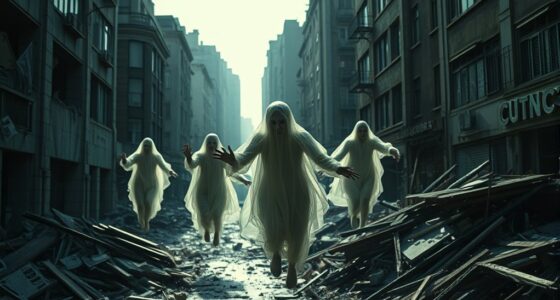

Time slips are strange events where time seems to warp, pulling you into different eras or moments from the past or future. You might see ghosts in period clothing or witness scenes from another time right before your eyes. These phenomena often occur in historic sites or old buildings, challenging your perception of reality. If you’re curious about what causes these moments and what they might mean, exploring this mysterious phenomenon can offer intriguing insights.
Key Takeaways
- Time slips are brief phenomena where individuals experience a sudden, unexplained shift into a different time period or scene.
- They often occur in historically significant locations, with witnesses seeing people or scenes from past eras.
- The phenomenon is linked to paranormal theories, suggesting possible overlaps of alternate timelines or dimensions.
- Explanations include reality glitches, energy portals, or psychological perceptions, though no definitive cause exists.
- Time slips challenge our understanding of linear time, hinting at a more fluid and mysterious nature of reality.

Have you ever experienced a moment where time seemed to warp, pulling you into a different moment or past event? If so, you’re not alone. Many people report sudden, inexplicable shifts that feel like stepping into another era. These experiences are often linked to paranormal phenomena, where the boundaries of time seem to blur, allowing glimpses into the past or future. Such moments are commonly described as time slips, and they’re often associated with encountering historical anomalies—events or locations that defy conventional understanding of history. When you find yourself caught in a time slip, it’s as if the fabric of reality momentarily tears, revealing a different layer of existence.
Experiencing a time slip feels like reality momentarily shifting, revealing hidden layers of the past or future.
These episodes are mysterious and fascinating because they challenge our grasp of linear time. Paranormal phenomena like time slips tend to occur in specific locations—old buildings, ancient sites, or areas with a heavy historical significance. Sometimes, you might see a street filled with people dressed in clothing from centuries ago, or you could witness a scene from a different era playing out before your eyes. These moments can last seconds or minutes, but they leave a profound impact, making you question what’s real. Many witnesses report feeling a sense of disorientation or awe, as if they’ve stepped into another world. Some even believe these experiences are windows into alternate realities or layers of time, where history is layered over the present.
Historical anomalies are often at the heart of these stories. They involve locations or events that seem out of place or impossible within our understanding of history, such as structures appearing older than they should or witnesses seeing ghostly figures in period clothing. These anomalies fuel speculation about the existence of alternate timelines or dimensions, where different versions of history coexist. For some, time slips are proof of paranormal phenomena—glitches in the fabric of reality caused by unseen forces or energy portals. Others see them as psychological phenomena or collective hallucinations, but the recurring reports keep the mystery alive. The idea that dimensional overlap might be involved adds an intriguing layer to these mysteries.
Whether you believe in the supernatural or see these experiences as psychological quirks, time slips continue to intrigue. They invite us to question the nature of reality and our place within it. If you ever find yourself transported momentarily to a different time, remember you’re not alone. These encounters with historical anomalies remind us that time might be more fluid and mysterious than we’ve been led to believe, offering a tantalizing glimpse into a world where past, present, and future may intertwine in ways we don’t yet understand.
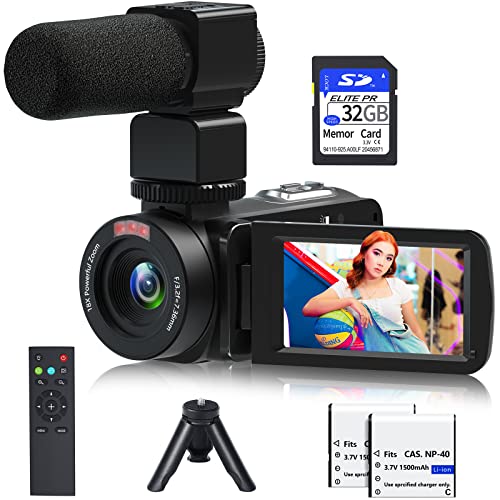
Video Camera, 1080P 30MP Camcorder IR Night Vision Vlogging Camera for YouTube,3.0" LCD Screen 18X Digital Zoom Recorder Camera with Remote Control, Microphone, Mini Tripod, 2 Battries, 32GB SD Card
【Video Camera Camcorder】--This 30FPS video camera recorder movies in 1080P resolution.It includes remote control, microphone, mini tripod, 2...
As an affiliate, we earn on qualifying purchases.
Frequently Asked Questions
Can Time Slips Be Scientifically Proven?
You can’t scientifically prove time slips yet because they often involve memory distortion, making events seem out of place. Quantum mechanics suggests some possibilities for unusual phenomena, but it doesn’t confirm actual time slips. Your experiences might be explained by psychological factors rather than physical time travel. While intriguing, current science requires more concrete evidence before confirming that time slips are real, measurable, phenomena.
Are There Specific Triggers for Experiencing Time Slips?
You might experience time slips triggered by factors like vivid dream recall and memory distortion, which can blur your perception of time. Stress, fatigue, or intense emotions often heighten these triggers, making your mind more prone to slipping into past or future moments unexpectedly. Paying attention to your mental state and sleep patterns can help you better understand these triggers, possibly reducing their occurrence.
How Common Are Time Slips Among the General Population?
You’re not alone; time slips are relatively uncommon among the general population. The frequency prevalence varies, with most people experiencing them rarely or never. Demographic differences exist—some studies suggest younger adults or those under stress might be more prone. While intriguing, these episodes are usually fleeting and benign. If they happen frequently or cause concern, consulting a healthcare professional is a good idea to rule out underlying issues.
Do Time Slips Have Long-Term Psychological Effects?
Time slips can cause long-term psychological effects, especially if you experience frequent episodes. You might develop memory lapses or altered perceptions that linger, making you doubt your reality. These experiences can lead to anxiety or confusion, affecting your daily life. It’s important to seek support if you notice persistent symptoms, as addressing these issues early can help you manage the psychological impact and regain clarity.
Can Time Slips Be Intentionally Induced?
Yes, you can intentionally induce time slips through meditative practices or lucid dreaming. By focusing your mind and deepening your awareness, you create a mental environment similar to those experienced during spontaneous slips. Visualize your intentions clearly and remain relaxed, allowing your subconscious to guide you into altered perceptions of time. Just as meditation and lucid dreaming open doors to other dimensions, they can also facilitate purposeful time slips.

Video Camera Camcorder Full HD 1080P 30FPS 24.0 MP IR Night Vision Vlogging Camera Recorder 3.0 Inch IPS Screen 16X Zoom Camcorders Remote Control with 2 Batteries
♥24MP & 1080P FHD CAMCORDER - This digital video camera for YouTube supports shooting of Full HD 1080p(30FPS)...
As an affiliate, we earn on qualifying purchases.
Conclusion
As you stand between moments, caught in the fragile threads of time, you realize how fleeting yet profound each slip can be. One second, you’re anchored in the present; the next, you’re lost in memories or dreams. It’s a reminder that time’s gentle passage can both heal and haunt. Embrace these slips—cherish the past, remain curious about the future—because in the blink of an eye, everything can change forever.

ORDRO Camcorders HDV-V12 HD 1080P Video Camera Recorder Infrared Night Vision Camera Camcorders with 16G Memory Card and 2 Batteries
1080P Video camera: 1920x1080P (FHD) resolution, up to 30.0 mega pixels. 3.0 inches TFT-LCD screen (270 degrees rotation)....
As an affiliate, we earn on qualifying purchases.

VETEK Video Camera 8k Camcorder 48MP UHD WiFi IR Night Vision Vlogging Camera for YouTube, 18X Digital Zoom 3.0“ LCD Screen Digital Camera with Microphone, 32G SD Card, Remote Control and 2 Batteries
【8K 48MP Video Camera】It adopts for newest upgraded sensor.This vlog camera max supports 8K(7680X4320)15fps video resolution,(It also supports...
As an affiliate, we earn on qualifying purchases.