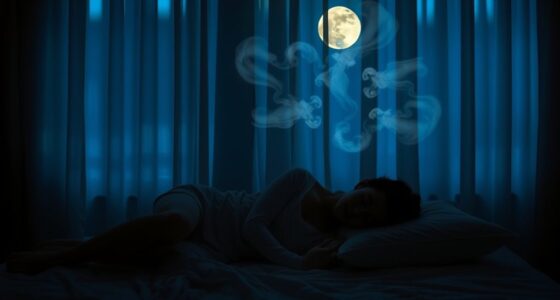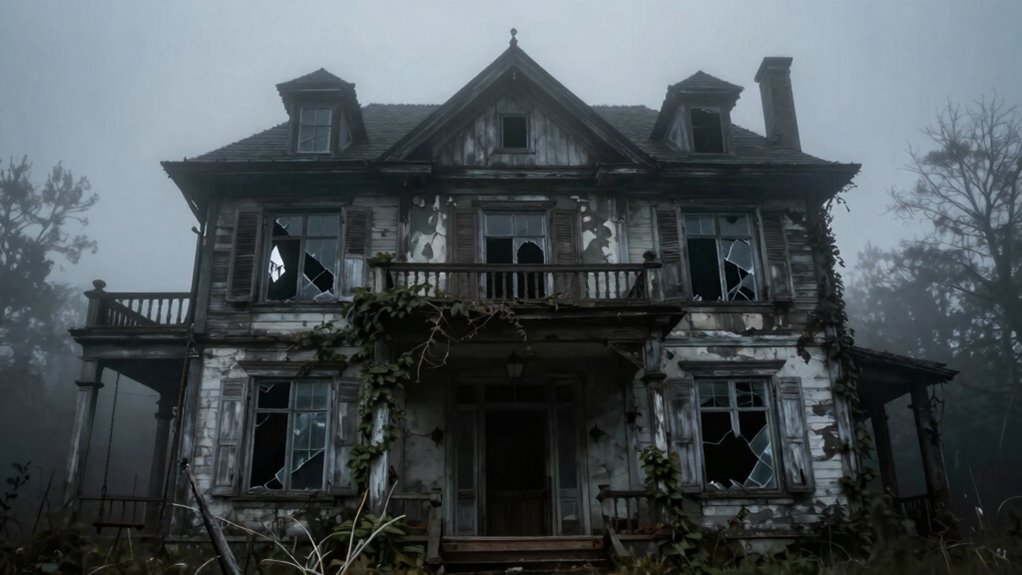

A place feels haunted when your senses pick up on subtle cues like drafts, creaky floors, or flickering lights that your mind interprets as supernatural. This perception is heightened by folklore, stories, and cultural beliefs that make the environment feel eerie. The atmosphere, along with your expectations and fears, amplifies minor anomalies into ghostly experiences. If you want to understand how these factors work together to create the haunted feeling, there’s more to uncover.

Get books and reading essentials delivered free — and shop member deals
- Fast, free delivery on millions of items
- Access to Prime Big Deal Days deals on October 6–7
- Prime Video, Amazon Music and more included
Key Takeaways
- Subtle environmental cues like drafts, creaky floors, or flickering lights trigger subconscious associations with supernatural presence.
- Folklore and cultural stories embed history and mystery, shaping perceptions of hauntedness.
- Aged architecture, dim lighting, and tragic histories enhance the eerie atmosphere and psychological tension.
- Expectations and beliefs amplify minor stimuli, making spaces feel more haunted than they are.
- The interplay of perception, environment, and cultural narratives transforms ordinary spaces into haunted-appearing locations.
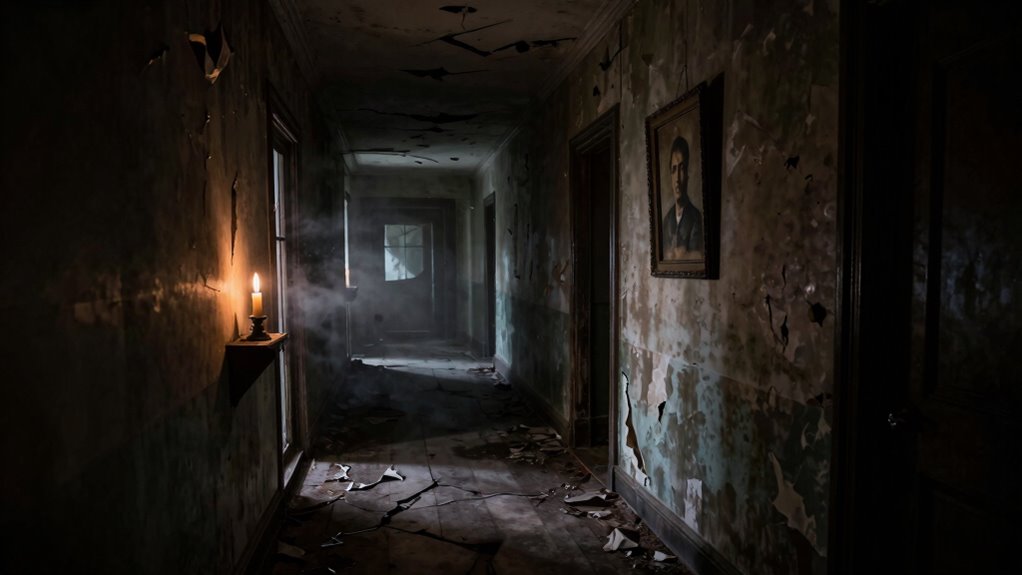
Have you ever walked into a building and immediately felt an eerie, unsettling presence, even if there’s no obvious reason? That sensation is at the core of what makes a place feel haunted. Often, it’s not just about the physical space but what your mind perceives, influenced heavily by spirits and folklore. These stories, passed down through generations, embed certain locations with a sense of history and mystery. When you hear accounts of ghostly sightings or strange sounds associated with a place, your subconscious begins to accept these narratives. Your brain then interprets subtle cues—drafts, creaky floorboards, or flickering lights—as evidence of something supernatural. This interplay between folklore and your psychological response amplifies the feeling of being in a haunted place.
The psychological effects are powerful. When you believe a space is haunted, your mind becomes hyper-aware of any unusual stimuli. A sudden noise or an unexplained shadow can trigger a fight-or-flight response, even if there’s a rational explanation. Your perception is heightened, and every creak or whisper becomes a sign of spirits lurking nearby. This heightened state of awareness makes even minor anomalies feel more significant, reinforcing the sense that the place is haunted. It’s a self-perpetuating cycle—your belief fuels your perception, and your perception confirms your belief. Over time, this can lead to a genuine feeling of fear or unease, rooted more in your mind than any actual ghostly presence.
Additionally, the atmosphere of a location—dim lighting, aged architecture, or a history of tragedy—can intensify these effects. Places with a storied past, especially those linked to tragedy or death, tend to evoke stronger psychological responses. The environment can seem to carry the echoes of its history, making it easier for your mind to imagine spirits lingering. Even without actual spirits, folklore about a space’s haunted past creates an ambient tension. This ambiance primes your senses to be on alert, heightening your emotional reactions to any odd occurrence. Furthermore, environmental cues such as temperature or sound can subtly influence your perception of a space’s haunted qualities. These cues often trigger memories or feelings that amplify the haunted atmosphere, making the experience more immersive. Research into psychological responses demonstrates how powerful expectation and perception are in shaping our experiences of haunted locations.
In fact, cultural narratives surrounding certain places can deeply influence how haunted they feel, often reinforcing the psychological effects. These stories are often passed down and become part of the collective consciousness, further shaping perceptions. Ultimately, what makes a place feel haunted isn’t solely about spirits or folklore but how those stories and your psychological responses intertwine. Your mind’s interpretation, shaped by cultural narratives and personal fears, transforms ordinary spaces into settings of mystery and dread. It’s a complex mix of perception, belief, and environment—each element playing a role in how haunted a place truly feels to you.
As an affiliate, we earn on qualifying purchases.
Frequently Asked Questions
Can Natural Phenomena Create Haunted Sensations?
Yes, natural phenomena can create haunted sensations. You might experience optical illusions that distort your perception, making familiar surroundings seem eerie or ghostly. Eerie sounds, like wind whistling through cracks or creaking trees, can heighten this effect, making you feel uneasy or as if spirits are present. These natural factors trick your senses and amplify your fears, making a place feel haunted even without any supernatural presence.
Do Specific Architectural Features Influence Haunted Feelings?
Think of architecture as the stage where ghostly apparitions and eerie sounds perform. Sharp angles, narrow corridors, and creaky floorboards can heighten your senses, making you feel haunted. These features act like whispers from the past, stirring unease. You might feel watched or hear unexplained noises, simply because the design amplifies shadows and echoes. Your environment shapes your experience, turning ordinary spaces into haunted domains.
How Do Personal Beliefs Affect Perceptions of Haunted Places?
Your personal beliefs greatly influence how you perceive haunted places. If you hold superstitious beliefs or are strongly influenced by cultural narratives, you’re more likely to interpret strange sounds or sights as supernatural. These beliefs create a lens through which you view the environment, making you more prone to feel fear or unease. Your mindset shapes your experience, turning ordinary locations into seemingly haunted places based on what you believe or expect.
Are There Psychological Factors Behind Haunted Experiences?
Yes, psychological factors like visual perception and emotional memory play a big role in haunted experiences. When you visit a spooky place, your mind interprets ambiguous stimuli—like shadows or sounds—based on your expectations, creating a sense of eeriness. Emotional memories of past fears or stories can intensify these feelings, making you more likely to perceive the environment as haunted, even if there’s no real supernatural activity.
Can Historical Events Contribute to a Location’s Haunted Reputation?
Yes, historical events profoundly contribute to a location’s haunted reputation. You’ll find that historical legends and cultural narratives shape perceptions, adding layers of mystery and fear. When a tragic event or famous incident is linked to a place, it often becomes ingrained in local stories, fueling ghost stories and paranormal beliefs. These stories endure, making the site feel haunted even if no supernatural activity is proven.
Conclusion
When a place feels haunted, it’s often a mix of eerie sights, sounds, and stories that trigger your imagination. Your mind fills in gaps, making shadows seem sinister and creaky floors sound alive. Curiously, a 2019 survey found that 63% of Americans believe in ghosts, showing how widespread these feelings are. So, whether it’s history, atmosphere, or superstition, haunted places tap into universal fears, making them feel alive long after the lights go out.
Halloween Picks
halloween
As an affiliate, we earn on qualifying purchases.