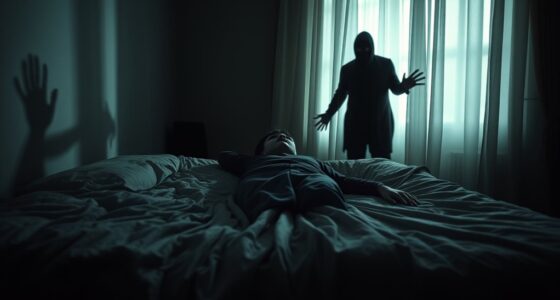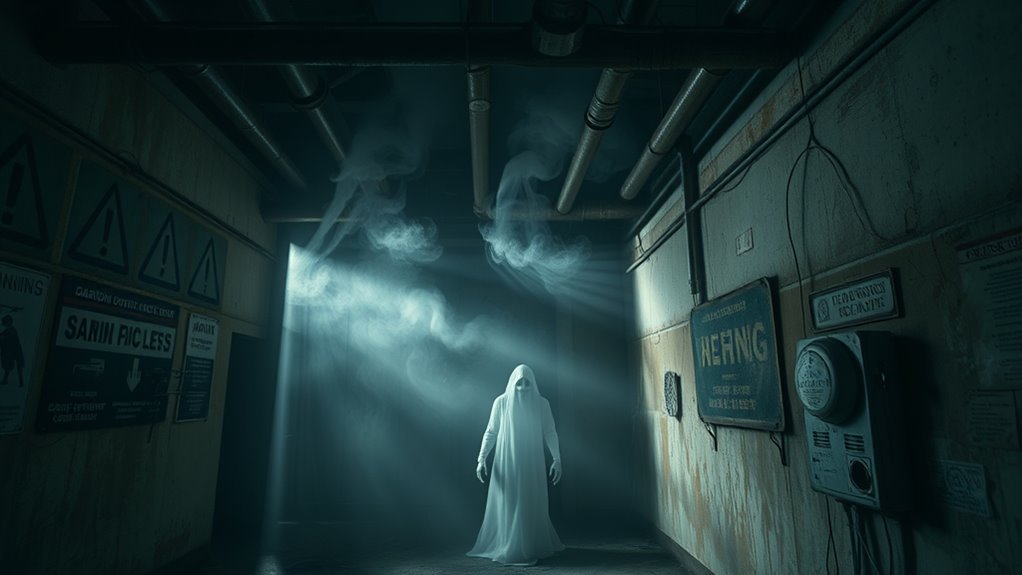

Carbon monoxide poisoning can cause symptoms like headaches, dizziness, and nausea, which often mimic supernatural experiences. Many haunting reports may actually stem from invisible, odorless CO leaks trapped inside homes, especially with poor ventilation or faulty appliances. Without detection devices, you may mistake these signs for paranormal activity. Understanding how atmospheric conditions and regular safety measures impact CO buildup helps you stay safe. Keep exploring to uncover more about how science explains these eerie phenomena.
Key Takeaways
- CO poisoning causes symptoms like headaches, dizziness, and nausea that mimic ghostly experiences, leading to misinterpretation of hauntings.
- Silent, odorless CO buildup from faulty appliances can cause physical symptoms mistaken for supernatural phenomena.
- Poor ventilation and atmospheric conditions can increase CO accumulation, making indoor spaces more prone to poisoning.
- Reliable gas detectors are essential to differentiate between true chemical hazards and perceived paranormal activity.
- Understanding the scientific causes of symptoms can dispel fears rooted in supernatural beliefs and promote safety awareness.
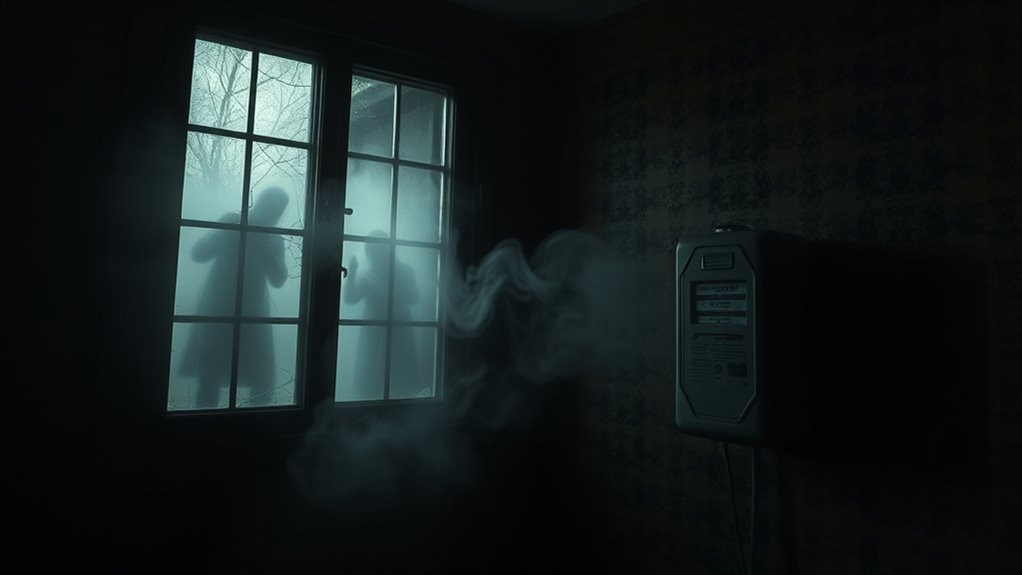
Many haunted reports and ghostly encounters may actually be linked to unseen dangers lurking in your home, with carbon monoxide poisoning often playing a silent role. This colorless, odorless gas can cause symptoms that mimic supernatural experiences, making it easy to mistake poisoning for paranormal activity. To stay safe, it’s essential to have reliable gas detectors installed throughout your house. These devices alert you when carbon monoxide levels become dangerous, providing a crucial warning before symptoms worsen. Without such detectors, you might remain unaware of the threat until it’s too late, especially because early signs—headaches, dizziness, nausea—are often mistaken for ordinary illnesses or stress.
Atmospheric conditions significantly influence how carbon monoxide accumulates and disperses inside your home. Poor ventilation, cold weather, and airtight windows can trap the gas, causing it to build up to hazardous levels. When the air becomes stagnant, even minor leaks from furnaces, water heaters, or faulty stoves can lead to dangerous concentrations. Conversely, windy or rainy weather may help disperse the gas, but relying solely on atmospheric conditions isn’t enough for safety. You need a proper monitoring system because the gas doesn’t always behave predictably. You might think that opening windows or increasing airflow will eliminate the danger, but without a gas detector, you won’t know if the levels are still unsafe.
Atmospheric conditions affect carbon monoxide buildup; detectors are essential for safety beyond just ventilation efforts.
Understanding the relationship between atmospheric conditions and gas buildup helps you appreciate why regular maintenance of appliances and proper ventilation are crucial. However, even with good ventilation, if there’s a leak or malfunction, carbon monoxide can still accumulate silently. This is why having a network of working gas detectors is your best defense. They continuously monitor the air and sound an alarm when dangerous levels are detected, giving you the chance to evacuate and seek help before symptoms develop into serious health issues. In many cases, people have reported ghostly phenomena—strange noises, cold spots, or feelings of dread—that disappear once the carbon monoxide source is identified and eliminated.
Additionally, studies show that high-quality projectors can improve the clarity and accuracy of images, which may influence how we perceive our environment, including reports of hauntings. Ultimately, recognizing that these haunting reports could be linked to unseen, odorless dangers shifts your perspective on safety. You learn that what feels supernatural might have a very real, physical cause. By understanding the importance of gas detectors and atmospheric conditions, you can prevent tragedy and dispel fears rooted in chemical hazards. Staying vigilant and proactive ensures your home remains a safe environment, free from the silent, invisible threat of carbon monoxide poisoning.
Top picks for "science behind carbon"
Open Amazon search results for this keyword.
As an affiliate, we earn on qualifying purchases.
Frequently Asked Questions
Can Carbon Monoxide Exposure Cause Long-Term Mental Health Issues?
Yes, carbon monoxide exposure can cause long-term mental health issues. You might experience neuropsychological effects like memory problems, difficulty concentrating, or mood swings. It can also threaten your emotional stability, leading to anxiety or depression even after the initial poisoning. If you suspect exposure, it is crucial to seek medical attention promptly, as early intervention can help prevent or minimize these lasting mental health effects.
Are There Specific Architectural Features That Increase CO Risk?
You should be aware that poor ventilation design and improper chimney positioning can substantially increase your risk of carbon monoxide exposure. If your home lacks adequate airflow or has chimneys that vent incorrectly, dangerous CO can accumulate unnoticed. make certain your ventilation systems are well-designed and chimneys are correctly positioned and maintained. Regular inspections and upgrades can help prevent CO buildup, keeping you and your loved ones safe from poisoning and potential hauntings linked to these hazards.
How Do Cultural Beliefs Influence Reports of Haunted Houses?
Imagine a house whispering secrets through shadowed corners—that’s how cultural beliefs shape haunted house reports. Your belief system colors what you see, turning ordinary creaks into ghostly voices or spectral figures. Cultural interpretations act like a lens, magnifying fears or embellishing tales. When you’re steeped in stories of spirits, your mind is more likely to interpret strange sounds or sights as supernatural, fueling haunting reports from the house.
Can CO Poisoning Induce Hallucinations Similar to Paranormal Experiences?
Yes, CO poisoning can induce hallucinations that resemble haunted house myths. When you experience CO hallucinations, you might see or hear things that feel paranormal, which can be mistaken for ghostly activity. These hallucinations often include visions of shadows or figures, similar to haunted house stories. So, if you’re in a poorly ventilated space with high CO levels, your mind might create experiences that seem like supernatural encounters.
What Are the Latest Technological Advances in Detecting CO Leaks?
You should know that the latest advances in detecting CO leaks include smart sensors that offer real-time monitoring. These innovative devices connect to your smartphone, alerting you instantly if a leak is detected. Leak detection technology has become more accurate and affordable, making it easier to safeguard your home. Installing these smart sensors ensures you get early warnings, preventing dangerous CO buildup and providing peace of mind.
Conclusion
So, next time you hear strange noises or feel uneasy in a haunted house, consider the science behind it. Could it be a simple case of carbon monoxide poisoning rather than supernatural activity? Remember, this silent killer mimics many haunting reports, making it essential to stay alert. Isn’t it fascinating how science can explain things we once thought were paranormal? Stay curious, stay safe, and always check for the unseen dangers around you.