When you compress EVP audio, you’re reducing file size by discarding some sound details, often using lossy formats like MP3 or AAC. This process can introduce artifacts, like muffled sounds or warbling effects, which may mask genuine voices or create false impressions. Digital processing further complicates things by adding distortions or smoothing signals. Knowing how compression affects audio helps you understand the challenges; keep exploring to uncover more about this complex science.
Key Takeaways
- Audio compression reduces data by discarding less critical audio information, often causing artifacts that can mimic EVPs.
- Lossy formats like MP3 introduce distortions such as ringing and muffling, which can obscure or resemble authentic voices.
- Lower bit rates increase compression, leading to more noticeable artifacts that may be mistaken for genuine EVP signals.
- Digital signal processing techniques, like noise reduction or equalization, can unintentionally add or amplify compression artifacts.
- Recognizing the characteristics of compression artifacts is essential to differentiate them from authentic EVPs and avoid misinterpretation.
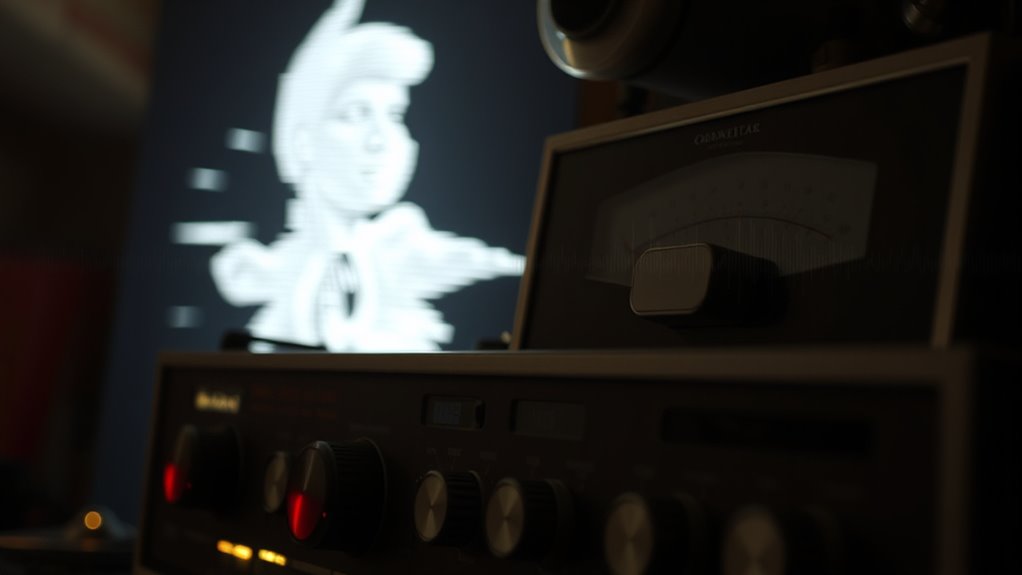
Electronics and digital audio processing often introduce compression artifacts that can distort the clarity of Electronic Voice Phenomena (EVPs). When you record or analyze these sounds, you’re relying heavily on audio compression techniques and digital signal processing to manage data size and enhance audio quality. However, these processes can inadvertently alter the original sound, making it harder to distinguish genuine voices from artifacts. Audio compression reduces file size by eliminating parts of the audio signal deemed less important, but in doing so, it can also remove subtle frequencies that carry essential information. Digital signal processing algorithms work to clean up recordings, reduce noise, and improve intelligibility, but they can sometimes overcorrect or introduce unnatural distortions. These distortions, known as compression artifacts, often appear as muffled sounds, warbling effects, or unnatural ringing, which can mask or mimic EVPs, complicating interpretations.
Digital audio processing can introduce artifacts that obscure or mimic genuine EVPs, complicating analysis and interpretation.
Understanding how audio compression impacts EVPs begins with recognizing that not all compression is equal. Lossy compression formats, like MP3 or AAC, intentionally discard some audio data to save space. If a recording of suspected EVP contains heavy compression, the original voice signals might be compromised, leading to artifacts that resemble speech or other sounds. Digital signal processing, while powerful for enhancing audio clarity, can sometimes amplify these artifacts if not carefully calibrated. For example, noise reduction algorithms might inadvertently smooth out authentic EVP signals, or equalization filters might distort frequencies that are crucial for identifying voices. Additionally, advancements in digital signal processing techniques continue to influence how artifacts are introduced or mitigated during analysis.
You should be aware that the choice of codec, bit rate, and processing settings directly influence the presence and severity of compression artifacts. Lower bit rates tend to produce more noticeable distortions, while higher quality settings preserve more of the original audio but increase file size. When analyzing EVPs, it’s essential to consider whether the recording has undergone compression and how digital signal processing may have altered it. Sometimes, artifacts are mistaken for genuine voices because they share similar characteristics—like certain frequencies or patterns—highlighting the importance of understanding the technical background of your recordings.
In essence, digital signal processing and audio compression are double-edged swords. They can help uncover faint voices and improve audio clarity, but they can also introduce distortions that mimic or obscure real EVPs. To accurately interpret these phenomena, you must be cautious about how your recordings are processed, recognizing that artifacts caused by compression can be mistaken for authentic voices. Developing an awareness of these technical limitations ensures you approach EVP analysis with the necessary skepticism and precision, leading to more credible and scientifically grounded conclusions.

Music Software Bundle for Recording, Editing, Beat Making & Production – DAW, VST Audio Plugins, Sounds for Mac & Windows PC
No Demos, No Subscriptions, it's All Yours for Life. Music Creator has all the tools you need to…
As an affiliate, we earn on qualifying purchases.
As an affiliate, we earn on qualifying purchases.
Frequently Asked Questions
Do Compression Artifacts Vary Across Different EVP Recording Devices?
Yes, compression artifacts do vary across different EVP recording devices. You’ll notice that device variations influence how these artifacts appear, with some devices producing more noticeable distortions due to differing compression algorithms. Recording consistency also plays a role; inconsistent recording conditions or device quality can lead to varying artifact levels. To mitigate these effects, guarantee you use reliable equipment and maintain consistent recording settings, helping you obtain clearer EVP recordings.
Can Editing Software Introduce or Remove Compression Artifacts in EVPS?
Yes, editing software can introduce or remove compression artifacts in EVPs. During audio restoration, you might use software to clean up recordings, but it has limitations. Sometimes, it unintentionally adds artifacts while reducing noise, or removes existing ones, affecting the authenticity of the EVP. Be cautious with your editing, as software limitations can influence the final sound quality and the perceived paranormal significance.
How Do Environmental Factors Influence Compression Artifacts in EVP Recordings?
Environmental factors like ambient noise and microphone quality notably influence compression artifacts in EVP recordings. When there’s a lot of background noise, your device’s compression algorithms struggle to differentiate between sounds, often creating artifacts. Similarly, low-quality microphones tend to introduce or exaggerate compression effects, making artifacts more prominent. To minimize this, choose a good microphone and record in a quiet environment, ensuring clearer EVPs with fewer compression-related distortions.
Are Certain Audio Formats More Prone to Compression Artifacts in EVPS?
Yes, certain audio formats are more prone to compression artifacts in EVPs. Formats like MP3 or AAC use lossy compression, which can introduce artifacts that mimic EVP phenomena. To minimize these issues, you should use higher quality formats like WAV or FLAC, which retain more audio data. Proper artifact suppression techniques also help reduce unwanted compression effects, ensuring your EVP recordings are clearer and more reliable.
What Are the Best Practices to Minimize Compression Artifacts During EVP Analysis?
To minimize compression artifacts during EVP analysis, focus on maintaining signal clarity by using high-quality recording techniques. Use uncompressed or lossless formats like WAV whenever possible, as they preserve audio integrity. Avoid excessive editing or compression. Position your microphone carefully, reduce background noise, and record at ideal levels. These practices help guarantee your recordings are as clear as possible, reducing artifacts and making EVP analysis more accurate.

Digital Signal Processing in Audio and Acoustical Engineering
As an affiliate, we earn on qualifying purchases.
As an affiliate, we earn on qualifying purchases.
Conclusion
Understanding compression artifacts in EVPs is like peeling back layers of a foggy window—you reveal hidden distortions that can mimic or obscure genuine voices. By grasping the science behind these artifacts, you can better differentiate between digital noise and authentic signals. Remember, just as a painter chooses the right brushstrokes to create clarity, your knowledge sharpens your perception, helping you see through the digital haze and uncover the true essence of EVP recordings.
![WavePad Audio Editing Software - Professional Audio and Music Editor for Anyone [Download]](https://m.media-amazon.com/images/I/B1fcLEGCs6S._SL500_.png)
WavePad Audio Editing Software – Professional Audio and Music Editor for Anyone [Download]
Full-featured professional audio and music editor that lets you record and edit music, voice and other audio recordings
As an affiliate, we earn on qualifying purchases.
As an affiliate, we earn on qualifying purchases.
high bitrate MP3 encoder
As an affiliate, we earn on qualifying purchases.
As an affiliate, we earn on qualifying purchases.