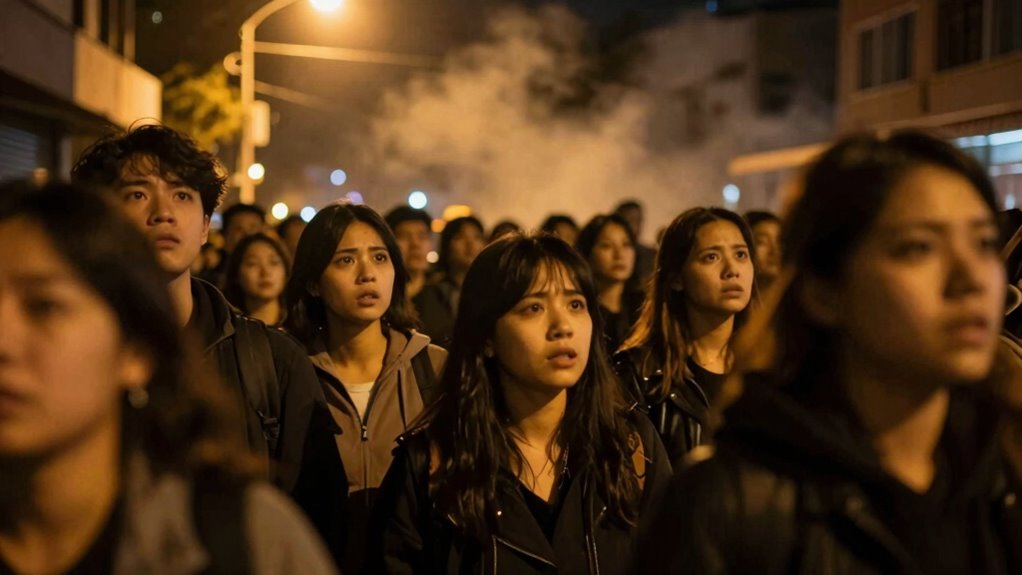

Fear influences your memory by making you focus on threatening or impactful details, often at the expense of accuracy. When you’re scared, your amygdala activates strongly, amplifying emotional significance but distorting other parts of your recollection. This can cause memories to change over time, embedding false details or blurring the full context. If you want to understand how trauma shapes what you remember and why memories can be unreliable, keep exploring this fascinating topic.

Get books and reading essentials delivered free — and shop member deals
- Fast, free delivery on millions of items
- Access to Prime Big Deal Days deals on October 6–7
- Prime Video, Amazon Music and more included
Key Takeaways
- Fear activates the amygdala, amplifying emotional details and often causing memories to focus on threatening aspects.
- Stress-related memory distortion leads to selective recall, emphasizing impactful or frightening details over accuracy.
- Trauma causes memories to change over time, influenced by new experiences, external suggestions, and emotional filtering.
- Fear-driven responses can embed false details, making it difficult to distinguish between real events and reconstructed memories.
- Memory distortions serve as a protective mechanism, shielding individuals from overwhelming emotional distress.

When you’re involved in a frightening event, your mind doesn’t just record what happens—it often alters the memory in ways you might not realize. Fear triggers a complex response in your brain, especially in areas linked to processing trauma impact. Instead of a clear, objective account, your memory can become distorted, shaped by the intense emotions you’re experiencing. This memory distortion isn’t a sign of forgetfulness or deception; it’s a natural reaction to trauma. Your brain prioritizes survival, which means it might highlight certain details while blurring or omitting others.
Fear alters memories, emphasizing threats and omitting details—an adaptive response to protect you from trauma’s overwhelming impact.
During a stressful situation, your amygdala, the brain’s emotion center, kicks into overdrive. It amplifies the emotional significance of what’s happening, often at the expense of accurate detail. As a result, your memory can become skewed, emphasizing aspects that seemed most threatening or impactful at the time. For example, if you’re in a chaotic scene, you might vividly remember the face of the person who threatened you but forget key contextual details, such as the setting or other bystanders. This selective recall is a direct consequence of trauma impact and memory distortion, where your mind subconsciously filters information to help you cope with the emotional aftermath. The brain’s response to trauma is also influenced by neuroplasticity, which can cause memories to change over time based on new experiences or external influences.
Fear not only influences what you remember but also how you remember it. The more traumatic the event, the more likely your memory will be altered over time. You might find that your recollections change with each retelling, or that they become influenced by external suggestions, media reports, or conversations with others. The fear-driven process of memory formation can embed false details or distort timelines, making it difficult to distinguish between what truly happened and what your mind has reconstructed under duress. This isn’t just happenstance — it’s a protective mechanism, although it can complicate legal testimonies or personal reflections. Memory reconstruction is a common phenomenon in these situations, demonstrating how malleable memories can be after trauma.
Understanding how trauma impact causes memory distortion helps you see why eyewitness accounts can sometimes be unreliable after frightening events. Your brain, in its effort to shield you from overwhelming feelings, reshapes memories in ways that might not align with reality. Recognizing this makes it easier to accept that your recollections, especially of traumatic incidents, are inherently vulnerable to change. Fear’s influence on memory isn’t a flaw; it’s a natural, adaptive response designed to help you survive, even if it sometimes leaves you questioning what’s true.
memory aid tools for trauma survivors
As an affiliate, we earn on qualifying purchases.
As an affiliate, we earn on qualifying purchases.
Frequently Asked Questions
How Long Does Fear-Induced Memory Distortion Last?
Fear-induced memory distortion can last from days to weeks, depending on your emotional resilience and the intensity of the fear. During this period, cognitive biases may skew your recall, making memories seem more vivid or altered. You might find it hard to trust your recollections, as fear subtly influences your perception. Strengthening emotional resilience can help minimize the duration and impact of these distortions, leading to clearer, more accurate memories over time.
Can Fear Memories Be Intentionally Altered or Erased?
Yes, fear memories can be intentionally altered or erased through techniques like memory reconsolidation and fear extinction. During reconsolidation, you can modify or weaken the original memory when it becomes malleable after recall. Fear extinction involves training your brain to dissociate the fear response from the memory, gradually reducing its power. These methods show promise in therapy but require careful application to achieve lasting change.
Does Fear Affect All Witnesses Equally?
Fear doesn’t affect all witnesses equally. While some exhibit remarkable emotional resilience, others experience intense physiological responses that distort memories. Ironically, those most overwhelmed by fear often recall events less accurately, making their memories unreliable. Your emotional resilience and physiological reactions shape how fear influences your perception. So, if you think you’re immune, remember that fear’s impact varies, sometimes rendering even the most confident witnesses vulnerable to distorted memories.
Are There Specific Types of Trauma That Influence Memory More?
Certain types of trauma, like life-threatening events or repeated abuse, impact memory more profoundly. These experiences can disrupt memory consolidation, making details either vivid or fuzzy. Your trauma resilience influences how well you process and recall such events; stronger resilience can buffer memory distortion. Overall, intense or prolonged trauma tends to leave more lasting, complex impressions on your memory, shaping what you remember and how you interpret those moments.
How Does Fear Impact Eyewitness Testimony Accuracy?
You might be surprised to learn that fear can reduce eyewitness accuracy by up to 50%. Fear impacts memory consolidation, making certain details more vivid while others fade, which skews recall. It also hampers emotional regulation, leading to heightened stress that interferes with clear memory formation. When you’re scared, your brain prioritizes survival over accuracy, often causing you to remember events differently than they actually happened.
Conclusion
Think of your memories as a delicate tapestry, woven from threads of truth and perception. When fear enters, it’s like a storm that rips through, tugging and twisting those threads, often blurring what was once clear. Your mind, trying to shelter you, may distort the picture. So, next time you recall a tense moment, remember—fear is the storm that can change the story, leaving behind a version that’s more about survival than fact.
Evergreen bestsellers Picks
bestsellers
As an affiliate, we earn on qualifying purchases.