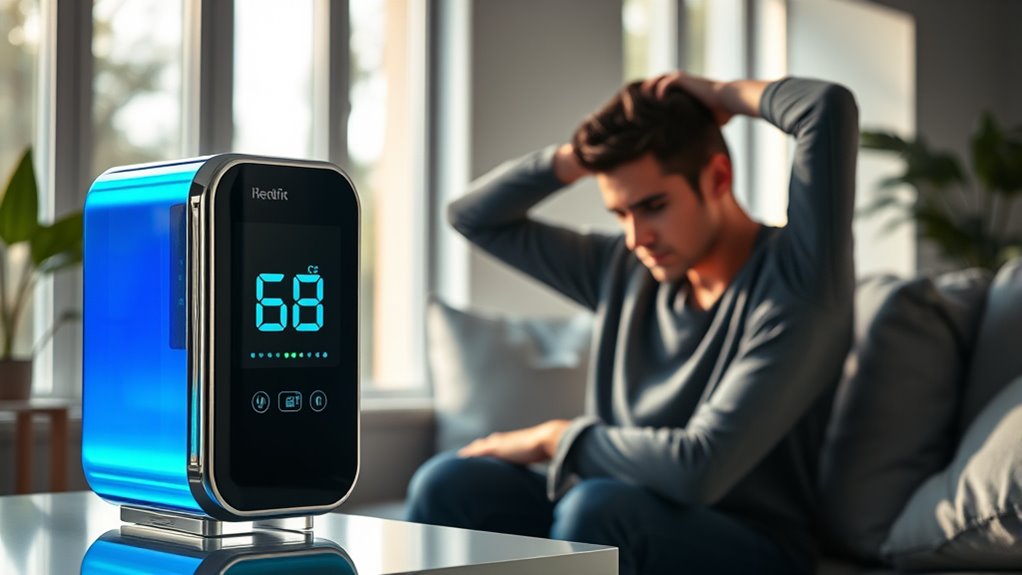

When indoor CO2 levels rise, it can impair your brain function and increase feelings of anxiety. High CO2 reduces oxygen supply and causes waste gases to build up, making you feel restless, irritable, or emotionally unstable. Poor ventilation worsens these effects by allowing CO2 to accumulate, affecting your mood and mental clarity. Understanding how ventilation influences these symptoms can help you find ways to improve your indoor environment and support your well-being. If you keep exploring, you’ll discover practical ways to breathe easier.
Key Takeaways
- Elevated indoor CO2 reduces oxygen availability, impairing brain function linked to increased anxiety symptoms.
- High CO2 levels can cause headaches and fatigue, which may exacerbate feelings of stress and unease.
- Poor ventilation leads to CO2 accumulation, disrupting neural activity associated with mood regulation and emotional stability.
- Increased CO2 can heighten sensitivity to stressors, amplifying anxiety and emotional distress.
- Improving air exchange and reducing indoor CO2 levels support mental clarity, potentially alleviating anxiety symptoms.

Indoor air quality can considerably impact your mental well-being, especially when carbon dioxide (CO2) levels rise. Elevated CO2 concentrations in enclosed spaces aren’t just a matter of breathing discomfort; they can directly influence how well your brain functions. One key aspect is the ventilation effects, which determine how effectively stale air is replaced with fresh air. When ventilation is inadequate, CO2 accumulates more rapidly, leading to a decline in the air quality you breathe. This buildup of CO2 doesn’t just make the space feel stuffy—it can impair your cognitive performance, making concentration harder and decision-making less sharp. You might notice yourself feeling more sluggish or distracted, which are signs that your brain isn’t functioning effectively due to poor air exchange.
Poor ventilation raises CO2 levels, impairing focus, decision-making, and mental clarity.
Furthermore, the connection between ventilation effects and cognitive performance is well-documented. When you’re in a poorly ventilated room with high CO2 levels, your brain receives less oxygen and more of the waste gases that can interfere with neural activity. This imbalance can cause headaches, fatigue, and decreased alertness, all of which contribute to a sense of mental fog. In environments like offices or classrooms, where sustained mental effort is required, these effects can considerably hamper productivity and learning. You might find yourself struggling to retain information or feeling irritable without understanding why. Studies show that even moderate increases in indoor CO2 levels can lead to measurable declines in cognitive functions such as problem-solving and concentration.
The impact of indoor CO2 on mental health isn’t limited to just feeling tired; it can also heighten feelings of anxiety. When your brain isn’t functioning properly due to poor ventilation effects, you may become more sensitive to stressors or experience heightened anxiety symptoms. This occurs because your brain’s ability to regulate mood and stress responses becomes compromised when oxygen levels drop and CO2 rises. You might start feeling more restless or uneasy, even in familiar settings. Improving ventilation can counteract these effects by reducing CO2 levels and restoring crucially cognitive performance. Simple actions like opening windows, using air purifiers, or upgrading HVAC systems support better air exchange, leading to clearer thinking and more stable moods.
In addition, understanding the role of ventilation effects can help you implement practical solutions that enhance indoor air quality. Better ventilation leads to improved cognitive performance and a calmer, more focused mind. Ignoring indoor air quality risks not just physical health but your mental clarity and emotional stability as well. Taking steps to ensure proper airflow isn’t just about comfort—it’s about safeguarding your mental well-being and maintaining sharp, healthy cognition every day.
Top picks for "science behind indoor"
Open Amazon search results for this keyword.
As an affiliate, we earn on qualifying purchases.
Frequently Asked Questions
Can Reducing Indoor CO2 Levels Immediately Ease Anxiety Symptoms?
Yes, reducing indoor CO2 levels can immediately ease anxiety symptoms. You can achieve this by implementing effective ventilation strategies and using air quality monitoring devices to identify high CO2 zones. Increasing fresh air circulation helps lower CO2 concentrations quickly, which may improve your mental clarity and reduce feelings of anxiety. Regularly monitoring air quality ensures you maintain ideal indoor conditions, providing a more comfortable and less stressful environment.
What Specific CO2 Concentrations Are Considered Safe Indoors?
You should aim for indoor CO2 levels below 800 ppm, which aligns with ventilation standards and CO2 thresholds for good air quality. Some might worry about strict limits, but maintaining these levels helps prevent discomfort and potential anxiety triggers. Proper ventilation guarantees fresh air circulates, reducing CO2 buildup. By monitoring and adjusting your indoor environment, you’ll create a healthier, calmer space that supports overall well-being and minimizes anxiety symptoms.
Are There Individual Differences in How CO2 Affects Anxiety?
Yes, individual differences in how CO2 affects your anxiety exist. Your genetic predisposition and personal health play significant roles in your response. If you have a family history of anxiety or respiratory issues, you may be more sensitive to elevated indoor CO2 levels. These factors influence how strongly CO2 impacts your mood and stress, making it important to monitor indoor air quality and prioritize good ventilation for your well-being.
How Long Does It Take for CO2 Levels to Impact Mental Health?
When it comes to CO2 levels impacting your mental health, timing varies. Usually, poor ventilation leads to CO2 accumulation within minutes, and you might start feeling effects in about 30 minutes to an hour. If you keep ventilating regularly, you can prevent these symptoms from taking root. Don’t wait until the problem skyrockets; timely ventilation breaks the cycle and keeps your mind clear and calm.
Can Other Indoor Pollutants Influence Anxiety Alongside CO2?
Yes, indoor pollutants like allergens, mold, and volatile organic compounds can also influence your anxiety levels. These pollutants may trigger inflammation or allergic reactions, which can worsen feelings of stress and unease. Using air purification systems helps remove these harmful particles, creating a healthier indoor environment. By reducing both CO2 and other pollutants, you can lower your anxiety symptoms and improve overall mental well-being.
Conclusion
Just as Icarus’s flight drew him too close to the sun, staying in a poorly ventilated space can leave you soaring into anxiety. Understanding how indoor CO2 impacts your mind reminds you that sometimes, the simplest fixes—like fresh air—are the wings you need. Don’t let invisible gases trap you in a cycle of unease. Breathe deeply, open a window, and remember that clarity begins with clear air and a calm mind.