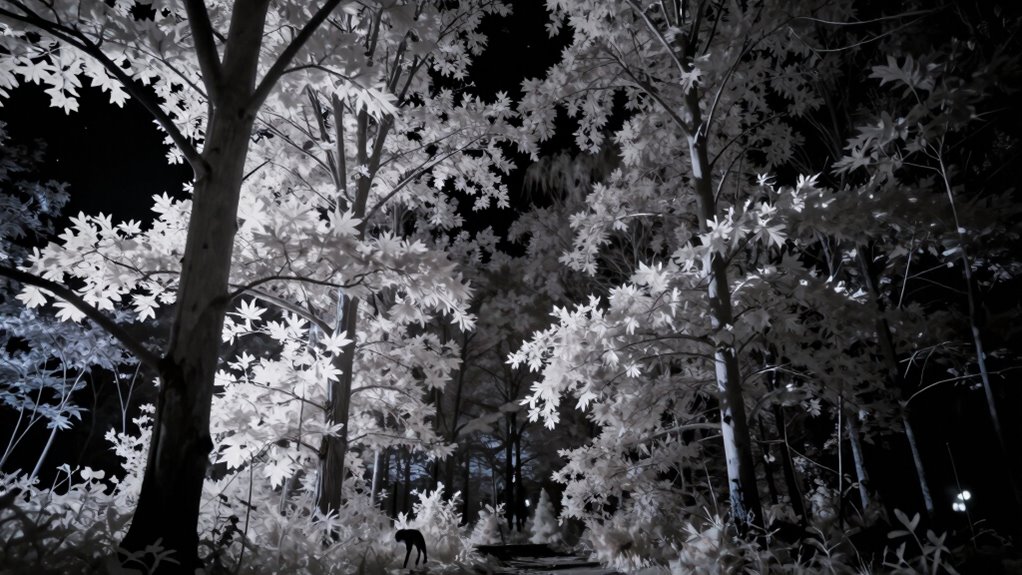

At night, infrared cameras detect heat emitted by objects, revealing scenes in complete darkness. They capture thermal images that show temperature differences, allowing you to see living creatures, vehicles, or hidden issues even when it’s pitch black. These cameras don’t rely on visible light but translate heat patterns into visual images. This makes them useful for security, wildlife, and rescue operations. Keep exploring to discover how their detailed heat signatures give you even deeper insights.

Get books and cozy reading nights delivered free with Prime
- Fast, free delivery on millions of items
- Prime Video, Amazon Music and more included
- Member-only deals all year
Key Takeaways
- Infrared cameras detect heat emitted by objects, regardless of visible light conditions.
- They capture thermal signatures, highlighting temperature differences in the scene.
- Warm objects like animals or humans appear distinct from cooler backgrounds.
- They reveal hidden threats or issues through heat patterns not visible to the naked eye.
- Infrared cameras provide detailed images based on heat, unaffected by fog, smoke, or darkness.
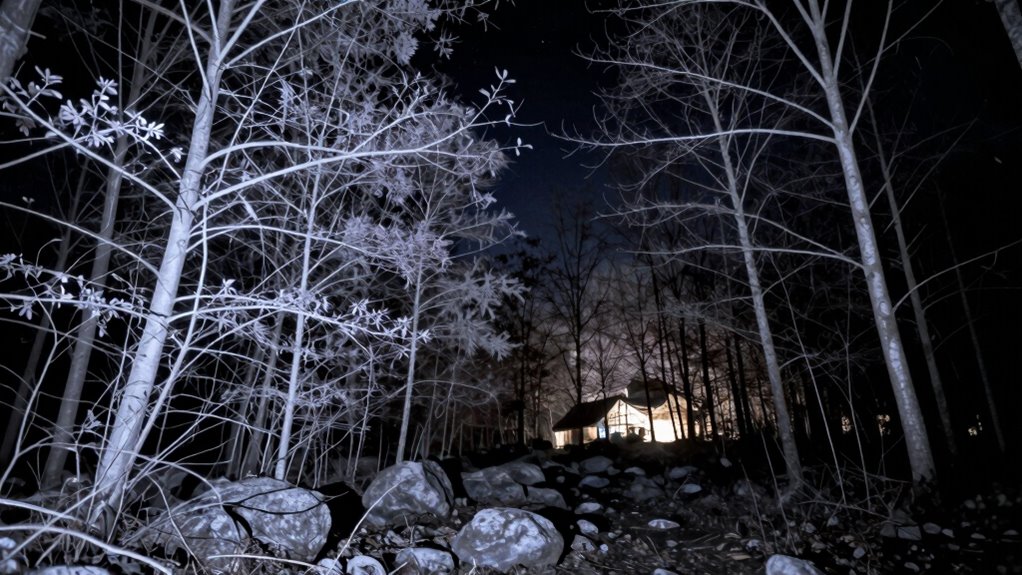
Infrared cameras have revolutionized nighttime observation by allowing you to see clearly in complete darkness. These devices work by detecting infrared radiation emitted by objects, rather than relying on visible light. When you use an infrared camera, you’re tapping into thermal imaging technology that translates heat signatures into visual images. This approach makes it possible to identify living creatures, vehicles, or even subtle changes in temperature that would be invisible to the naked eye. Unlike traditional night vision devices, which amplify ambient light, infrared cameras capture the heat radiated by objects, providing a more detailed and accurate picture of your surroundings even without any light source.
At night, infrared cameras primarily capture thermal images that reveal temperature differences across the scene. Warm objects, such as animals or humans, stand out distinctly against cooler backgrounds, making it easy for you to track movement or locate targets in complete darkness. This ability is especially useful in situations where visibility is limited, such as wildlife observation, security patrols, or search and rescue missions. The thermal imaging component of infrared cameras converts heat patterns into an image that your brain can interpret, giving you a clear view of what’s happening in the dark. This capability surpasses simple night vision, which can sometimes be hampered by fog, smoke, or other obscurants.
What you see through an infrared camera isn’t just a black-and-white silhouette. The thermal images produced often display a color palette that represents different temperature ranges, helping you distinguish between objects more easily. For example, a person’s body heat will emit a different color than the cooler surrounding environment. This color coding enhances your ability to interpret what’s on the screen quickly and accurately. You can also detect subtle temperature variations that might indicate problems, such as overheating machinery or hidden threats, giving you an edge in various applications.
In essence, what infrared cameras capture at night is a visual map of heat emissions. They don’t just see in the dark—they reveal the invisible thermal landscape that exists all around you. Whether you’re monitoring wildlife, securing a perimeter, or conducting inspections, you’re leveraging advanced thermal imaging technology that provides a detailed, reliable view of your environment, regardless of lighting conditions. This makes infrared cameras an invaluable tool for any situation where darkness conceals important details, transforming how you perceive the night. Additionally, understanding the thermal signatures can help in identifying specific materials or substances based on their heat profiles, further expanding their utility. Recognizing these heat patterns allows for more precise assessments in various fields, including conservation and environmental management.
infrared thermal camera for night vision
As an affiliate, we earn on qualifying purchases.
As an affiliate, we earn on qualifying purchases.
Frequently Asked Questions
How Do Infrared Cameras Differentiate Between Heat Sources?
Infrared cameras differentiate between heat sources by detecting their thermal signatures and heat patterns. You’ll notice that each object emits a unique infrared radiation based on its temperature. The camera captures these variations, translating them into images with different colors or shades. Warmer objects appear brighter, while cooler ones are darker. This way, you can easily identify heat sources and their intensity, even in complete darkness.
Can Infrared Cameras Detect Movement Through Walls?
Think of infrared cameras as ghost hunters, able to sense movement through walls, but only under specific conditions. They can detect subtle thermal distortions caused by heat transfer, but sensor sensitivity limits this ability. Walls made of dense materials block infrared signals, so movement behind them often remains unseen. While they excel in open spaces, their effectiveness through walls depends on the wall’s material and the camera’s sensitivity, making it a nuanced skill.
What Are the Limitations of Infrared Imaging in Fog?
Infrared imaging struggles in fog because thermal contrast variability drops, making it hard to distinguish objects. Moisture in fog scatters infrared signals, reducing their effectiveness. Proper infrared sensor calibration is essential, but even then, dense fog can considerably impair clarity. You might not see clear details, as the camera’s ability to detect temperature differences diminishes. For reliable results, avoid relying solely on infrared in heavy fog conditions.
Do Infrared Cameras Work Equally Well in All Weather Conditions?
Infrared cameras don’t work equally well in all weather conditions. Their performance depends on factors like thermal sensitivity and weather impact. Heavy rain, fog, or snow can scatter infrared signals, reducing image clarity. While they excel in detecting heat differences, certain weather conditions diminish their effectiveness. You’ll find that clear, dry nights provide the best results, but adverse weather can obscure or distort thermal images, limiting their reliability.
How Does the Resolution of Infrared Cameras Compare to Regular Cameras?
Think of infrared cameras as seasoned artists with a different palette—they focus on thermal sensitivity, revealing heat rather than light. While they excel at detecting temperature differences, their image clarity often isn’t as sharp as regular cameras. Compared to standard cameras, infrared images can appear softer, highlighting warmth rather than fine detail. So, your infrared camera paints a thermal portrait, but it may lack the crispness of a traditional camera’s masterpiece.
Conclusion
As you watch through an infrared camera at night, you’re holding a lantern in the darkness, revealing hidden worlds shrouded in shadows. The camera’s thermal eyes serve as a silent guardian, uncovering secrets that eyes alone can’t see. In this quiet glow, you realize that even in the darkness, there’s a story waiting to be told—a reminder that light, whether visible or unseen, always finds a way to illuminate what truly matters.
Halloween Picks
halloween
As an affiliate, we earn on qualifying purchases.