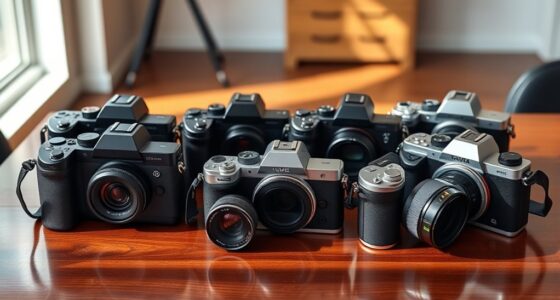
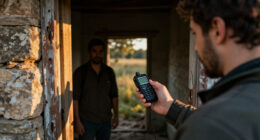
The RIX Titan-T6 is my best overall pick among these thermal monoculars for ghost hunting, pairing a 640×480 sensor with a 1920×1080 OLED display and a laser rangefinder. For a lighter, simpler option, the Pulsar Axion 2 35mm favors compact carry, while the GOYOJO G210 offers a more approachable starting point with its 256×192 sensor. The main tradeoff is between image detail and price, size, and ease of use; greater magnification can also narrow the view and make scanning harder. Thermal cameras detect heat differences, not ghosts, so results need careful interpretation. Read on for the full comparison and guidance on choosing a model that fits your locations and search style.

Get books and cozy reading nights delivered free with Prime
- Fast, free delivery on millions of items
- Prime Video, Amazon Music and more included
- Member-only deals all year
Key Takeaways
- The RIX Titan-T6 leads on listed imaging detail: its 640×480 sensor and 1920×1080 OLED screen give it the strongest specification combination in this lineup, while its 35mm lens and rangefinder add bulk and features many casual users may not need.
- Compactness is a real point of separation: the Pulsar Axion 2 35mm and RIX Pocket K2 are more natural candidates for portable searches than larger-featured models such as the Titan-T6 or ATN BlazeHunter Pro 3.5–28x50mm.
- Resolution and lens specifications should be read together: sensor resolution alone does not tell you how wide an area you can scan or how much detail you will see at a given distance.
- There are distinct entry-level paths: the GOYOJO G210 and TOPDON TS004 have lower-resolution specifications than the high-resolution RIX and ATN options, which may suit basic exploration better than demanding long-range observation.
- A rangefinder is a specialized extra, not a ghost-detection feature: the Pulsar Telos LRF XP50 and RIX Titan-T6 add distance measurement, but buyers focused on close indoor searches may prefer portability and simple controls.
| GOYOJO G210 Thermal Imaging Monocular, 256×192, 10 mm Lens |  | Best Value for Basic Night Walks | Thermal resolution: 256×192 | Detector pixel size: 12 μm | Lens focal length: 10 mm | VIEW LATEST PRICE | See Our Full Breakdown |
| Pulsar Telos LRF XP50 Thermal Monocular with Laser Rangefinder |  | Best Premium for Detailed Documentation | Display: 1024 × 768 pixel AMOLED | Sensor NETD: <18 mK | Detection range: Up to 1,900 yards | VIEW LATEST PRICE | See Our Full Breakdown |
| RIX POCKET K3 Thermal Monocular, 384×288 Sensor, 15 mm Lens |  | Best Compact Pick for Moving Scenes | Thermal sensor resolution: 384×288 | Objective lens: 15 mm | Base magnification: 2× | VIEW LATEST PRICE | See Our Full Breakdown |
| ATN BlazeHunter Pro 3.5–28x50mm Thermal Monocular |  | Best for Zoom and Outdoor Distance Checks | Sensor resolution: 640×512 | Magnification: 3.5–28× | Objective lens diameter: 50 mm | VIEW LATEST PRICE | See Our Full Breakdown |
| Pulsar Axion 2 35mm Compact Thermal Monocular |  | Best Compact All-Weather Choice | Objective lens diameter: 35 mm | Magnification: 2.5–20× | Field of view: 6 degrees | VIEW LATEST PRICE | See Our Full Breakdown |
| ATN BlazeSeeker Thermal Hunting Monocular |  | Best for Pocketable Night Walks | Sensor resolution: 256×192 | Pixel size: 12 μm | NETD: <35 mK | VIEW LATEST PRICE | See Our Full Breakdown |
| Athlon Optics Cronus ATS P-Mini 250S Thermal Monocular |  | Best for Long Sessions and App Sharing | Sensor resolution: 466 × 466 | Thermal sensor pixel size: 12 μm | Magnification: 1x–4x | VIEW LATEST PRICE | See Our Full Breakdown |
| ATN BlazeHunter Pro Thermal Monocular, 2.5–20x35mm, 640×512, 50 Hz, Black |  | Best Premium Image Detail | Sensor resolution: 640×512 | NETD: Less than 18 mK | Magnification: 2.5–20x | VIEW LATEST PRICE | See Our Full Breakdown |
| RIX Titan-T6 Thermal Monocular with Laser Rangefinder, 35mm Lens, 640×480 Sensor and 1920×1080 OLED Display |  | Best for Stabilized Long-Range Scanning | Sensor resolution: 640×480 | Pixel pitch: 12 μm | Objective lens: 35 mm F0.9 | VIEW LATEST PRICE | See Our Full Breakdown |
| RIX Pocket K2 Portable Thermal Monocular, 256×192, 50 Hz, Wi-Fi | | Best Compact Option for Wet Conditions | Sensor resolution: 256×192 | Pixel pitch: 12 μm | Thermal sensitivity: NETD <25 mK | VIEW LATEST PRICE | See Our Full Breakdown |
| TOPDON TS004 Thermal Imaging Monocular, 13 mm Lens, 50 Hz |  | Best for Long, Uninterrupted Sessions | IR resolution: 256 × 192 | Refresh rate: 50 Hz | Lens: 13 mm | VIEW LATEST PRICE | See Our Full Breakdown |
| AGM Global Vision Sidewinder TM25-384 Thermal Imaging Monocular |  | Best for Thermal Detail and Recording | Resolution: 384 × 288 | Thermal sensitivity: NETD <20 mK | Pixel pitch: 12 microns | VIEW LATEST PRICE | See Our Full Breakdown |
| thermal monoculars for ghost hunting | Display | Refresh rate | Battery life | Sensor resolution |
|---|---|---|---|---|
| GOYOJO G210 Thermal Imaging Mo | — | 25 Hz | Over 6 hours | — |
| Pulsar Telos LRF XP50 Thermal | 1024 × 768 pixel AMOLED | — | Over 8 hours | — |
| RIX POCKET K3 Thermal Monocula | 800×600 OLED | — | — | — |
| ATN BlazeHunter Pro 3.5–28x50m | Full-color high-definition OLED | 50 Hz | — | 640×512 |
| Pulsar Axion 2 35mm Compact Th | — | — | Up to 7 hours | — |
| ATN BlazeSeeker Thermal Huntin | 720×540 LCOS | — | Up to 9 hours | 256×192 |
| Athlon Optics Cronus ATS P-Min | 1.43-inch OLED touchscreen | — | More than 9 hours | 466 × 466 |
| ATN BlazeHunter Pro Thermal Mo | Full-color HD OLED | 50 Hz | — | 640×512 |
| RIX Titan-T6 Thermal Monocular | 0.49-inch, 1920×1080 OLED | 50 Hz | — | 640×480 |
| RIX Pocket K2 Portable Thermal | 800×600 OLED | 50 Hz | — | 256×192 |
| TOPDON TS004 Thermal Imaging M | — | 50 Hz | Up to 11 hours | — |
| AGM Global Vision Sidewinder T | — | — | — | — |
More Details on Our Top Picks
GOYOJO G210 Thermal Imaging Monocular, 256×192, 10 mm Lens
The GOYOJO G210 is a straightforward pick for ghost hunters who want to scan dark rooms or outdoor paths without carrying a feature-heavy unit. Its 256×192 sensor and six palettes offer several ways to distinguish warm shapes from the background, while 16 GB of storage and app sharing make it easier to save observations for later review. Compared with the higher-resolution RIX POCKET K3, the G210 provides a simpler, lower-detail thermal view, and its 25 Hz refresh rate is less suited to following quick movement. The tradeoff is a useful set of practical features, including a replaceable battery rated for over six hours and IP65 weather resistance, in a relatively heavy 1 kg body. Fixed focus also limits flexibility when viewing at different distances.
Pros:- Six display palettes help tailor thermal contrast to different surroundings.
- 16 GB of image storage and app-based sharing support documenting observations.
- Replaceable battery is rated for over six hours of use.
- IP65 rating suits damp or dusty outdoor investigations.
Cons:- Fixed focus offers less control across near and distant scenes.
- The 256×192 sensor provides less image detail than the RIX POCKET K3’s 384×288 sensor.
- At 1 kg, it is substantially heavier than the compact RIX POCKET K3.
Best for: Ghost-hunting beginners who want a weather-resistant handheld with recording and phone sharing for occasional investigations.
Not ideal for: Investigators who need crisp detail, smooth tracking of fast movement, or focus adjustment for scenes at varied distances.
- Thermal resolution:256×192
- Detector pixel size:12 μm
- Lens focal length:10 mm
- Field of view:17.5°
- Refresh rate:25 Hz
- Digital zoom:4×
- Storage:16 GB
- Battery life:Over 6 hours
- Weather resistance:IP65
Our verdict“Choose the G210 for basic, shareable thermal observations and weather resistance; skip it if image detail or low carry weight is your priority.”
Pulsar Telos LRF XP50 Thermal Monocular with Laser Rangefinder
For investigators who want a high-detail thermal view and recording tools, the Pulsar Telos LRF XP50 sits at the premium end of this group. Its 1024 × 768 AMOLED display and sensor rated below 18 mK NETD are aimed at showing subtle temperature differences more clearly than the GOYOJO G210’s 256×192 system. Photo and video recording, Wi-Fi, and a laser rangefinder add practical tools for documenting and locating observations, though the rangefinder is more useful outdoors than inside a building. The tradeoffs are its manual focus, product-specific battery, and specialized feature set, which can be more than a casual ghost-hunting session requires. Its IPX7 housing and operating range from -13°F to 104°F make it a sturdier all-weather choice than the compact, pocket-oriented RIX POCKET K3.
Pros:- 1024 × 768 AMOLED display and <18 mK NETD sensor support detailed thermal viewing.
- Photo and video recording with Wi-Fi makes it easier to save and share observations.
- Built-in laser rangefinder measures distances up to 1,000 yards.
- IPX7 magnesium alloy housing and over eight hours of stated operation suit extended field sessions.
Cons:- Manual focus requires active adjustment when the viewing distance changes.
- Product-specific battery limits battery flexibility.
- The size of its feature set may be unnecessary for short, indoor-only investigations.
Best for: Experienced investigators and research groups who want detailed thermal viewing, recorded evidence, and a rugged device for outdoor locations.
Not ideal for: Casual indoor investigators who want a lightweight, simple monocular or have little use for a rangefinder and advanced recording features.
- Display:1024 × 768 pixel AMOLED
- Sensor NETD:<18 mK
- Detection range:Up to 1,900 yards
- Laser rangefinder:Up to 1,000 yards
- Battery life:Over 8 hours
- Color palettes:8
- Housing:Magnesium alloy; IPX7 waterproof
- Operating temperature:-13°F to 104°F
- Weight:453 g
Our verdict“Pick the Telos LRF XP50 when detailed imagery and rugged recording matter more than simplicity, compactness, or a rangefinder-free design.”
RIX POCKET K3 Thermal Monocular, 384×288 Sensor, 15 mm Lens
The RIX POCKET K3 makes the strongest case for ghost hunters who move between rooms or trail locations and want a monocular that is easy to carry. At 7.52 oz, it is far lighter than the GOYOJO G210, and its 50 Hz frame rate with electronic image stabilization can make moving subjects easier to follow. The 384×288 sensor also gives it a resolution advantage over the G210, while an OLED display, Wi-Fi, and photo, audio, and video recording support field notes. Its listed detection distance of up to 853 yards is based on controlled conditions, not a guarantee for real locations; walls, weather, and terrain affect what appears. Compared with the feature-rich Pulsar Telos LRF XP50, the K3 is more portable but has a lower-resolution display and no listed rangefinder.
Pros:- Compact 7.52 oz body is easier to carry than the GOYOJO G210.
- 50 Hz frame rate and electronic image stabilization support steadier viewing of movement.
- 384×288 sensor and 800×600 OLED display offer a stronger detail package than the G210.
- Wi-Fi and photo, audio, and video recording provide flexible ways to document sessions.
Cons:- The stated detection range of up to 853 yards depends on controlled test conditions.
- Its 800×600 display has lower resolution than the Pulsar Telos LRF XP50’s 1024 × 768 display.
- No laser rangefinder is listed for measuring distance to a sighting.
Best for: Investigators who walk between locations and want a lightweight, stabilized thermal monocular with built-in recording.
Not ideal for: Buyers who need a long-range distance tool, premium display resolution, or detection performance they can expect to match a controlled-test figure.
- Thermal sensor resolution:384×288
- Objective lens:15 mm
- Base magnification:2×
- Frame rate:50 Hz
- Display:800×600 OLED
- Maximum detection range:Up to 853 yards under controlled conditions
- Image stabilization:Electronic Image Stabilization
- Memory:8 GB
- Weight:7.52 oz
Our verdict“Choose the K3 if portability and smoother viewing matter most, but treat its maximum detection figure as a test-condition claim rather than a field promise.”
ATN BlazeHunter Pro 3.5–28x50mm Thermal Monocular
The ATN BlazeHunter Pro is the zoom-focused choice here, with a 640×512 sensor, 50 Hz refresh rate, and an 8× zoom range from 3.5–28×. That combination can help an investigator inspect distant heat signatures without relying on the GOYOJO G210’s more modest 4× digital zoom. A built-in laser rangefinder adds distance information, while video recording and Wi-Fi sharing can help preserve observations. The high magnification is less compelling in tight indoor spaces, where a wider view can make scanning rooms easier; the RIX POCKET K3’s 17.5° horizontal field of view is specified, while no field-of-view figure is supplied for this ATN. Its fixed-focus design also means less viewing adjustment than the manual-focus Pulsar Telos LRF XP50, and its rifle compatibility listing may signal a less clearly defined handheld use case.
Pros:- 640×512 sensor and 50 Hz refresh rate support detailed, fluid viewing.
- 3.5–28× magnification with an 8× zoom range suits inspection at varied distances.
- Built-in laser rangefinder can add distance context to outdoor observations.
- Video recording and Wi-Fi sharing support saving and reviewing sessions.
Cons:- Fixed focus limits adjustment for scenes at different distances.
- High magnification may be less useful than a wider view in small rooms.
- Product data lists compatibility with rifles, leaving its handheld ghost-hunting fit less clear.
Best for: Outdoor investigators who scan open grounds and want substantial zoom, a rangefinder, and video-sharing features in one unit.
Not ideal for: Indoor-only teams or buyers who need adjustable focus, a clearly documented handheld-first design, or a broad room-scanning view.
- Sensor resolution:640×512
- Magnification:3.5–28×
- Objective lens diameter:50 mm
- Refresh rate:50 Hz
- Zoom ratio:8×
- Display:Full-color high-definition OLED
- Focus type:Fixed focus
- Additional features:Laser rangefinder, video recording, Wi-Fi sharing
- Warranty:3 years
Our verdict“The BlazeHunter Pro suits open-site investigators who value zoom and distance measurement, but it is a less natural fit for close indoor scanning.”
Pulsar Axion 2 35mm Compact Thermal Monocular
The Pulsar Axion 2 35mm balances a carry-friendly body with a sturdier build for investigators who work outdoors in changing conditions. Its magnesium alloy housing is designed to withstand shocks, moisture, and temperature extremes, while three sensitivity levels and adjustable image settings let users adapt the view to varied weather. The rechargeable APS5 battery is rated for up to seven hours, and Wi-Fi supports streaming, updates, and app-based remote control. Compared with the lighter RIX POCKET K3, the Axion offers a larger 35 mm objective lens and a more rugged housing, but the K3 specifies a 50 Hz frame rate, stabilization, and built-in recording; those details are not listed for the Axion. The Axion’s manual focus and special battery charger also add setup friction for teams seeking a simple grab-and-go device.
Pros:- Magnesium alloy housing is designed for shocks, moisture, and temperature extremes.
- Three sensitivity levels and adjustable image settings help adapt the view to changing weather.
- Replaceable rechargeable battery provides up to seven hours of operation.
- Wi-Fi supports streaming, software updates, and app-based remote control.
Cons:- Manual focus requires adjustment as viewing distance changes.
- Battery charging uses a special charger.
- Unlike the RIX POCKET K3, the supplied specs do not list image stabilization or photo and video recording.
Best for: Outdoor ghost hunters who want a compact, rugged monocular with adaptable image settings and smartphone connectivity.
Not ideal for: Teams who prioritize in-device photo or video recording, a specified high frame rate, or charging with standard equipment.
- Objective lens diameter:35 mm
- Magnification:2.5–20×
- Field of view:6 degrees
- Sensor pixel size:12 µm
- Focus type:Manual
- Battery life:Up to 7 hours
- Connectivity:Wi-Fi, USB-C
- Dimensions:6.6 × 1.9 × 2.9 in
- Weight:12.8 oz
Our verdict“Pick the Axion 2 for rugged outdoor portability and app connectivity, but choose the RIX POCKET K3 if recording and stabilized viewing are higher priorities.”
ATN BlazeSeeker Thermal Hunting Monocular
For ghost hunting that involves moving between rooms, trails, or outbuildings, I’d favor the BlazeSeeker’s pocket-friendly 9.6-ounce build over a larger, more specialized unit like the RIX Titan-T6. Its 256×192 sensor and stated detection range of up to 345 m suit general scanning, while multiple color palettes let you change how heat differences appear on screen. The photo and video recording and Wi-Fi app connection also make it easier to save and share observations, though you’ll need to supply a MicroSD card for local storage. Battery life is listed at up to nine hours, a useful buffer for a long outing. Compared with the Athlon Cronus ATS P-Mini 250S, this model is lighter, but its listed detection range is shorter and its display resolution is lower.
Pros:- Compact 9.6-ounce design is easy to carry during a long search
- Multiple color palettes support different ways of viewing heat contrast
- Photo and video recording with Wi-Fi app connectivity
- Battery life rated up to nine hours
Cons:- A MicroSD card is required to store photos and videos
- The stated detection range is shorter than the Athlon Cronus ATS P-Mini 250S
- 720×540 LCOS display is less detailed on paper than the Athlon’s 466×466 display
Best for: Ghost hunters who want a light, pocketable scanner for extended walks and want to save thermal images or clips.
Not ideal for: Buyers prioritizing longer stated detection range or a higher-resolution display, or anyone who wants recording without adding a MicroSD card.
- Sensor resolution:256×192
- Pixel size:12 μm
- NETD:<35 mK
- Detection range:Up to 345 m
- Display:720×540 LCOS
- Battery life:Up to 9 hours
- Storage:MicroSD card up to 256 GB
- Weight:9.6 oz
Our verdict“Choose the BlazeSeeker if low carry weight and onboard recording matter more than maximum detection range.”
Athlon Optics Cronus ATS P-Mini 250S Thermal Monocular
The Cronus ATS P-Mini 250S fits ghost hunters who want a compact viewer with controls that are easy to adjust in the field. Its 1.43-inch OLED touchscreen, seven palettes, and adjustable brightness and contrast give you ways to tune the image when scanning dark interiors or outdoor areas. The stated 550-yard detection range is longer than the ATN BlazeSeeker’s listed 345 m, and more than nine hours of battery life favors extended outings. Wi-Fi app support can help with recording and downloading media, while USB-C external power offers another option for a long session. The tradeoff is its plastic construction: compared with the RIX Titan-T6, this is the less feature-heavy choice, without a listed laser rangefinder or stabilization system. I’d skip it if rugged-feeling construction is a priority.
Pros:- 1.43-inch OLED touchscreen provides direct access to image adjustments
- Seven palettes with adjustable brightness and contrast
- More than nine hours of battery life, with USB-C external power support
- Wi-Fi app supports media recording and downloads
Cons:- Plastic construction may not suit buyers seeking a more rugged-feeling unit
- The stated 550-yard detection range does not extend as far as some higher-range models
- No laser rangefinder or image stabilization is listed
Best for: Ghost hunters who want a touchscreen, app-based media sharing, and long battery life for extended investigations.
Not ideal for: Buyers who prioritize a more substantial build or want advanced tools such as the RIX Titan-T6’s laser rangefinder and image stabilization.
- Sensor resolution:466 × 466
- Thermal sensor pixel size:12 μm
- Magnification:1x–4x
- Detection range:550 yards
- Display:1.43-inch OLED touchscreen
- Color palettes:7
- Battery life:More than 9 hours
- Connectivity:Wi-Fi; compatible Apple and Android app
Our verdict“Pick the Cronus ATS P-Mini 250S for long sessions and touchscreen app features, not for a metal-bodied build or advanced ranging tools.”
ATN BlazeHunter Pro Thermal Monocular, 2.5–20x35mm, 640×512, 50 Hz, Black
When image detail takes priority over an especially light kit, the BlazeHunter Pro’s 640×512 sensor and NETD below 18 mK make it the premium pick in this group. Its full-color HD OLED and 50 Hz refresh rate are aimed at a clear, responsive view while scanning; that can be more useful for examining thermal differences than the lower-resolution ATN BlazeSeeker. A built-in laser rangefinder, video recording, and Wi-Fi sharing add field tools the simpler BlazeSeeker lacks. The tradeoff is that the supplied listing gives a package weight of 3.4 pounds, so it is a less appealing choice for hunters who value a pocketable setup. The RIX Titan-T6 also offers a high-resolution sensor and rangefinder, so I’d compare the two closely if stabilization and its listed OLED resolution matter more than this ATN’s specified sensor resolution.
Pros:- 640×512 sensor and NETD below 18 mK
- Full-color HD OLED display with multiple viewing modes
- Built-in video recording, laser rangefinder, and Wi-Fi sharing
- 50 Hz refresh rate
Cons:- Listed package weight of 3.4 pounds is heavy compared with the pocketable BlazeSeeker
- The supplied dimensions appear unreliable, listed as 1 × 1 × 1 inches
- Warranty details are not specified beyond referring buyers to the manufacturer website
Best for: Ghost hunters who prioritize a higher-resolution thermal sensor, detailed viewing, and integrated recording and ranging features over low carry weight.
Not ideal for: Walkers seeking a genuinely lightweight pocket monocular, or buyers who need clear device dimensions before choosing a carry setup.
- Sensor resolution:640×512
- NETD:Less than 18 mK
- Magnification:2.5–20x
- Lens diameter:35 mm
- Refresh rate:50 Hz
- Display:Full-color HD OLED
- Package weight:3.4 pounds
- Additional features:Video recording, laser rangefinder, Wi-Fi sharing
Our verdict“Choose the BlazeHunter Pro if detailed thermal imaging and integrated tools outweigh the burden of a heavier package.”
RIX Titan-T6 Thermal Monocular with Laser Rangefinder, 35mm Lens, 640×480 Sensor and 1920×1080 OLED Display
The RIX Titan-T6 is the feature-heavy choice for ghost hunters scanning large properties or trying to hold a steady view while examining distant heat sources. It combines a 640×480 sensor and 1920×1080 OLED display with electronic image stabilization, which may help reduce shake during handheld viewing. The laser rangefinder is listed for measurements up to 1,312 yards, and the stated detection range reaches 1,818 yards; those capabilities go beyond what the ATN BlazeSeeker specifies. Its ballistic calculator, though, is aimed more at shooting use than paranormal investigation, so it adds complexity without being a central ghost-hunting benefit. Manual focus also asks for active adjustment, unlike a simpler point-and-scan approach. Compared with the premium ATN BlazeHunter Pro, the Titan-T6 lists stabilization and a high-resolution display, but buyers should weigh its more involved controls.
Pros:- 640×480 sensor paired with a 1920×1080 OLED display
- Electronic image stabilization can help steady handheld viewing
- Laser rangefinder listed for measurements up to 1,312 yards
- 50 Hz refresh rate and listed detection range up to 1,818 yards
Cons:- Manual focus requires active adjustment while scanning
- Digital zoom uses image enhancement rather than adding native sensor detail
- Ballistic calculator features are of limited relevance to ghost hunting
Best for: Experienced ghost hunters scanning open grounds who want image stabilization, a laser rangefinder, and detailed viewing.
Not ideal for: Beginners seeking simple point-and-scan operation, or investigators who do not need ranging tools and would rather carry a lighter, simpler unit.
- Sensor resolution:640×480
- Pixel pitch:12 μm
- Objective lens:35 mm F0.9
- Display:0.49-inch, 1920×1080 OLED
- NETD:<20 mK
- Detection range:Up to 1,818 yards
- Laser rangefinder range:Up to 1,312 yards
- Refresh rate:50 Hz
Our verdict“Choose the Titan-T6 for stabilized, feature-rich scanning across open areas, but skip it if you want a simple compact viewer.”
RIX Pocket K2 Portable Thermal Monocular, 256×192, 50 Hz, Wi-Fi
For a ghost hunt in rain, damp woodland, or a drafty old building, the Pocket K2’s IP67 rating gives it a clear practical edge over the ATN BlazeSeeker, whose supplied specs do not list a water-resistance rating. Its compact design and 50 Hz refresh rate suit walking scans, while the 800×600 OLED display gives a crisp viewing panel for its 256×192 sensor. Electronic image stabilization may help keep the picture steadier when moving, and Wi-Fi adds connectivity. Resolution Enhanced Technology is meant to improve apparent clarity, but it uses algorithms to simulate pixels rather than adding sensor resolution. That distinction matters if you expect it to match higher-resolution options such as the RIX Titan-T6. The sliding lens cover is also a basic open-and-close design, rather than a more elaborate protective mechanism.
Pros:- IP67 water resistance suits damp and wet field conditions
- Pocketable design for walking investigations
- 800×600 OLED display
- 50 Hz refresh rate and electronic image stabilization
Cons:- 256×192 sensor has less native resolution than the RIX Titan-T6’s 640×480 sensor
- Resolution Enhanced Technology simulates pixels through processing
- Integrated lens cover is limited to a sliding open-and-close design
Best for: Ghost hunters who need a pocketable thermal monocular for wet-weather walks and value a high-resolution display and image stabilization.
Not ideal for: Buyers seeking native sensor detail beyond 256×192 or expecting image-enhancement processing to replace a higher-resolution sensor.
- Sensor resolution:256×192
- Pixel pitch:12 μm
- Thermal sensitivity:NETD <25 mK
- Refresh rate:50 Hz
- Display:800×600 OLED
- Image enhancement:Resolution Enhanced Technology (RET)
- Image stabilization:Electronic Image Stabilization (EIS)
- Water resistance:IP67
Our verdict“Choose the Pocket K2 for compact wet-weather use, but look to a higher-resolution model if native image detail is your priority.”
TOPDON TS004 Thermal Imaging Monocular, 13 mm Lens, 50 Hz
For ghost hunters who prioritize a responsive view and long nights outdoors, the TOPDON TS004 pairs a 50 Hz refresh rate with battery life rated up to 11 hours. That runtime outlasts the AGM Sidewinder TM25-384’s stated seven hours, though the AGM has a higher-resolution sensor for potentially clearer thermal detail. TOPDON’s 256 × 192 sensor and 13 mm lens are a more modest setup: detail visibility is specified within 100 yards, so distant heat signatures may be easier to spot than interpret. Wireless monitoring and recording through the TopInfrared app can help a group share observations, while its IP67 casing and stated 2-meter drop resistance suit field use. The tradeoff is manual focus, which asks for extra adjustment when targets or viewing distances change.
Pros:- 50 Hz refresh rate supports a responsive view of moving heat signatures.
- Battery life is rated up to 11 hours, longer than the AGM Sidewinder TM25-384’s stated runtime.
- TopInfrared app supports wireless live monitoring plus image and video capture.
- IP67-rated silicone casing and stated drop resistance up to 2 meters suit outdoor handling.
Cons:- Manual focus requires adjustments as viewing distance changes.
- The 13 mm lens has detail visibility specified only within 100 yards.
- The 256 × 192 resolution is lower than the AGM Sidewinder TM25-384’s 384 × 288 sensor.
Best for: Ghost-hunting groups planning long outdoor sessions who want app-based live viewing and recording without frequent battery changes.
Not ideal for: Investigators who need fine thermal detail at longer distances or prefer a focus-free setup; the 13 mm lens has detail visibility specified within 100 yards, and focus is manual.
- IR resolution:256 × 192
- Refresh rate:50 Hz
- Lens:13 mm
- Field of view:13.5°
- Detection range:Up to 410 m
- Detail visibility:Within 100 yd
- Battery life:Up to 11 hours
- Wireless connection:TopInfrared app
- Protection:IP67; drop resistance up to 2 m
Our verdict“Choose the TOPDON TS004 for long investigations and app sharing, but pick a higher-resolution option if distant scene detail matters more than runtime.”
AGM Global Vision Sidewinder TM25-384 Thermal Imaging Monocular
The AGM Sidewinder TM25-384 is the stronger fit when a ghost-hunting team wants to inspect subtle heat patterns and keep a record of the session. Its 384 × 288 sensor and NETD below 20 mK give it a more detail-oriented profile than the TOPDON TS004’s 256 × 192 sensor, while image processing adds detail enhancement and noise reduction. Built-in 64 GB memory supports video, audio, and snapshots, making it better suited to documenting observations without relying on a phone. Wi-Fi and external-power support add flexibility, but its stated runtime is up to seven hours—shorter than TOPDON’s 11 hours. The 2× to 8× zoom is digital, so magnification does not add optical detail, and the 1.5-pound plastic-bodied unit is less compelling for buyers seeking a lightweight, rugged-feeling carry.
Pros:- 384 × 288 sensor provides more resolution than the TOPDON TS004’s 256 × 192 sensor.
- NETD below 20 mK and image processing support sensitivity and detail enhancement.
- Built-in 64 GB memory records video and audio and captures snapshots.
- Wi-Fi and external-power support add options for sharing and longer sessions.
Cons:- Up to seven hours of continuous operation is shorter than the TOPDON TS004’s stated 11 hours.
- The 2× to 8× zoom is digital rather than optical.
- At 1.5 lbs with plastic construction, it is not the lightest or most rugged-feeling option.
Best for: Investigators who prioritize higher-resolution thermal viewing and onboard audio, video, and snapshot recording over maximum battery runtime.
Not ideal for: All-night teams seeking the longest stated runtime or buyers who want a lightweight, more rugged-feeling housing; it weighs 1.5 lbs, has a plastic body, and runs up to seven hours.
- Resolution:384 × 288
- Thermal sensitivity:NETD <20 mK
- Pixel pitch:12 microns
- Objective lens:25 mm
- Digital zoom:2× to 8×
- Built-in memory:64 GB
- Continuous runtime:Up to 7 hours
- Weight:1.5 lbs
- Warranty:5-year limited liability
Our verdict“Pick the Sidewinder TM25-384 when sensor detail and onboard recording matter most, and choose the TOPDON TS004 if longer battery life is the priority.”
How We Picked
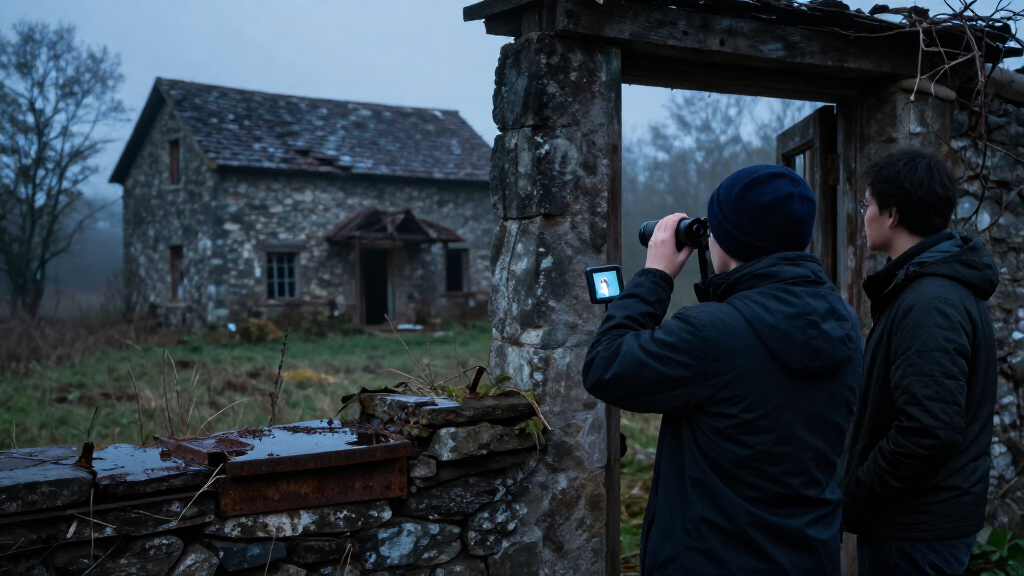
I ranked these models around the practical needs of ghost-hunting-style exploration: scanning in darkness, spotting heat differences, carrying the device through varied locations, and interpreting what appears on screen. I compared the supplied sensor resolution, lens size, stated magnification or display details, portability cues, and listed extras such as Wi-Fi or a laser rangefinder. Higher-resolution models received credit for potential image detail, but not automatically for being the best fit; a larger lens, extra features, or high magnification can add complexity without helping every search.
The ordering reflects those tradeoffs rather than treating one specification as a guarantee of field performance. The RIX Titan-T6 ranks first for its strong listed imaging and display combination, while compact and simpler models rank well for buyers who value ease of carry or a lower-complexity setup. Product details supplied for this roundup do not establish detection range, battery life, durability, or real-world image quality, so I avoid claiming results that cannot be verified from the specifications. Thermal imaging shows heat patterns, not paranormal activity, and every pick is judged as an observation tool rather than proof of a haunting.
| thermal monoculars for ghost hunting | Battery life |
|---|---|
| GOYOJO G210 Thermal Imaging Mo | Over 6 hours |
| Pulsar Telos LRF XP50 Thermal | Over 8 hours |
| RIX POCKET K3 Thermal Monocula | — |
| ATN BlazeHunter Pro 3.5–28x50m | — |
| Pulsar Axion 2 35mm Compact Th | Up to 7 hours |
| ATN BlazeSeeker Thermal Huntin | Up to 9 hours |
| Athlon Optics Cronus ATS P-Min | More than 9 hours |
| ATN BlazeHunter Pro Thermal Mo | — |
| RIX Titan-T6 Thermal Monocular | — |
| RIX Pocket K2 Portable Thermal | — |
| TOPDON TS004 Thermal Imaging M | Up to 11 hours |
| AGM Global Vision Sidewinder T | — |
Factors to Consider When Choosing Thermal Monoculars For Ghost Hunting
Choosing a thermal monocular for ghost-hunting outings is less about buying the most elaborate model and more about matching the device to your locations, scanning habits, and tolerance for interpreting ambiguous images. I would settle the following questions before paying for extra resolution or features.
Decide What You Need to Observe
Start by describing the actual scene: a small indoor room, a long hallway, or an outdoor property calls for different viewing priorities. A device suited to broad scanning may be easier to use than one with high magnification that shows only a narrower slice at once. Buyers often focus on the largest magnification number and overlook how much area they can check without repeatedly repositioning. For indoor exploration, close-range usability and a manageable field of view may matter more than distant identification. For open ground, sensor detail and lens choice become more relevant, though specifications alone cannot confirm usable range. Match the intended setting to the maker’s field-of-view and focus information before choosing.
Read Resolution Alongside Lens and Display
Sensor resolution describes the image information captured, while the lens and display affect how that information is framed and viewed. A higher-resolution sensor can be useful when distinguishing small heat patterns, but it cannot compensate for a view that is too narrow for the search area. A sharp-looking screen may make the image easier to inspect without adding new detail to the captured scene. Avoid treating digital magnification as a substitute for optical detail; enlarging an image can make pixelation more apparent. Compare sensor, lens, field of view, and display as a system rather than choosing by one headline number. If a listing omits field-of-view or focus details, ask the seller or manufacturer before relying on it for a particular site.
Choose Features You Will Actually Use
Rangefinders, Wi-Fi, recording, and multiple viewing modes can add value when they fit a repeatable workflow. A rangefinder can help document distances between observation points, but it does not identify a heat source or establish what caused it. Wi-Fi may help with sharing or viewing, yet it can bring extra setup steps and does not replace checking how images are saved. Before paying for add-ons, decide whether you need to record sessions, compare observations later, or simply scan in real time. More menus can slow down a quick search, especially when several people are taking turns with the device. Favor a short learning curve if the group is new to thermal imaging.
Plan for Carry, Controls, and Session Length
A monocular that is comfortable to carry and operate may see more use than a feature-heavy unit that feels cumbersome during a long walk. Check the stated weight, dimensions, grip layout, and button access, especially if you expect to operate it with gloves or in tight spaces. Battery runtime matters for extended outings, but the product names and specifications here do not provide a consistent battery comparison. Look for replaceable-battery details, charging method, and whether power banks are supported before assuming a session can last all night. If possible, verify how the device handles focus and menu control before committing. A simple control layout can reduce interruptions when you need to switch between scanning and checking a possible heat source.
Set Expectations About Heat Signatures
Thermal monoculars display differences in surface temperature; they do not show through walls or identify a person, animal, or object by itself. Reflections, warm pipes, recently occupied spaces, airflow, and changing outdoor conditions can all complicate what appears on screen. A common mistake is labeling an unusual shape as paranormal before checking the surroundings with visible-light tools and repeating the observation. Keep notes about location, time, weather, and what else was present so later comparisons have context. In locations where access is permitted, use a second observation method rather than relying on one thermal image. This cautious process makes the device more useful for documenting anomalies without overstating what the image proves.
Know When Premium Specifications Are Worth It
Paying for a higher-resolution sensor makes the most sense if you expect to inspect fine heat patterns, work across larger spaces, or keep detailed records. If your searches are mostly close-range and exploratory, a simpler, lower-resolution unit may cover the basic task without adding features you will rarely use. A rangefinder is more useful for mapping outdoor observations than for examining a small room. Compact models can be a better investment for frequent walking, even when their specifications look less imposing on paper. Ask whether a premium feature changes what you can observe or only makes the device more complex. The best fit is the one whose advantages match your real search conditions, not the longest feature list.
Frequently Asked Questions
Can a thermal monocular prove that a place is haunted?
No. A thermal monocular displays heat differences and cannot identify a source as paranormal. Warm surfaces, drafts, people, animals, and environmental changes can create shapes that look unusual on screen. I would treat any image as an observation to investigate, not as proof. Check the area with another method and record conditions before drawing conclusions.
Should I prioritize sensor resolution or a compact body?
Choose based on where and how you search. Higher resolution can help when you need to inspect finer heat patterns, while a compact body is easier to carry during extended walks or group investigations. For short indoor sessions, portability and simple controls may matter more than a high-resolution sensor. If you plan to observe across larger outdoor areas, compare resolution with lens and field-of-view details rather than treating it as a standalone measure.
Is a laser rangefinder useful for ghost hunting?
It can help record how far away an observation point or heat source appears to be, particularly outdoors. It cannot tell you what created the heat signature, and it does not improve the thermal image by itself. For close indoor searches, rangefinding may be less useful than a wide, easy-to-scan view. The Pulsar Telos LRF XP50 and RIX Titan-T6 are the lineup’s rangefinder-equipped options, so compare their other features before making that extra capability the deciding factor.
Do I need 640×512 resolution for indoor investigations?
Not necessarily. A high-resolution sensor may show more image detail, but small indoor spaces can be manageable with a simpler device, especially when the goal is general heat-pattern observation. Field of view, focus, screen readability, and ease of use also affect how practical a monocular feels in a room. The listed high-resolution ATN BlazeHunter Pro and RIX Titan-T6 may suit buyers who value detail, while lower-resolution options can be a more approachable fit for basic searches. Check real field-of-view and close-focus specifications before deciding.
What should I check before using a thermal monocular on an overnight outing?
Confirm battery runtime, charging or replacement options, storage capacity if recording, and how the device behaves in the temperatures you expect. The supplied specifications do not provide a consistent battery-life comparison across these 12 models, so verify those details with the manufacturer. Practice the controls and focus at home to avoid spending field time learning menus. Bring a visible-light backup and keep a simple log of observations and conditions. Also confirm that you have permission to enter and use equipment at the location.
Conclusion
For the best overall balance of listed imaging detail and added capability, I recommend the RIX Titan-T6. Buyers seeking a premium alternative with a rangefinder can compare it with the Pulsar Telos LRF XP50, while the compact Pulsar Axion 2 35mm is the better fit for those who prioritize carry comfort. For a simpler starting point, I would look at the GOYOJO G210 or TOPDON TS004 and verify the field-of-view, runtime, and controls before buying. The RIX Pocket K2 is a sensible candidate when portability and Wi-Fi matter more than maximum resolution. Choose the model that suits your search locations and documentation needs, and treat thermal images as evidence of heat patterns—not evidence of ghosts.
Black Friday Picks

Sony WH-1000XM6 Wireless Noise-Canceling Headphones, Black
As an affiliate, we earn on qualifying purchases.