For those seeking 4k color e ink monitors that prioritize eye comfort, this category offers a unique blend of high-resolution displays with reduced eye strain. The ASUS ProArt PA279CRV stands out as the best overall, delivering excellent color accuracy and a 4k UHD HDR experience. For portability and outdoor use, the Yodoit 4K Portable Monitor offers impressive brightness and color coverage, while the Bigme B251 provides a large, readable e ink screen ideal for long reading sessions. However, tradeoffs exist: OLED models like the 14 Inch 4K OLED Portable Monitor offer stunning visuals but can cause more eye fatigue over extended use, while e ink screens excel in comfort but lack vibrant color or fast refresh rates. Continue reading for a detailed breakdown of each option and what suits different needs best.

Get books and cozy reading nights delivered free with Prime
- Fast, free delivery on millions of items
- Prime Video, Amazon Music and more included
- Member-only deals all year
Key Takeaways
- E ink monitors significantly reduce eye strain compared to traditional screens, especially for prolonged use.
- Color accuracy and 4k resolution are achievable in e ink displays, but often involve tradeoffs like slower refresh rates or limited color gamuts.
- Portability features such as brightness and contrast are crucial for outdoor or mobile use, with models like Yodoit excelling here.
- Premium OLED options deliver superior image quality but may increase eye fatigue over long periods, making them less ideal for all-day use.
- Choosing the right monitor depends heavily on intended use—professional color work, outdoor reading, or portable convenience—each has distinct priorities.
| ASUS ProArt PA279CRV 27-Inch 4K UHD HDR Professional Monitor for Mac |  | Best Overall for Professional Content Creation | Display Size: 27 inches | Resolution: 3840 x 2160 (4K UHD) | Display Technology: LCD LED | VIEW ON AMAZON | See Our Full Breakdown |
| 14 Inch 4K OLED Portable Monitor UHD 3840×2400, 100% DCI-P3, 100000:1 Contrast |  | Best for Creative Professionals on the Go | Display Size: 14 inches | Resolution: 3840 x 2400 (4K UHD) | Contrast Ratio: 100,000:1 | VIEW ON AMAZON | See Our Full Breakdown |
| Yodoit 4K Portable Monitor, 16-inch UHD IPS Travel Screen with Sunlight-Readable 1200nit Brightness, 145% sRGB, 2000:1 Contrast |  | Best for Outdoor Use and Bright Environments | Display Size: 16 inches | Resolution: 3840 x 2400 (4K UHD) | Brightness: 1200 nits | VIEW ON AMAZON | See Our Full Breakdown |
| Bigme B251 E Ink Color Monitor, 25.3-inch |  | Best for Eye Comfort and Reading | Display Size: 25.3 inches | Resolution: 3200 x 1800 | Display Technology: E Ink Color | VIEW ON AMAZON | See Our Full Breakdown |
| Dell 27 Monitor S2725QC 4K UHD IPS with 120Hz Refresh Rate and FreeSync Premium |  | Best for Versatile Use with Eye Comfort Features | Screen Size: 27 inches | Resolution: 4K UHD | Panel Type: IPS | VIEW ON AMAZON | See Our Full Breakdown |
| 4K OLED Touchscreen Portable Monitor 16 inch MPP Stylus Support (PI-X9) | 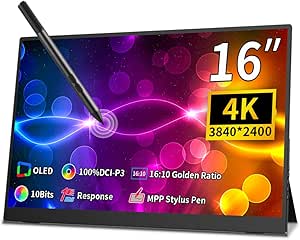 | Best for Creative Professionals and Versatile Use | Display Size: 16 inches | Resolution: 3840 x 2400 pixels | Aspect Ratio: 16:10 | VIEW ON AMAZON | See Our Full Breakdown |
| 4k color e ink monitors for eye comfort | Resolution | Display Size | Contrast Ratio | Color Gamut |
|---|---|---|---|---|
| ASUS ProArt PA279CRV 27-Inch 4 | 3840 x 2160 (4K UHD) | 27 inches | 3,000:1 | 99% DCI-P3, 99% Adobe RGB |
| 14 Inch 4K OLED Portable Monit | 3840 x 2400 (4K UHD) | 14 inches | 100,000:1 | 100% DCI-P3 |
| Yodoit 4K Portable Monitor | 3840 x 2400 (4K UHD) | 16 inches | 2000:1 | 145% sRGB |
| Bigme B251 E Ink Color Monitor | 3200 x 1800 | 25.3 inches | High | — |
| Dell 27 Monitor S2725QC 4K UHD | 4K UHD | — | — | — |
| 4K OLED Touchscreen Portable M | 3840 x 2400 pixels | 16 inches | 100000:1 | 100% P3 |
More Details on Our Top Picks
ASUS ProArt PA279CRV 27-Inch 4K UHD HDR Professional Monitor for Mac
The ASUS ProArt PA279CRV stands out for its exceptional color accuracy and professional calibration, making it an ideal choice for creative professionals who need precise color reproduction. Compared with the Dell S2725QC, it offers a wider color gamut (99% DCI-P3 and Adobe RGB) and factory calibration, which is crucial for tasks like photo editing and graphic design. Its 27-inch size provides a comfortable workspace, but the 60Hz refresh rate may be less appealing for those who also want smooth motion for video editing or casual gaming. The versatile connectivity, including USB-C with 96W power delivery, enhances workflow flexibility. However, its higher price can be a barrier for hobbyists, and the size demands ample desk space. Overall, this monitor makes the most sense for professionals prioritizing color fidelity over price or gaming performance.
Pros:- Exceptional color accuracy with 99% DCI-P3 and Adobe RGB coverage
- Factory pre-calibrated with Delta E < 2 for reliable color fidelity
- Flexible connectivity options including USB-C with 96W power delivery
Cons:- Relatively high price point compared to consumer-grade monitors
- 60Hz refresh rate may not satisfy gamers or fast-paced video editors
Best for: Professional content creators and designers who need high color accuracy and calibration out of the box
Not ideal for: Casual users or gamers seeking high refresh rates and budget options, as the price and specs favor professional workflows
- Display Size:27 inches
- Resolution:3840 x 2160 (4K UHD)
- Display Technology:LCD LED
- Contrast Ratio:3,000:1
- Brightness:400 nits
- Color Gamut:99% DCI-P3, 99% Adobe RGB
Our verdict“This monitor is perfect for professionals who need precise color with versatile connectivity, accepting the higher cost and size.”
14 Inch 4K OLED Portable Monitor UHD 3840×2400, 100% DCI-P3, 100000:1 Contrast
This portable OLED monitor delivers stunning visuals with vibrant colors and true blacks, making it ideal for photo editing, video work, and creative tasks. Its 14-inch size is significantly smaller than the ASUS ProArt, favoring mobility over workspace, and the 100% DCI-P3 coverage ensures color accuracy that rivals larger professional screens. The OLED technology provides superior contrast and color depth compared to LCD-based options like the Dell S2725QC, but the smaller screen and limited refresh rate (60Hz) make it less suitable for fast-paced gaming or extensive motion work. Its lightweight, with included stylus, makes it perfect for fieldwork, though OLED panels can sometimes warm or suffer burn-in with prolonged use. This pick is perfect for creatives needing portability without sacrificing color quality, but not for intensive gaming or prolonged static images.
Pros:- Vivid OLED display with high contrast and true blacks
- Color accuracy with 100% DCI-P3 coverage and 4K resolution
- Lightweight and portable with included stylus and accessories
Cons:- Limited refresh rate (60Hz) unsuitable for gaming or motion-intensive tasks
- OLED panels can heat up or develop burn-in with extended use
Best for: Traveling photographers, videographers, and designers who prioritize color fidelity and portability
Not ideal for: Users seeking a large display for extended desktop use or fast-paced gaming, due to small size and refresh limitations
- Display Size:14 inches
- Resolution:3840 x 2400 (4K UHD)
- Contrast Ratio:100,000:1
- Color Gamut:100% DCI-P3
- Response Time:1 ms
- Weight:1.3 pounds
Our verdict“This monitor is ideal for mobile creatives who need top-tier color quality in a compact, portable package, accepting some OLED-specific drawbacks.”
Yodoit 4K Portable Monitor, 16-inch UHD IPS Travel Screen with Sunlight-Readable 1200nit Brightness, 145% sRGB, 2000:1 Contrast
The Yodoit 16-inch portable monitor combines high brightness with a wide color gamut, making it particularly suited for outdoor work or environments with challenging lighting. Its 1200-nit brightness exceeds many competitors like the ASUS or Dell, which typically max out at 400-500 nits, enabling clear visibility even in direct sunlight. The IPS panel ensures consistent color and wide viewing angles, and its 145% sRGB coverage guarantees vibrant, accurate colors. However, the 15 Hz refresh rate and 36-millisecond response time limit motion fluidity, making it less suitable for gaming or fast video editing. It’s also a larger, heavier portable option, which might challenge those seeking maximum portability. Still, for outdoor photographers, field engineers, or anyone who needs a bright, color-rich display outside, this monitor provides an excellent solution.
Pros:- Exceptional brightness of 1200 nits for outdoor visibility
- Wide color coverage (145% sRGB) and IPS technology for accurate colors
- Versatile connectivity including USB-C and HDMI
Cons:- Limited refresh rate (15 Hz), not suitable for gaming or motion-intensive tasks
- Relatively heavy for portable use, at over 2 pounds
Best for: Outdoor professionals or field workers needing high brightness and outdoor visibility
Not ideal for: Fast-paced gamers or users wanting a lightweight portable monitor for casual desktop use
- Display Size:16 inches
- Resolution:3840 x 2400 (4K UHD)
- Brightness:1200 nits
- Color Gamut:145% sRGB
- Contrast Ratio:2000:1
- Response Time:36 ms
Our verdict“This monitor is best for outdoor or field use where brightness and color are priorities over motion smoothness or ultra-light portability.”
Bigme B251 E Ink Color Monitor, 25.3-inch
The Bigme B251 presents a different approach by mimicking printed paper with its E Ink color technology, making it an excellent choice for prolonged reading, writing, and general use with minimal eye strain. Its large 25.3-inch size provides a more expansive viewing area than smaller portable options, and the 3200 x 1800 resolution delivers sharp text and images. While the 15 Hz refresh rate and 36-millisecond response time are slow compared to LCD monitors, they are sufficient for reading, annotations, and static content, not for video or gaming. The ability to customize dark mode and refresh modes enhances eye comfort further. Unlike LCDs, it avoids blue light and flicker, which can cause fatigue. However, it lacks built-in speakers and stand adjustments, making it less versatile for multimedia or ergonomic positioning. This monitor is best for users prioritizing eye comfort and reading over motion or multimedia performance.
Pros:- Large 25.3-inch E Ink display for comfortable, eye-friendly viewing
- Blue light-free, flicker-free technology reduces eye fatigue
- Customizable settings for dark mode and refresh modes
Cons:- Slow refresh rate (15 Hz) unsuitable for motion or video
- Limited multimedia features (no built-in speakers or ergonomic adjustments)
Best for: Readers, writers, and long-form content consumers seeking maximum eye comfort and minimal blue light
Not ideal for: Users wanting a fast, color-rich display for gaming or video editing, due to slow refresh rates and static content focus
- Display Size:25.3 inches
- Resolution:3200 x 1800
- Display Technology:E Ink Color
- Contrast Ratio:High
- Refresh Rate:15 Hz
- Viewing Angle:178 degrees
Our verdict“This monitor excels for extended reading and writing tasks where eye comfort is paramount, accepting its slow refresh rate and static content limitations.”
Dell 27 Monitor S2725QC 4K UHD IPS with 120Hz Refresh Rate and FreeSync Premium
The Dell S2725QC balances 4K resolution with a high 120Hz refresh rate, making it a versatile choice for both work and entertainment. Its IPS panel provides vibrant colors and wide viewing angles, comparable to the ASUS ProArt but with a focus on general use rather than professional-grade color accuracy. The inclusion of blue light reduction and eye care technology enhances comfort during long sessions. While it lacks the pixel-perfect calibration of the ASUS, it offers a smoother experience for casual gaming and multimedia. Its USB-C port supports both display and power, simplifying desk setups. However, it doesn’t include integrated speakers or extensive ergonomic adjustments, which could impact extended use. This monitor is well-suited for users wanting a 4K display with eye-friendly features and higher refresh rates for multimedia tasks at a more moderate price point.
Pros:- Vivid 4K visuals with 99% sRGB coverage
- 120Hz refresh rate with FreeSync Premium for smooth motion
- Blue light reduction and eye care technology for comfort
Cons:- Lack of built-in speakers and limited ergonomic adjustments
- Higher price compared to basic 4K monitors without high refresh rates
Best for: Home office users who want a balance of 4K clarity, eye comfort, and smooth media playback
Not ideal for: Highly professional color work or gaming enthusiasts seeking ultra-quick response times or advanced ergonomics
- Screen Size:27 inches
- Resolution:4K UHD
- Panel Type:IPS
- Refresh Rate:120Hz
- Color Coverage:99% sRGB
- Connectivity:USB-C with 65W
Our verdict“Suitable for users seeking a 4K monitor with eye protection and smoother multimedia performance, with some compromises on ergonomics and color calibration.”
4K OLED Touchscreen Portable Monitor 16 inch MPP Stylus Support (PI-X9)
The PI-X9 stands out for its stunning 4K OLED display, offering vibrant colors and superior contrast compared to traditional LCD-based monitors like the ASUS ProArt PA279CRV. Its touch and stylus support make it ideal for artists, designers, and those who want an interactive experience, combining portability with high-resolution clarity. Unlike the 14-inch OLED portable, the PI-X9’s larger size enhances productivity and creative work, though its limited to 60Hz refresh rate makes it less suitable for fast-paced gaming. The need for multiple cables can be a hassle, and its premium price is a consideration for budget-conscious users. Nevertheless, its wide viewing angles and eye care certification support comfortable extended use. This monitor fits best for mobile creatives or professionals who prioritize color accuracy and portability over high refresh rates.
Pros:- Stunning 4K OLED display with 100% P3 color gamut and high contrast
- Supports touch and stylus input for creative flexibility
- Lightweight with versatile connectivity including HDMI, USB-C, and DisplayPort
Cons:- Limited to 60Hz refresh rate, not suited for fast-paced gaming
- Requires multiple cables for full connectivity setup
- Premium price point may be prohibitive for some users
Best for: Creative professionals, digital artists, and professionals needing portable 4K with vibrant color and touch support
Not ideal for: Gamers or users seeking ultra-fast refresh rates for competitive gaming or smooth motion
- Display Size:16 inches
- Resolution:3840 x 2400 pixels
- Aspect Ratio:16:10
- Display Technology:OLED
- Brightness:400 lumens
- Color Gamut:100% P3
- Contrast Ratio:100000:1
- Refresh Rate:60 Hz
- Weight:2 lbs
Our verdict“This monitor is best suited for mobile creatives and professionals who want high-quality visuals and interactive features on the go.”

How We Picked
I evaluated these monitors based on several key criteria: display resolution and color reproduction quality, eye comfort features like flicker-free technology and brightness levels, build quality and portability, and overall value for their price. I prioritized products that balance visual clarity with eye-friendly features, aiming to find options suitable for long-term use without discomfort. The ranking reflects a combination of performance, usability, and unique strengths, ensuring a diverse set of picks for different needs and budgets.| 4k color e ink monitors for eye comfort | Display Technology |
|---|---|
| ASUS ProArt PA279CRV 27-Inch 4 | LCD LED |
| 14 Inch 4K OLED Portable Monit | — |
| Yodoit 4K Portable Monitor | — |
| Bigme B251 E Ink Color Monitor | E Ink Color |
| Dell 27 Monitor S2725QC 4K UHD | — |
| 4K OLED Touchscreen Portable M | OLED |
Factors to Consider When Choosing 4k Color E Ink Monitors For Eye Comfort
Selecting a 4k color e ink monitor for eye comfort involves balancing several factors. First, consider the display’s color accuracy and resolution—important for professional work or detailed reading. Next, evaluate the eye comfort features such as flicker-free technology, adjustable brightness, and anti-glare coatings, which can greatly reduce fatigue. Portability and screen size matter if you plan to use the monitor outdoors or on the go; larger screens are more comfortable but less portable. Price and build quality should also align with your expected usage, as premium models tend to offer better eye comfort features but at a higher cost. Understanding these factors helps avoid common pitfalls like choosing a high-resolution screen without comfort features or sacrificing portability for performance.Display Quality and Resolution
The core of any monitor choice lies in its display quality. 4k resolution ensures sharp images and fine detail, essential for photo editing and professional work. Color accuracy, measured through sRGB and AdobeRGB coverage, indicates how true-to-life the colors appear. E ink monitors excel here by providing stable, flicker-free visuals that mimic printed paper, but often with limited color range. When evaluating options, look for models that balance high resolution with realistic color reproduction to get the best of both worlds—crisp visuals without eye strain.
Eye Comfort Features
Features like flicker-free backlighting, adjustable brightness, and anti-glare coatings are vital for reducing eye fatigue. E ink monitors naturally excel in this area because they reflect ambient light like paper, eliminating flicker and blue light concerns. Some models also include special filters or modes that shift color temperature or reduce blue light further. Prioritize these features if you plan long sessions, especially in varied lighting conditions, to minimize strain and maintain comfort over time.
Portability and Size
If mobility or outdoor use is a priority, consider the physical size and brightness of the monitor. Portable e ink screens like the Yodoit or the OLED options are lightweight and compact, but the tradeoff is often a smaller display or reduced color vibrancy. Larger screens, such as the Bigme B251, provide more reading space and are easier on the eyes but sacrifice portability. Think about where you’ll use the monitor most—if outdoors or on the move, brightness and weight are critical considerations.
Price and Durability
While premium models with advanced features tend to cost more, they often deliver a better balance of eye comfort and display quality. Durability and build quality matter if the monitor will be frequently transported or used outdoors. E ink monitors generally have longer-lasting screens since they don’t rely on backlit pixels, but check for factors like sturdy casing and reliable connectors. Setting a budget that aligns with your needs helps avoid overspending on features you won’t use or sacrificing critical comfort features.
Tradeoffs and Limitations
Every monitor type presents compromises. OLED screens, for instance, offer superior color and contrast but can cause eye fatigue over time due to their high brightness and intense colors. E ink monitors excel in comfort but lack fast refresh rates and vibrant color for multimedia. Recognizing these tradeoffs enables smarter choices aligned with your primary use—whether for long reading sessions, color-critical work, or portable outdoor use. Clarifying your priorities helps find the best fit within your budget.
Frequently Asked Questions
Are 4k color e ink monitors suitable for professional photo editing?
While some 4k color e ink monitors can deliver impressive resolution and decent color accuracy, they are generally not the first choice for professional photo editing. E ink displays excel in reducing eye strain and offering stable visuals but often fall short in vibrant color range and fast refresh rates needed for editing workflows. If your work demands precise color matching and rapid adjustments, a high-quality IPS or OLED monitor might be more appropriate, though they come with higher eye fatigue risks. For casual editing or long-term reading, e ink remains a comfortable option.
Can I use an OLED 4k monitor for all-day work without eye fatigue?
OLED monitors provide stunning visuals with high contrast and vibrant colors, but their intense brightness and color saturation can cause eye fatigue during extended use. If you primarily work in a controlled environment with adjustable lighting, OLEDs can be suitable, especially if you enable comfort settings like blue light filters. However, for prolonged reading or writing sessions, e ink or monitors with flicker-free technology may offer a more comfortable experience. The key is to balance visual quality with your tolerance for brightness and contrast.
What should I prioritize if I plan to use a 4k color e ink monitor outdoors?
For outdoor use, prioritize high brightness levels, anti-glare coatings, and portability. Brightness is essential to combat sunlight, so models like the Yodoit with 1200 nits are ideal. Anti-glare surfaces help reduce reflections that hinder readability, and a lightweight, durable design ensures ease of transport. Keep in mind that color vibrancy may be limited, but for reading or simple editing outdoors, these features significantly enhance comfort and usability. Compatibility with portable power sources is also a plus for extended outdoor use.
Are there any downsides to choosing a 4k e ink monitor over traditional screens?
Despite their comfort benefits, 4k e ink monitors often come with limitations such as slower refresh rates, limited color gamuts, and a lack of multimedia features like fast response times or high contrast. They are primarily designed for static images, reading, or light editing, making them less suitable for video or fast-paced tasks. Additionally, some models may be more expensive per inch of screen size, and their availability can be limited. Understanding these tradeoffs helps ensure you pick a monitor aligned with your primary activities.
How does the refresh rate affect eye comfort on these monitors?
The refresh rate influences how smoothly images update on the screen. Higher refresh rates reduce flicker and motion blur, which can contribute to eye fatigue over time. E ink monitors typically have very low refresh rates, which is actually beneficial for eye comfort when viewing static content but not suitable for dynamic visuals or video playback. Conversely, OLED and IPS monitors with higher refresh rates can cause flickering or blue light exposure that may lead to fatigue, especially during extended sessions. Matching the monitor’s refresh rate to your usage is key to maintaining comfort.
Conclusion
For most users, the ASUS ProArt PA279CRV offers the best overall balance of image quality, eye comfort features, and versatility, making it ideal for professional work and long sessions. If portability and outdoor readability are priorities, the Yodoit 4K Portable Monitor provides excellent brightness and lightweight convenience. Budget-conscious buyers seeking comfort without sacrificing too much resolution might find the Bigme B251 to be a smart choice. For those new to e ink technology, starting with a flexible, mid-range model ensures a smooth transition. Ultimately, your choice should depend on your primary use—professional editing, outdoor reading, or portable convenience—and your comfort preferences.