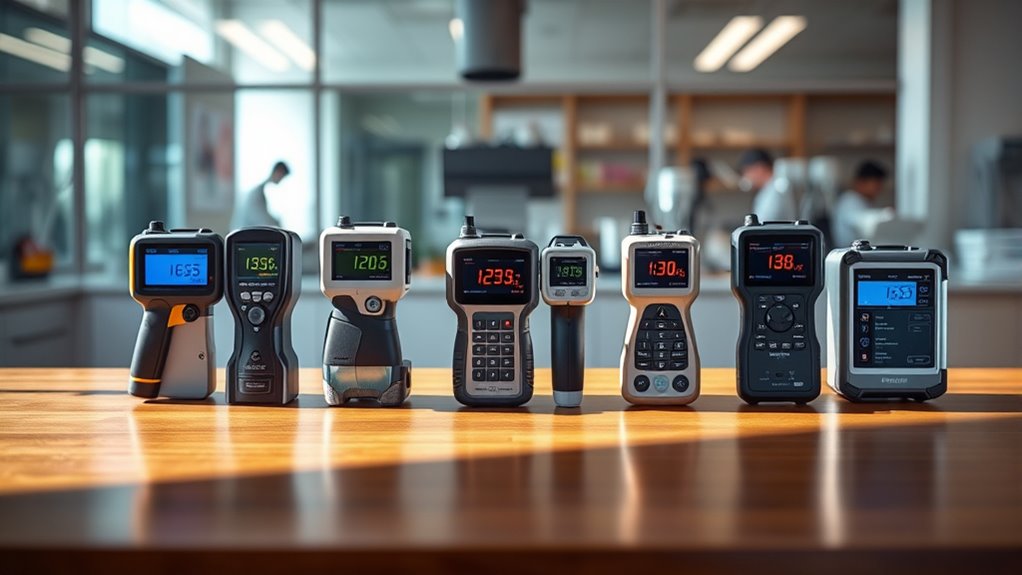

When choosing a geiger counter, the main considerations are accuracy, ease of use, and versatility. The GQ 600 PRO stands out as the best overall for its real-time data sharing and comprehensive detection capabilities. For those seeking portability, the MOESAPU Geiger Counter offers a rechargeable handheld design with a clear display. If budget is a concern, the GQ GMC-300S provides solid performance at a more accessible price point. Each of these options balances features with tradeoffs like complexity versus simplicity or cost versus advanced functionality. Keep reading for a detailed breakdown to help you find the perfect fit for your needs.

Get books and cozy reading nights delivered free with Prime
- Fast, free delivery on millions of items
- Prime Video, Amazon Music and more included
- Member-only deals all year
Key Takeaways
- Top-tier models like the GQ 600 PRO excel in data sharing and multi-radiation detection, ideal for advanced users.
- Portability and ease of use often come together in models like the MOESAPU, making them suitable for fieldwork or casual monitoring.
- Budget options such as the GQ GMC-300S deliver reliable performance without complex features, perfect for beginners.
- Higher-end picks tend to include larger displays, multiple alarm types, and better build quality, but at a higher cost.
- Most models vary in their detection scope—some focus on alpha and beta, while others excel at gamma and X-ray detection—so match features to your specific needs.
| GQ 600 PRO Geiger Counter Nuclear Radiation Detector – Portable Dosimeter for Alpha, Beta, Gamma, X-Ray with Real-Time Data and Cloud Sharing |  | Best Overall for Professional and Data-Driven Use | Detection Capabilities: Alpha, Beta, Gamma, X-Ray | Display: LCD | Connectivity: WiFi, USB | VIEW ON AMAZON | See Our Full Breakdown |
| Smart Geiger Counter Radiacode-102 with Free Mobile App |  | Best for Mobile-Integrated Rapid Detection | Detection Speed: up to 20x faster than basic models | Reference Count Rate: 1 μSv/h = 30 cps on Cs-137 | Spectral Resolution: 9.5% (+/- 0.4%) | VIEW ON AMAZON | See Our Full Breakdown |
| APOWER RD-3 Geiger Counter Nuclear Radiation Detector for Beta, Gamma, and X-ray Detection |  | Best for Environmental and Laboratory Use with Customizable Settings | Detection Types: Gamma, Beta, X-ray | Cumulative Dose Range: 0.05uSv-50.0mSv | Energy Response: 33KeV-3MeV | VIEW ON AMAZON | See Our Full Breakdown |
| MOESAPU Geiger Counter Nuclear Radiation Detector, Rechargeable Handheld Dosimeter with 2.4″ TFT Display, Detects X-ray, Beta, Gamma Radiation, FS5000 (Yellow) |  | Best for Long-Duration, Portable Dose Monitoring | Sensor: J321 | Display: 2.4″ TFT LCD | Detection Range: 0.01μSv/h to 50mSv/h | VIEW ON AMAZON | See Our Full Breakdown |
| Nuclear Radiation Detector GQ GMC-800 Geiger Counter with Large Color LCD Display and Multiple Alarm Types |  | Best for User-Friendly, Long-Term Data Storage | Display: Large color TFT LCD | Detection Types: Beta, Gamma, X-ray | Alarm Types: Visual LED, Audio, Vibration, Voice | VIEW ON AMAZON | See Our Full Breakdown |
| Radiation Detector AEGTEST Radar-5633 Portable Nuclear Radiation Detector with LCD Screen, Rechargeable Dosimeter for Beta, Gamma, X-ray Detection |  | Best Overall for Professional and Personal Monitoring | Detection Range: 33 keV to 3 MeV | Accuracy: -17% to +20% (for 137Cs γ) | Cumulative Dose Range: 0.1 μSv to 9999 mSv | VIEW ON AMAZON | See Our Full Breakdown |
| Smart Geiger Counter Radiacode 110 with Free Mobile App – Nuclear Radiation Detector |  | Best for Advanced Real-Time Monitoring and Spectral Analysis | Sensitivity: 77 cps = 1 μSv/h for Cs-137 | Spectral resolution: 8.4% ±0.3% FWHM | Detection capabilities: Gamma, X-ray, hard beta | VIEW ON AMAZON | See Our Full Breakdown |
| Geiger Counter Radiation Detector, Portable Radiation Detector |  | Best Compact and User-Friendly for General Use | Detection Range: 0.00-50000μSv/h | Cumulative Dose: 0.00μSv-5000mSv | Energy Range: 48 keV-1.5MeV | VIEW ON AMAZON | See Our Full Breakdown |
| FNIRSI GC-03 3-in-1 Geiger Counter Nuclear Electromagnetic Detector |  | Best Multi-Function Device for Gamma, Beta, and X-ray Detection | Display Modes: 3 | Real-Time Monitoring: Yes | Detection Types: Gamma, Beta, X-ray | VIEW ON AMAZON | See Our Full Breakdown |
| Nuclear Radiation Detector GQ GMC-800 | | Best for Long-Term Data Storage and User-Friendly Interface | Display: Large color LCD | Alarm Types: Visual LED, Audio, Vibration, Voice | Data Storage: Up to 10 years | VIEW ON AMAZON | See Our Full Breakdown |
| Radar-9989 Geiger Counter with USA LND7311 Sensor, High-Precision Nuclear Radiation Detector for Alpha, Beta, Gamma, and X-ray Detection |  | Best Overall for Precision and Versatility | Sensor: LND7311 mica window sensor | Detection Types: Alpha, Beta, Gamma, X-ray | Display: 3.5-inch color LCD | VIEW ON AMAZON | See Our Full Breakdown |
| Smart Geiger Counter Radiacode-103 with Free Mobile App |  | Best for Isotope Identification and Mobile Integration | Measurement Speed: up to 20 times faster than regular devices | Reference Count Rate: 1 μSv/h = 30 cps on Cs-137 | Spectral Resolution: 8.4% (+/- 0.4%) | VIEW ON AMAZON | See Our Full Breakdown |
| GQ GMC-300S Digital Nuclear Radiation Detector Monitor Meter Geiger Counter Radiation Dosimeter |  | Best Budget-Friendly Data Logger for Versatile Use | Real-time data logging: Yes | Memory: Internal | Measurement modes: Dosimeter, CPM, Graph | VIEW ON AMAZON | See Our Full Breakdown |
| FNIRSI GC-01 Geiger Counter Nuclear Radiation Detector with Curve Display |  | Best Portable for Environment and Industrial Use | Detection Range: 48 KeV-1.5 MeV | Cumulative Dose: 0.00 uSv-500.0 mSv | Alarm Modes: Light, Vibration, Sound | VIEW ON AMAZON | See Our Full Breakdown |
| GQ GMC-500Plus Geiger Counter Nuclear Radiation Detector Monitor Dosimeter |  | Best Advanced Monitor with Cloud and Server Integration | Product Dimensions: 5 x 3 x 1 inches | Item Weight: 1.76 ounces | Detection Range: Up to 10x higher than previous models | VIEW ON AMAZON | See Our Full Breakdown |
| geiger counter | Display |
|---|---|
| GQ 600 PRO Geiger Counter Nucl | LCD |
| Smart Geiger Counter Radiacode | transflective blue-backlit |
| APOWER RD-3 Geiger Counter Nuc | Color LCD |
| MOESAPU Geiger Counter Nuclear | 2.4" TFT LCD |
| Nuclear Radiation Detector GQ | Large color TFT LCD |
| Radiation Detector AEGTEST Rad | Color TFT LCD |
| Smart Geiger Counter Radiacode | Transflective blue-backlit |
| Geiger Counter Radiation Detec | — |
| FNIRSI GC-03 3-in-1 Geiger Cou | — |
| Nuclear Radiation Detector GQ | Large color LCD |
| Radar-9989 Geiger Counter with | 3.5-inch color LCD |
| Smart Geiger Counter Radiacode | transflective blue-backlit |
| GQ GMC-300S Digital Nuclear Ra | — |
| FNIRSI GC-01 Geiger Counter Nu | — |
| GQ GMC-500Plus Geiger Counter | Large LCD with auto orientation |
More Details on Our Top Picks
GQ 600 PRO Geiger Counter Nuclear Radiation Detector – Portable Dosimeter for Alpha, Beta, Gamma, X-Ray with Real-Time Data and Cloud Sharing
The GQ 600 PRO stands out for its professional-grade detection capabilities across Alpha, Beta, Gamma, and X-Ray radiation, making it ideal for users who need precise, reliable measurements. Its real-time data logging and WiFi cloud sharing surpass basic models like the GQ GMC-800, which lacks cloud features but offers simpler operation. While the 600 PRO’s advanced features and high sensitivity are advantageous for research or industrial environments, they come with a higher cost and complexity that may overwhelm casual users. The rechargeable USB-C power and unlimited internal and cloud data storage provide long-term convenience, but the reliance on WiFi could limit use in remote locations. Overall, this model is best for professionals needing detailed data management and high accuracy, with the tradeoff of increased complexity and expense.
Pros:- High sensitivity with professional-grade detection across multiple radiation types
- Real-time data logging and seamless cloud sharing for detailed analysis
- Rechargeable via USB-C for convenient power management
Cons:- Requires WiFi connection for full cloud features, limiting portability in remote areas
- Complex interface may be challenging for casual or first-time users
Best for: Radiation safety officers, industrial inspectors, or researchers requiring precise, cloud-integrated data management.
Not ideal for: Casual hobbyists or emergency responders seeking a simple, low-cost device without cloud features or complex controls.
- Detection Capabilities:Alpha, Beta, Gamma, X-Ray
- Display:LCD
- Connectivity:WiFi, USB
- Power:Rechargeable USB Type-C
- Data Storage:Unlimited cloud storage, internal memory
Our verdict“This model is perfect for professionals who need detailed, reliable radiation data with advanced sharing capabilities, accepting higher cost and complexity.”
Smart Geiger Counter Radiacode-102 with Free Mobile App
The Radiacode-102 excels in fast, on-the-move radiation detection, making it ideal for users who prioritize speed and real-time mapping via a mobile app. Its detection speed, being up to 20 times faster than basic models like the GQ GMC-800, allows quick situational assessment. The spectral analysis feature helps identify specific isotopes, which is a key advantage over simpler models lacking isotope discrimination. Its multiple alarm modes and GPS-based mapping enhance safety, but the device’s complexity and limited info on battery life could pose challenges for less tech-savvy users. While the app integration offers convenience, it may require a learning curve and reliable connectivity. This pick makes the most sense for those needing rapid, detailed data on the go, but less so for users seeking simplicity or longer battery life without app reliance.
Pros:- Exceptional detection speed enhances safety during rapid assessments
- Spectral analysis helps identify specific isotopes for detailed understanding
- Real-time mapping via mobile app improves situational awareness
Cons:- Complex features may require a learning curve for new users
- Limited info on battery life, which could affect prolonged use
Best for: Field operators, emergency responders, or hobbyists who want fast, accurate readings with mobile app integration.
Not ideal for: Users preferring standalone devices with minimal setup or those with limited smartphone compatibility.
- Detection Speed:up to 20x faster than basic models
- Reference Count Rate:1 μSv/h = 30 cps on Cs-137
- Spectral Resolution:9.5% (+/- 0.4%)
- Detection Types:Cs-137, Ra-226, Th-232, U-238, Radon-222 decay
- Display:transflective blue-backlit
- Connectivity:Mobile and desktop apps with GPS
Our verdict“Ideal for users who need quick, detailed radiation data with mobile mapping, accepting a potentially steep learning curve.”
APOWER RD-3 Geiger Counter Nuclear Radiation Detector for Beta, Gamma, and X-ray Detection
The APOWER RD-3 offers precise detection of gamma, beta, and X-ray radiation with a user-friendly color LCD and customizable alarms. Compared to the MOESAPU FS5000, it provides a more comprehensive interface and flexible settings, suitable for environmental, industrial, or laboratory applications. Its long battery life of up to 8 days ensures extended use, though it requires careful handling to prevent internal damage and proper storage after measurements. The device’s accuracy and customizable alerts make it a strong choice for users who need detailed, configurable measurements, but it may be less portable and more delicate than smaller, handheld models. The RD-3 strikes a balance between usability and precision, making it suitable for specialized work environments.
Pros:- Accurate detection of multiple radiation types with customizable alarm settings
- Color LCD display for easy viewing and adjustments
- Long battery life supports extended field or lab use
Cons:- Handle with care to prevent internal damage
- Requires proper storage after use to maintain calibration
Best for: Environmental scientists, industrial inspectors, or laboratory personnel needing detailed, customizable radiation measurements.
Not ideal for: Hobbyists or emergency responders seeking a rugged, pocket-sized device for quick checks on the go.
- Detection Types:Gamma, Beta, X-ray
- Cumulative Dose Range:0.05uSv-50.0mSv
- Energy Response:33KeV-3MeV
- Display:Color LCD
- Battery:Rechargeable Lithium, Type-C, up to 8 days
- Included Batteries:1 AA
Our verdict“Best suited for professionals needing a precise, configurable detector for environmental or laboratory applications, accepting some fragility and setup requirements.”
MOESAPU Geiger Counter Nuclear Radiation Detector, Rechargeable Handheld Dosimeter with 2.4″ TFT Display, Detects X-ray, Beta, Gamma Radiation, FS5000 (Yellow)
The MOESAPU FS5000 provides a compact, portable solution with a large 2.4-inch TFT display, making it easy to monitor X-ray, Beta, and Gamma radiation in real time. Its impressive standby time of up to 30 days offers unmatched reliability for long-term environmental assessments or personal exposure tracking. While detailed specifications like dimensions and weight are not specified, its design includes a clip for convenient carrying, making it accessible for fieldwork. The device’s accuracy and long battery life make it suitable for professionals and hobbyists alike, though it requires familiarity with radiation measurements to interpret readings correctly. It may lack some advanced features of higher-end models but excels in portability and ease of use for extended periods.
Pros:- Long standby time of up to 30 days ensures reliable, ongoing monitoring
- Large TFT display for clear, real-time radiation readings
- Accurate detection of X-ray, Beta, and Gamma radiation
Cons:- Lack of detailed specifications on size and weight
- Requires prior knowledge to interpret readings effectively
Best for: Field workers, health and safety inspectors, or radiation hobbyists needing long-lasting, portable dose monitoring.
Not ideal for: Users seeking advanced spectral analysis or detailed data management features beyond basic dose readings.
- Sensor:J321
- Display:2.4″ TFT LCD
- Detection Range:0.01μSv/h to 50mSv/h
- Total Dose Range:0μSv to 1000Sv
- Battery:1800mAh rechargeable
- Response Time:0.5 seconds
Our verdict“Perfect for long-term monitoring in field environments where portability and extended battery life are essential, with some limitations in advanced features.”
Nuclear Radiation Detector GQ GMC-800 Geiger Counter with Large Color LCD Display and Multiple Alarm Types
The GQ GMC-800 combines a large, easy-to-read color LCD with multiple alarm options, making it accessible for a broad range of users—from beginners to seasoned professionals. Its data storage capacity extending up to 10 years offers a significant advantage over models like the APOWER RD-3, which lacks extensive storage. The device’s detection of beta, gamma, and X-ray radiation is accurate, and its alarms include visual, audio, vibration, and voice alerts, catering to different environments and preferences. However, the higher price point and lack of explicit battery life details might deter budget-conscious buyers or those needing prolonged, portable use without charging. The GMC-800 is well-suited for users needing reliable long-term data, especially in safety or industrial settings, despite requiring some familiarity with radiation measurement systems.
Pros:- Large, clear color LCD for easy operation and data viewing
- Multiple alarm modes including voice and vibration for versatile alerts
- Up to 10 years of data storage supports long-term record keeping
Cons:- Relatively higher cost for a specialized device
- Battery life details are not specified, which may affect planning
Best for: Safety officers, industrial inspectors, or educational institutions needing durable, long-term data logging with simple operation.
Not ideal for: Casual users or emergency responders seeking lightweight, pocket-sized devices for quick checks without extensive data storage.
- Display:Large color TFT LCD
- Detection Types:Beta, Gamma, X-ray
- Alarm Types:Visual LED, Audio, Vibration, Voice
- Data Storage:Up to 10 years
- Battery:Rechargeable, Type-C
- Dimensions:2.75 x 4.92 x 0.59 inches
Our verdict“Best suited for users requiring a reliable, easy-to-read device with extensive data storage, accepting a higher price point.”
Radiation Detector AEGTEST Radar-5633 Portable Nuclear Radiation Detector with LCD Screen, Rechargeable Dosimeter for Beta, Gamma, X-ray Detection
The AEGTEST Radar-5633 stands out for its comprehensive detection capabilities, accurately measuring Beta, Gamma, and X-ray radiation with a clear, multi-data LCD display. Unlike simpler devices such as the ND01 Geiger Counter, this model offers customizable alarms and detailed data logging, making it more suitable for users who need precise, ongoing monitoring. However, its complexity can be daunting for casual users who lack radiation knowledge, and setting correct alarm thresholds requires some understanding. The long battery life and rechargeable Type-C support add convenience, but the device’s advanced features demand familiarity to avoid misinterpretation. Best suited for professionals or serious hobbyists who value detailed data and long-term monitoring.
Pros:- Accurate detection of Beta, Gamma, and X-ray radiation
- Clear multi-data display on a single screen
- Customizable alarm system for safety alerts
- Long battery life with rechargeable Type-C support
Cons:- Complex for casual users without radiation knowledge
- Requires understanding of alarm thresholds for effective use
Best for: Radiation safety professionals, researchers, or dedicated hobbyists needing detailed, customizable monitoring
Not ideal for: Casual users or those seeking a simple, plug-and-play device without learning curve
- Detection Range:33 keV to 3 MeV
- Accuracy:-17% to +20% (for 137Cs γ)
- Cumulative Dose Range:0.1 μSv to 9999 mSv
- Display:Color TFT LCD
- Battery Life:Up to 18 days
- Charging:Type-C
Our verdict“This device is ideal for users who need detailed, long-term radiation monitoring and are comfortable with technical features.”
Smart Geiger Counter Radiacode 110 with Free Mobile App – Nuclear Radiation Detector
The Radiacode 110 excels in delivering rapid, highly sensitive radiation measurements, up to 40 times faster than basic models, thanks to its advanced spectral analysis and isotope visualization. Its integration with a mobile app enables real-time radiation mapping, GPS location tagging, and detailed spectral data, making it a powerful tool for serious users. However, its wealth of features can be overwhelming for beginners, and the cost may be prohibitive for casual or infrequent users. Compared with the GQ GMC-800, it offers more in-depth spectral insights and mapping, but at a steeper learning curve. Best suited for professionals, researchers, or dedicated hobbyists seeking comprehensive data and real-time analysis.
Pros:- High sensitivity and fast measurement speed
- Advanced isotope visualization and spectral analysis
- Real-time GPS-enabled radiation mapping via mobile app
- Multiple customizable alarm modes
Cons:- Complex features may require learning curve
- Potentially high cost for full feature set
Best for: Radiation researchers, emergency responders, or serious hobbyists needing detailed spectral and location data
Not ideal for: Casual users or those with limited technical background who prefer simple measurement tools
- Sensitivity:77 cps = 1 μSv/h for Cs-137
- Spectral resolution:8.4% ±0.3% FWHM
- Detection capabilities:Gamma, X-ray, hard beta
- Alarm modes:Up to 7 with adjustable sound, LED, vibration
- Display:Transflective blue-backlit
- Connectivity:iOS, Android, macOS, Windows
Our verdict“This model is perfect for users who prioritize speed, spectral detail, and real-time mapping over simplicity.”
Geiger Counter Radiation Detector, Portable Radiation Detector
The ND01 Geiger Counter offers a straightforward, portable solution for detecting ionizing radiation, with a three-color alarm system that quickly indicates safety levels, making it suitable for various environments like laboratories, nuclear facilities, or border control. Its multi-value LCD screen remains clear under sunlight and in low-light conditions, providing easy-to-read measurements. Compared to more feature-rich devices like the GQ GMC-800, this model is simpler to operate but lacks extensive data storage or advanced alarm customization. Its manual calibration requirement and limited detection range mean it’s best for general assessments rather than detailed scientific work. This pick makes the most sense for users needing quick, reliable alerts without complex features.
Pros:- Compact and portable design for easy carrying
- Three-color alarm system for quick safety assessment
- Clear LCD display suitable for sunlight and low-light conditions
- Suitable for a wide range of applications
Cons:- Requires manual calibration for precise measurements
- Limited to detection of ionizing radiation within specified ranges
Best for: Security personnel, educators, or hobbyists needing a portable, easy-to-read radiation detector
Not ideal for: Advanced users requiring detailed data logging or spectral analysis
- Detection Range:0.00-50000μSv/h
- Cumulative Dose:0.00μSv-5000mSv
- Energy Range:48 keV-1.5MeV
- Sensitivity:80 CPM/μSv (for Co-60)
- Power:2 x AAA batteries
- Dimensions:6.77 x 1.77 x 1.34 inches
Our verdict“This device suits users who want a simple, reliable, and portable radiation alert tool for quick assessments.”
FNIRSI GC-03 3-in-1 Geiger Counter Nuclear Electromagnetic Detector
The FNIRSI GC-03 combines gamma, beta, and X-ray detection into a single portable device, with real-time measurement and multiple display modes. Its rechargeable design offers flexibility, but it lacks RF detection capabilities that some other models, like the GQ GMC-800, include. While it provides essential radiation readings, its limited specifications mean it’s best for users who need a versatile, all-in-one device without sophisticated spectral analysis. The absence of detailed technical parameters can be a drawback for those seeking in-depth data. This makes it suitable for general detection needs where multi-mode measurement is preferred over detailed analysis.
Pros:- Multi-mode radiation detection (gamma, beta, X-ray)
- Rechargeable and portable design
- Real-time measurement for immediate results
Cons:- No RF detection capability
- Limited detailed specifications or advanced features
Best for: Field inspectors, educational institutions, or hobbyists requiring a multi-mode, portable detector
Not ideal for: Scientists or professionals needing spectral analysis or electromagnetic field measurement
- Display Modes:3
- Real-Time Monitoring:Yes
- Detection Types:Gamma, Beta, X-ray
- Rechargeable:Yes
- Detection Range:0.00-50000μSv/h
Our verdict“This device is best for users who need a versatile, multi-mode detector without advanced spectral analysis features.”
Nuclear Radiation Detector GQ GMC-800
The GQ GMC-800 delivers comprehensive radiation detection with a large color LCD, offering multiple alarm options such as visual, audio, vibration, and voice alerts. Its capability to store data for up to a decade and support firmware updates makes it ideal for long-term monitoring projects. When compared with the Radiacode 110, it’s more accessible for users who prefer a straightforward interface but still want detailed data management. The device’s complex features may require some initial effort to master, and its battery life details are not specified, which could impact prolonged use. Nonetheless, its compliance with NIST and NRC standards makes it suitable for professional settings. This pick is perfect for users seeking a reliable, user-friendly device with extensive data storage capabilities.
Pros:- Accurate and sensitive radiation detection
- User-friendly interface with customizable display
- Multiple alarm options for diverse safety needs
- Long-term data storage with easy transfer
Cons:- Complex features may need initial learning
- Battery life details are not specified
Best for: Environmental agencies, labs, or safety officers needing long-term data collection and easy interface
Not ideal for: Casual users or those requiring rapid, real-time alerts without long-term data needs
- Display:Large color LCD
- Alarm Types:Visual LED, Audio, Vibration, Voice
- Data Storage:Up to 10 years
- Battery:Rechargeable & replaceable, Type C
- Standards:Meets USA NIST & NRC standards
Our verdict“This detector is well-suited for users who prioritize reliable long-term data storage and ease of use in professional environments.”
Radar-9989 Geiger Counter with USA LND7311 Sensor, High-Precision Nuclear Radiation Detector for Alpha, Beta, Gamma, and X-ray Detection
The Radar-9989 stands out for its high sensitivity and accuracy, thanks to the U.S.-made LND7311 sensor, which makes it suitable for both professional and personal safety applications. Its real-time monitoring and multi-unit support ensure precise readings across alpha, beta, gamma, and X-ray detection, outperforming simpler models like the GQ GMC-300S in accuracy. The 3.5-inch color LCD display and customizable alarms enhance usability, but the advanced features may require some technical understanding, making it less ideal for casual users. While the price isn’t specified, its professional-grade capabilities suggest a higher cost, which might be a barrier for hobbyists or casual safety checks.
Pros:- High sensitivity and accuracy with U.S.-made sensor
- Real-time monitoring with multiple units supported
- User-friendly color LCD display and customizable alarms
Cons:- Requires some technical knowledge to operate advanced features
- Potentially higher cost for professional-grade equipment
Best for: Industrial safety officers, laboratory professionals, and serious hobbyists needing high accuracy and multi-mode detection
Not ideal for: Casual users or those seeking a budget-friendly, straightforward device without advanced features
- Sensor:LND7311 mica window sensor
- Detection Types:Alpha, Beta, Gamma, X-ray
- Display:3.5-inch color LCD
- Units Supported:μSv/h, μR/h, CPS, CPM, μSv, Bq/cm²
- Alarm System:Visual and audible alarms with customizable thresholds
- Included Accessories:Storage box, telescopic rod, Type-C charging cable, lanyard, user manual
Our verdict“This device is best suited for professionals and serious hobbyists who prioritize precision and versatility in radiation detection.”
Smart Geiger Counter Radiacode-103 with Free Mobile App
The Radiacode-103 excels in rapid detection and isotope identification, making it ideal for users who need quick responses in the field. Its ability to identify isotopes like Cs-137 and U-238 sets it apart from simpler detectors like the FNIRSI GC-01, which only measures radiation levels without spectral analysis. The device’s fast response time—up to 20 times quicker—ensures critical situations are addressed swiftly, while its compatibility with iOS, Android, and desktop apps provides advanced analysis options. However, the complexity of its features introduces a learning curve, and its relatively small display may challenge some users, especially beginners. Its higher price reflects its advanced capabilities, making it less suitable for casual or budget-conscious buyers.
Pros:- Fast detection speed improves response time
- Ability to identify specific isotopes enhances analysis
- Real-time mapping with GPS logging
Cons:- Complex features require some learning curve
- Small display can be difficult for prolonged use
- Higher price may deter casual users
Best for: Radiation safety professionals, emergency responders, and researchers needing rapid isotope identification and detailed data analysis
Not ideal for: Casual users or those new to radiation detection who prefer simple, straightforward devices
- Measurement Speed:up to 20 times faster than regular devices
- Reference Count Rate:1 μSv/h = 30 cps on Cs-137
- Spectral Resolution:8.4% (+/- 0.4%)
- Display:transflective blue-backlit
- Detection Capabilities:Gamma, X-ray, and hard beta
- Connectivity:iOS, Android, macOS, Windows
Our verdict“This pick is ideal for users who need rapid, detailed isotope identification and are comfortable navigating advanced features.”
GQ GMC-300S Digital Nuclear Radiation Detector Monitor Meter Geiger Counter Radiation Dosimeter
The GQ GMC-300S offers solid real-time data logging and multiple measurement modes, making it suitable for users who want a versatile device without the complexity of more advanced models. Its internal memory and free PC software allow for detailed data analysis, comparable to the GMC-500Plus but with less sophisticated features. The absence of specific measurement ranges and detailed specs can be a drawback, especially for those needing precise calibration or wide-range detection. Its rechargeable battery provides convenience, but the device’s simplicity might limit its appeal for users requiring in-depth spectral analysis or higher accuracy in professional environments.
Pros:- Real-time data logging with internal memory
- Multiple measurement modes for flexibility
- Rechargeable battery extends operation
Cons:- Limited detailed specifications and range info
- Potentially complex for casual users
Best for: Casual safety enthusiasts, educational users, and hobbyists looking for a budget-friendly, data-logging Geiger counter
Not ideal for: Professional laboratories or users needing detailed spectral analysis and high-precision measurements
- Real-time data logging:Yes
- Memory:Internal
- Measurement modes:Dosimeter, CPM, Graph
- Battery:Rechargeable
Our verdict“This model suits budget-conscious users who want reliable data logging and versatile measurement options without needing advanced spectral analysis.”
FNIRSI GC-01 Geiger Counter Nuclear Radiation Detector with Curve Display
The FNIRSI GC-01 is a portable choice for detecting gamma, beta, and X-ray radiation, with a straightforward curve display that visually represents radiation levels. Its multiple alarm modes—light, vibration, sound—offer flexible alerts for different environments, making it ideal for environmental monitoring and industrial safety. Compared to the GQ GMC-500Plus, it lacks advanced features like data logging or internet connectivity but remains user-friendly for quick checks. Its energy range, from 48 KeV to 1.5 MeV, means it may not detect all types of radiation, and it doesn’t display detailed spectral data, limiting its usefulness for in-depth analysis. It’s best for users who prioritize portability and ease of use over detailed diagnostics.
Pros:- Multiple alarm modes for flexible alerts
- Compact, easy one-handed operation
- Customizable settings for various environments
Cons:- Limited to specific energy range, may miss some radiation types
- No detailed spectral display
Best for: Environmental inspectors, industrial safety staff, and field personnel needing a lightweight, portable detector
Not ideal for: Laboratory professionals or users requiring detailed spectral analysis and data logging
- Detection Range:48 KeV-1.5 MeV
- Cumulative Dose:0.00 uSv-500.0 mSv
- Alarm Modes:Light, Vibration, Sound
- Language:English, Chinese
Our verdict“This device is ideal for field users who need a portable, easy-to-operate detector for quick environmental or industrial checks.”
GQ GMC-500Plus Geiger Counter Nuclear Radiation Detector Monitor Dosimeter
The GMC-500Plus combines an advanced dual-sensor setup with a large LCD display and built-in memory, making it well-suited for environments where continuous, detailed radiation monitoring is critical. Its ability to log data to servers and integrate with online maps elevates its functionality beyond basic handheld detectors like the FNIRSI GC-01. However, the setup process can be complex for newcomers, and its higher price may deter casual users. Its internet connectivity and calibration options make it a strong choice for professional use, but beginners seeking simplicity might find it overwhelming. Overall, this device balances accuracy with connectivity, ideal for comprehensive safety monitoring.
Pros:- Dual sensor design for high accuracy
- Large, auto-orienting LCD display
- Real-time data logging with server integration
Cons:- Setup complexity may challenge beginners
- Relatively high cost for casual use
Best for: Environmental agencies, hospitals, and safety officers needing detailed, connected radiation monitoring
Not ideal for: Casual or hobbyist users who prefer simple, plug-and-play devices
- Product Dimensions:5 x 3 x 1 inches
- Item Weight:1.76 ounces
- Detection Range:Up to 10x higher than previous models
- Display:Large LCD with auto orientation
- Connectivity:Wi-Fi, server data logging
- Calibration:Independent calibration factors
Our verdict“This model is best suited for professionals requiring detailed, connected radiation monitoring with extensive data analysis options.”

How We Picked
In selecting these geiger counters, I prioritized a combination of performance, usability, build quality, and value. I evaluated each device’s radiation detection accuracy across different types of radiation, as well as how straightforward they are to operate without extensive training. Durability and display quality also played a role, especially for portable models. I ranked products based on their feature set relative to their price, ensuring each offers a clear advantage for specific user needs—whether that’s advanced detection, ease of use, or affordability. This approach guarantees a balanced lineup that caters to both casual users and professional applications.Factors to Consider When Choosing Geiger Counters
Choosing the right geiger counter depends on understanding key factors that influence both performance and user experience. Considering your expected use case, budget, and technical comfort can help narrow down options. The following factors highlight what matters most when selecting a device that reliably detects radiation and is easy to operate.Detection Capabilities
Not all geiger counters detect the same types of radiation. Some are specialized for alpha and beta particles, while others excel at gamma and X-ray detection. Assessing the specific radiation risks you want to monitor will guide you toward a model with the appropriate sensors. Keep in mind that more comprehensive detectors often come with a higher price and complexity, so match the device’s capabilities to your actual needs to avoid overspending or underperforming.
Ease of Use
Many models feature digital displays, alarms, and mobile app integration, but these vary widely in complexity. Beginners should prioritize devices with simple interfaces and clear instructions, while advanced users may prefer customizable alarms and data-sharing options. Consider whether a handheld, compact device suits your mobility needs or if a larger unit with detailed readouts is more appropriate for stationary use. User-friendly models reduce setup time and minimize errors during operation.
Build Quality and Durability
Since geiger counters are often used outdoors or in variable conditions, durability is key. Look for devices with sturdy casings, water resistance, and reliable power sources. Rechargeable batteries extend usability, but having replaceable batteries can be advantageous in remote locations. Investing in a well-built device prevents costly repairs or replacements and ensures consistent performance over time.
Display and Data Features
A clear, easy-to-read display helps interpret readings quickly, especially in high-radiation areas. Features like data logging, real-time sharing, and alarms can significantly enhance usability for professionals, while casual users may prefer simpler, visual alerts. Consider whether you need detailed historical data or just immediate alerts, and select a model that offers the right balance for your application.
Price and Value
Pricing varies dramatically, reflecting differences in detection range, build quality, and additional features. While high-end models offer more advanced capabilities, they may be unnecessary for basic monitoring. Conversely, budget options may lack the precision or durability needed for critical applications. Prioritize a device that balances your budget with the features you need most, avoiding unnecessary extras that can inflate costs.
Frequently Asked Questions
How accurate are portable geiger counters for detecting low-level radiation?
Portable geiger counters generally provide reliable readings for moderate to high levels of radiation but can vary in sensitivity at very low levels. For detecting minimal radiation, especially in scientific or environmental monitoring, high-quality professional models with low detection thresholds are preferable. Always check the device’s specifications for minimum detectable dose rates, and remember that calibration and proper use are critical for accurate measurements.
Can I use a geiger counter for medical or personal safety purposes?
While some geiger counters are suitable for basic safety checks, they are not medical devices and should not be relied upon for clinical diagnostics. For personal safety, these devices can help identify areas with elevated radiation levels, such as around radioactive materials or certain medical equipment. However, understanding the limitations of your device and maintaining a safe distance from radiation sources is essential for effective and safe use.
Are digital or traditional analog geiger counters better?
Digital geiger counters are generally easier to read, often feature alarms and data logging, and can connect to mobile devices for enhanced analysis. Analog models, while simpler and sometimes more rugged, require interpretation of meter needles, which can be less precise or slower to respond. The choice depends on your preference for usability versus simplicity; digital units tend to suit most modern users better, especially in dynamic environments.
How often do geiger counters need calibration?
Calibration frequency depends on usage intensity and environmental conditions. Most manufacturers recommend calibrating your device annually or after significant impacts or repairs. Proper calibration ensures readings remain accurate over time, which is critical for professional or safety-related applications. Some advanced models allow for user calibration with specific sources, but many require professional calibration services.
What features should I prioritize if I plan to use my geiger counter outdoors?
For outdoor use, prioritize devices with rugged, water-resistant housings, long-lasting rechargeable batteries, and clear displays that are easy to read in sunlight. Features like alarms, data logging, and portability are also important. Additionally, consider models with adjustable sensitivity and multiple detection modes to adapt to changing environments, ensuring reliable performance during extended outdoor monitoring.