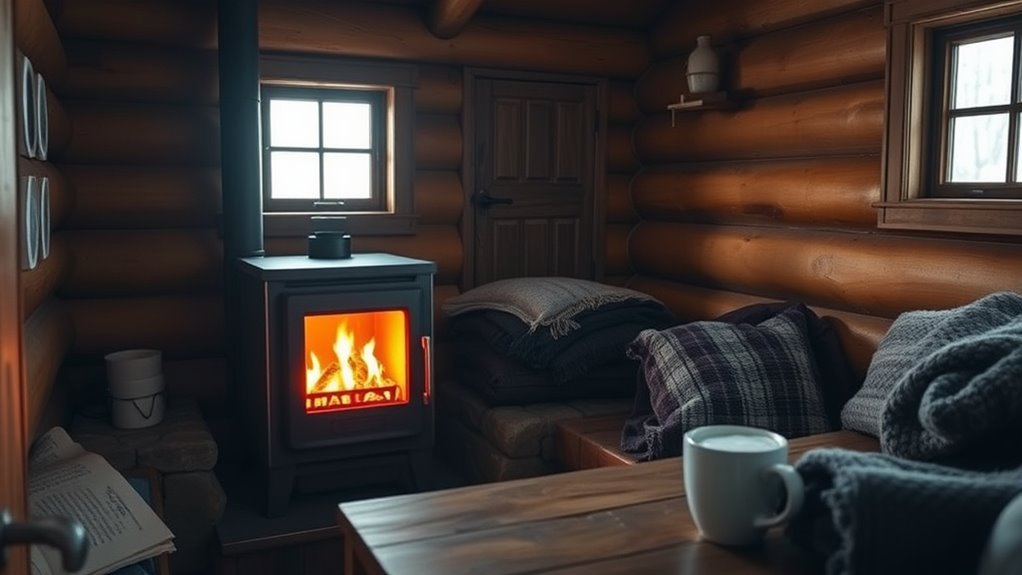

Finding the right pellet stove for an offgrid cabin involves balancing performance, fuel efficiency, and ease of use. The Ashley Hearth AP5617-W stands out as the best overall choice, offering reliable heating and a large hopper for extended burn times. For those prioritizing smart controls, the Freedom Stove PS24 Patriot provides WiFi connectivity and a cast iron build for durability. Compact options like the ComfortBilt HP40 Alpine cater to smaller cabins with limited space. The main tradeoffs in this category often involve balancing capacity against size, ease of maintenance versus initial cost, and automation versus manual control. Continue reading for a detailed breakdown of these top picks and what makes each one unique.

Get books and cozy reading nights delivered free with Prime
- Fast, free delivery on millions of items
- Prime Video, Amazon Music and more included
- Member-only deals all year
Key Takeaways
- Top-performing stoves combine large hoppers with efficient burn technology for longer off-grid operation.
- Smart controls and WiFi connectivity are increasingly common, but may increase upfront costs and complexity.
- Size and capacity vary significantly, so selecting a stove that matches your cabin’s square footage is critical.
- Ease of maintenance and cleaning can save time, especially in remote cabins without easy access to repair services.
- Price ranges vary widely; investing in a more durable, higher-capacity stove can offer better long-term value.


| pellet stoves for offgrid cabin | Hopper Capacity | BTU |
|---|---|---|
| Ashley Hearth AP5617-W Pellet | 90 lbs. | — |
| Comfort Glow Pellet Stove for | 60 lbs. | — |
| ComfortBilt HP22i Pellet Stove | 47 lbs. | 41,000 per hour |
| Castle Serenity Pellet Stove | 40 lbs. | 32,000 |
| Freedom Stove PS24 Patriot Pel | — | — |
| PelPro PP70 Pellet Stove for H | 70 lbs | 42,500 |
| PelPro PP150 Pellet Stove for | 150 lbs | 49,200 |
| ComfortBilt HP50S Pellet Stove | 47 lb. | 41,000 per hour |
| ComfortBilt HP40 Alpine Pellet | 25 lbs | — |
More Details on Our Top Picks
Ashley Hearth AP5617-W Pellet Stove with 90 lb. Hopper
The Ashley Hearth AP5617-W stands out for its ability to heat spaces up to 2,200 sq. ft., making it ideal for sizable offgrid cabins. Its large 90 lb. hopper reduces frequent refills, and smart technology optimizes fuel use, which is a significant advantage over smaller-capacity models like the ComfortBilt HP22i. However, this power comes with tradeoffs: it requires freight shipping and professional installation, which can complicate offgrid setups. Compared to the Castle Serenity, it offers higher heat output but less simplified maintenance. This pick makes the most sense for those who need reliable, extended heating without constant attention, and who can handle a more complex installation process.
Pros:- Powerful heating up to 2,200 sq. ft.
- Large 90 lb. hopper for long burn times
- Smart technology for fuel efficiency and remote operation
- EPA Certified for clean burning
Cons:- Requires freight shipping and professional installation
- Chimney system not included, adding to setup complexity
Best for: Homeowners with large, offgrid cabins needing continuous, high-capacity heating
Not ideal for: Casual users in smaller cabins or those seeking a plug-and-play solution due to shipping and installation complexity
- Heating Capacity:Up to 2,200 sq. ft.
- BTUs:30,000
- Hopper Capacity:90 lbs.
- Continuous Operation:Up to 47 hours
- Connectivity:WiFi and Bluetooth
- Control Options:Mobile app, remote, digital controls
Our verdict“This stove suits those with large cabins who want powerful, efficient heating and are prepared for a professional install.”
Comfort Glow Pellet Stove for Home Heating, Remote, 60 lb Hopper – CGPS2100
The Comfort Glow CGPS2100 offers a solid balance of capacity and convenience, heating up to 2,200 sq. ft. with a 60 lb. hopper that provides up to 30 hours of burn time. Its digital control panel, remote, and auto ignition make it accessible for users seeking straightforward operation. Compared with the Ashley Hearth AP5617-W, it’s slightly less powerful but easier to install and maintain in offgrid situations. However, its bulkiness and blower noise could be drawbacks in smaller or quieter cabins. This model makes the most sense for those who prioritize ease of use and consistent heating in large spaces, without the need for professional setup or high-tech features.
Pros:- Heats up to 2,200 sq. ft.
- Long burn time with 60 lb. hopper
- Remote control and auto ignition for convenience
- Suitable for mobile homes and large cabins
Cons:- Bulkier than some models, may be difficult in small spaces
- Blower noise could be disruptive
Best for: Offgrid homeowners seeking reliable, user-friendly heating for large cabins without complex installation
Not ideal for: Users with limited space or those wanting a sleek, low-profile unit due to its size and noise levels
- Heat Output:Up to 2,200 sq. ft.
- Hopper Capacity:60 lbs.
- Burn Time:Up to 30 hours
- Control Panel:Digital with LED display
- Remote Control:Yes
- Blower:200 CFM
Our verdict“This stove is ideal for offgrid users wanting straightforward, large-space heating with minimal fuss.”
ComfortBilt HP22i Pellet Stove Fireplace Insert
The ComfortBilt HP22i is designed to heat up to 2,800 sq. ft., making it the most powerful in this lineup for large offgrid cabins. Its 47 lb. hopper supports up to 18 hours of continuous burn, and the programmable thermostat allows precise temperature control, which is a plus over simpler models like the Castle Serenity. While its venting and installation are more complex, its high BTU output and auto ignition make it suitable for cold climates. Compared to the Ashley Hearth AP5617-W, it offers similar capacity but with more user control options. This stove is best for those who want a highly customizable, high-capacity heating solution but are comfortable with installation requirements.
Pros:- Heats up to 2,800 sq. ft.
- Multiple power settings and programmable thermostat
- Includes accessories like ash vacuum and finishing shroud
- EPA and CSA certified for safety
Cons:- Requires proper venting and professional installation
- Performance can be weather-dependent
Best for: Owners of large cabins or seasonal retreats requiring maximum heat control and capacity
Not ideal for: Small cabins or users seeking minimal setup hassle due to installation complexity
- Heating Area:2,800 sq. ft.
- BTU:41,000 per hour
- Hopper Capacity:47 lbs.
- Burn Time:Up to 18 hours
- Power Settings:5
- Features:Programmable thermostat, auto ignition
Our verdict“This model suits those who need high, customizable heating capacity and are ready for detailed setup.”
Castle Serenity Pellet Stove, 1500 sq ft Heating, Smart Controller, Manual, Weekly, Thermostat, Eco Modes, 40lb Hopper, Easy Clean, Black
The Castle Serenity offers a straightforward heating solution for spaces up to 1,500 sq. ft., with a 40 lb. hopper supporting around 20 hours of burn time. Its intuitive controls include manual, weekly, thermostat, and eco modes, making it accessible for users who prefer simple operation over high-tech features. Compared to the ComfortBilt HP22i, it has a smaller capacity but excels in ease of use and maintenance, with an easy-to-clean design that appeals to offgrid users wary of complex setups. Its limited color options and higher power consumption might be drawbacks for some. This model makes sense for those prioritizing minimal setup and straightforward operation in smaller to medium cabins.
Pros:- Easy to clean with no hidden chambers
- Multiple programmable modes including eco
- Sufficient for heating up to 1,500 sq. ft.
- Simple remote control operation
Cons:- Limited to black color only
- Higher power consumption compared to some models
Best for: Offgrid residents who desire easy-to-maintain heating in modest-sized cabins
Not ideal for: Large or cold-climate cabins needing maximum heat output or advanced features
- Heating Capacity:1,500 sq. ft.
- BTU:32,000
- Hopper Capacity:40 lbs.
- Wattage:77 Watts
- Operating Modes:Manual, Weekly, Thermostat, Eco
- Control:Remote
Our verdict“This stove is best suited for small to medium cabins where ease of use and low maintenance are priorities.”
Freedom Stove PS24 Patriot Pellet Stove – 59,964 BTU Cast Iron Wood Pellet Heater with 48 lb Hopper, WiFi & Remote Control
The Freedom Stove PS24 Patriot delivers an impressive 59,964 BTU, making it suitable for heating spaces up to 2,600 sq. ft., which sets it apart from smaller models like the Castle Serenity. Its cast iron construction promises durability, ideal for offgrid environments where reliability matters. The smart controls via WiFi and remote, along with a battery backup, enhance convenience during power outages or remote operation, a feature not always available in less sophisticated units. The higher initial cost and the need for electricity could be barriers for some users. Compared with the Ashley Hearth AP5617-W, it offers superior capacity but requires more setup effort. This stove makes sense for those who value rugged construction and high heat output in large, offgrid spaces.
Pros:- Heats up to 2,600 sq. ft. with nearly 60,000 BTU
- Durable cast iron build for longevity
- WiFi and remote control for easy operation
- Long burn times with 48 lb hopper and battery backup
Cons:- Requires electricity, limiting offgrid independence without backup options
- Higher cost and more complex setup
Best for: Large offgrid cabins or remote retreats needing robust, high-capacity heating with smart controls
Not ideal for: Small cabins or users seeking low-cost, simple heating solutions due to its complexity and expense
Our verdict“This stove is best for large, remote cabins where durability and high heat capacity are paramount, and users are prepared for a more involved setup.”
PelPro PP70 Pellet Stove for Home Heating – 70 lb Hopper, 42,500 BTU, Heats up to 2,000 sq. ft., Easy-Dial Temp Control, Built-in Thermostat, Auto-Ignition, Variable Speed Blower
The PelPro PP70 stands out for its balance of power, efficiency, and user-friendly features, making it an excellent choice for offgrid cabins that need reliable heating without complexity. Unlike the smaller HP40, it can comfortably heat larger spaces up to 2,000 sq. ft., thanks to its 42,500 BTU output. Its large 70-lb hopper minimizes refueling, while the easy-dial controls and built-in thermostat simplify operation, especially important for those unfamiliar with pellet stoves. The model’s high efficiency (89%) and low emissions also matter for off-grid setups where fuel and air quality are considerations. However, its size and weight mean it requires a spacious installation area and some assembly upon delivery. This pick is ideal for cabin owners who want dependable, straightforward heating with moderate capacity.
Pros:- High efficiency (89%) with low emissions
- Large 70-lb hopper for up to 2 days of burn time
- Easy-to-use dial control with multiple heat settings
- Suitable for various small-to-medium spaces
Cons:- Requires assembly upon delivery
- Limited to wood pellet fuel only
- Dimensions may require ample space for installation
Best for: Offgrid cabin owners needing a reliable, medium-capacity stove with simple controls
Not ideal for: Those with very limited space or seeking a compact, lightweight heating solution
- Hopper Capacity:70 lbs
- Heating Capacity:Up to 2,000 sq. ft.
- BTU:42,500
- Dimensions:22″ W x 33″ H x 22″ D
- Efficiency:89%
- Auto-Ignition:300W
Our verdict“This stove suits offgrid cabins where reliable, moderate heating and ease of use are priorities.”
PelPro PP150 Pellet Stove for Home Heating – 150 lb Hopper, 49,200 BTU, Heats up to 2,500 sq. ft., Easy-Dial Temp Control, Built-in Thermostat, Quiet Blower
The PelPro PP150 is tailored for bigger cabins or workshops that demand sustained heat over larger areas, making it a step up from the PP70. Its impressive 49,200 BTU capacity can warm up to 2,500 sq. ft., and the enormous 150-lb hopper means less frequent refueling—ideal for remote locations. Compared to the smaller PP70, it offers higher power, but its larger size and dimensions (24-1/2″ W x 38-1/2″ H x 22-7/8″ D) could be a challenge in tighter spaces. Its EPA certification and low emissions (0.53 grams/hr) are advantageous for off-grid living where environmental impact matters. Though assembly is required and the hopper extension is sold separately, this model suits offgrid owners who prioritize long-term, high-capacity heating without constant maintenance.
Pros:- High heating output suitable for large spaces
- Massive 150-lb hopper reduces refueling frequency
- EPA-certified with low emissions
- Reliable, quiet operation
Cons:- Requires assembly upon delivery
- Large dimensions may limit placement options
- Hopper extension sold separately for larger capacity
Best for: Owners of large cabins or workshops needing consistent, high-capacity heat
Not ideal for: Small cabins or limited installation spaces due to its size
- Hopper Capacity:150 lbs
- Heating Area:2,500 sq. ft.
- BTU:49,200
- Dimensions:24-1/2″ W x 38-1/2″ H x 22-7/8″ D
- Efficiency:88%
- Emission:0.53 grams/hr
Our verdict“This stove is best for those with spacious offgrid cabins needing high, sustained heat and minimal refuel interruptions.”
ComfortBilt HP50S Pellet Stove, 2,200 sq. ft., 47 lb. Hopper, Black
The ComfortBilt HP50S offers a practical balance between size and capacity, making it ideal for offgrid cabins that need effective heating without overwhelming space. It heats up to 2,200 sq. ft. with 41,000 BTU, comparable to larger models but in a more space-efficient form. The 47-lb hopper provides roughly a day’s worth of fuel, suitable for daily refueling routines typical in off-grid setups. Its space-saving design and features like multiple power settings, a programmable thermostat, remote control, and auto ignition enhance convenience, especially for users who prefer straightforward operation. Compared to the smaller HP40, the HP50S provides more power for larger spaces but still remains manageable for typical cabin installations. It’s a solid choice for those who want reliable heating, with some tradeoffs in hopper size and long-term durability info.
Pros:- Efficient heating for spaces up to 2,200 sq. ft.
- Multiple power settings and programmable thermostat
- Compact, space-saving design
- Includes remote control and auto ignition
Cons:- Requires regular maintenance of ash pan and hopper
- Initial setup may be complex for some users
- Price not specified, which could be a concern
Best for: Offgrid cabin owners needing a compact yet capable stove for medium-sized spaces
Not ideal for: Very small cabins or users seeking long burn times without frequent refueling
- Heating Area:2200 sq. ft.
- BTU:41,000 per hour
- Hopper Capacity:47 lb.
- Burn Time:up to 23 hours
- Material:Alloy Steel
- Color:Black
Our verdict“This stove fits offgrid owners who want a reliable, space-efficient heater with user-friendly features for medium-sized cabins.”
ComfortBilt HP40 Alpine Pellet Stove, 1,500 sq. ft., 25 lb. Hopper, Black
The ComfortBilt HP40 Alpine shines as a compact, efficient option for smaller offgrid cabins or workshops, providing adequate heat for up to 1,500 sq. ft. with 26,224 BTU. Its small 25-lb hopper means it’s best suited for daily or frequent refueling, which could be a downside for those seeking long unattended burn times. Compared to the larger HP50S, it offers less capacity but fits into tighter spaces easily thanks to its slim, lightweight design. The inclusion of a remote, auto ignition, and adjustable power settings makes it user-friendly, though customer ratings suggest some users find durability or long-term performance uncertain. This pick makes sense for owners with limited space who prioritize portability and ease of use over extended burn times.
Pros:- Ideal for small to medium spaces up to 1,500 sq. ft.
- Adjustable power settings and remote control
- Compact, lightweight design
- EPA and CSA certified
Cons:- Limited long-term performance info
- No listed price, which could hinder decision-making
Best for: Small cabin owners or those with limited installation space needing efficient, short-term heating
Not ideal for: Large cabins or owners seeking long unattended burn durations
- Heating Capacity:1500 sq. ft.
- BTU Output:26,224 BTU/hr
- Hopper Capacity:25 lbs
- Color:Black
- Certifications:EPA and CSA
Our verdict“This stove is well-suited for small cabins or limited spaces where portability and quick heating are more important than long-term unattended operation.”

How We Picked
In evaluating these pellet stoves, I focused on key factors that matter most for offgrid cabin use: heating capacity relative to size, fuel efficiency, ease of operation, and build quality. Reliability and safety features, such as automatic ignition and thermostatic control, also played a significant role. Cost-effectiveness was considered alongside durability and maintenance needs, as these stoves must operate dependably in remote settings without frequent repairs. The ranking reflects a balance of performance, versatility, and value, aiming to help offgrid dwellers find a stove suited to their specific cabin size and energy setup.Factors to Consider When Choosing Pellet Stoves For Offgrid Cabins
Choosing the right pellet stove for an offgrid cabin requires considering several factors beyond initial cost. Size and heating capacity should match your cabin’s square footage to ensure efficient warmth without overloading the system. Fuel efficiency becomes critical when fuel supply is limited or unpredictable, so look for models with good burn rates and auto-shutdown features. Ease of use, including digital controls and maintenance requirements, helps prevent frustration during long stays. Safety features and build quality are especially important in remote locations where quick repairs may not be possible. Lastly, consider your budget and whether investing in premium features like WiFi connectivity or larger hoppers aligns with your long-term needs.Heating Capacity and Size
Matching a stove’s heating capacity to your cabin’s size prevents wasted energy and ensures consistent warmth. Larger cabins require higher BTU output and bigger hoppers, but bigger units can also mean increased size and weight. Conversely, smaller cabins benefit from compact models that heat efficiently without taking up too much space. Be cautious about overestimating your needs; a stove too powerful for your space can lead to unnecessary fuel consumption and difficulty controlling temperatures. Consider your specific climate and insulation quality when selecting capacity.
Fuel Efficiency and Capacity
Fuel efficiency directly impacts how often you’ll need to refill the hopper and how sustainable your operation is over time. Look for models with advanced combustion technology that maximizes burn rates. The hopper size determines how long the stove can run without refueling—important for offgrid setups where trips to refill fuel may be infrequent. Larger hoppers are advantageous but often come with increased size and cost. Balance your fuel supply logistics with your stove’s capacity to optimize long-term operation.
Ease of Use and Control
Stoves with digital controls, remote operation, or smart connectivity simplify managing temperature and burn rates, especially when you’re away from the cabin. Automatic ignition and thermostats help maintain a consistent environment without constant monitoring. However, these features can add complexity and increase initial costs. Simpler manual models might require more hands-on operation but tend to be more reliable over time. Consider your comfort with technology and how much time you want to devote to stove management.
Build Quality and Safety Features
Durability is vital for offgrid cabins, where repairs might not be immediately available. Look for stoves made from high-quality materials like cast iron or steel, which withstand the rigors of regular use. Safety features such as automatic shut-off, overheat protection, and sturdy glass doors add peace of mind. Proper venting and installation are equally important to prevent fire hazards. Investing in a well-built model reduces long-term maintenance and replacement costs.
Budget and Long-Term Value
While lower-priced models can be appealing, they often compromise on capacity, efficiency, or durability. Conversely, premium models with advanced features can lower operating costs and improve convenience over time. Think about your expected usage, fuel supply, and maintenance willingness when setting your budget. Sometimes, paying more upfront results in a better fit for your needs and fewer hassles down the line. Carefully weigh initial costs against projected longevity and operational savings.
Frequently Asked Questions
How much space does a pellet stove need for proper ventilation?
Proper ventilation is essential for safe operation and optimal performance. Most pellet stoves require a venting system that extends outside the cabin, typically through a chimney or vent pipe that meets local codes. The space around the venting should be clear of obstructions, and the stove should be installed with adequate clearance from walls and combustible materials. It’s important to follow the manufacturer’s specifications and local regulations to ensure safe and efficient venting. Proper ventilation not only prevents dangerous buildup of fumes but also maintains good airflow for consistent heating.
Can I run a pellet stove off solar power in an offgrid setup?
Running a pellet stove directly off solar power is generally impractical because these stoves require a steady, high-current power supply for ignition and fans. However, you can integrate a pellet stove into an offgrid system with a reliable battery bank and a solar inverter capable of handling the stove’s power draw. This setup ensures continuous operation during periods of low sunlight or at night. Keep in mind, this increases the complexity and initial cost of your offgrid power system, so careful planning and capacity assessment are essential. For most offgrid cabins, a dedicated generator or grid connection remains more straightforward for pellet stove operation.
What maintenance is required to keep a pellet stove running reliably offgrid?
Regular maintenance is key to ensuring your pellet stove operates smoothly in an offgrid setting. This includes daily or weekly cleaning of the burn pot and ash removal, checking the hopper for blockages, and inspecting the venting system for obstructions or corrosion. Periodically, the auger and fans should be lubricated or replaced as needed, and the stove’s internal sensors calibrated. Keeping spare parts on hand is advisable, especially in remote locations. Consistent maintenance minimizes downtime and prolongs the life of your stove, which is crucial when access to repair services is limited.
Are pellet stoves suitable for extremely cold climates?
Pellet stoves can perform well in cold climates, provided they have adequate capacity and insulation. Look for models with higher BTU ratings and larger hoppers to sustain longer burns during frigid weather. Some stoves feature advanced control systems to optimize combustion in low temperatures, but very cold conditions may still challenge even the best models. Ensuring proper installation, including insulated vent pipes and a well-sealed cabin, enhances overall efficiency. In extreme cold, supplementing with additional heating sources or using a high-capacity stove becomes necessary to maintain comfort.
How do I choose the right size pellet stove for my offgrid cabin?
Selecting the correct size hinges on your cabin’s square footage, insulation quality, and climate. Generally, a stove rated around 30-40 BTU per square foot suffices for moderate climates, but colder regions demand higher ratings. Overestimating capacity can lead to inefficiency and difficulty controlling temperatures, while underestimating results in inadequate heating. Consider the stove’s heat output, as well as its capacity for continuous operation, especially if you plan to spend extended periods away. Consulting with a professional or using online calculators can help match your specific needs with an appropriate model.
Conclusion
For those seeking a reliable, all-around pellet stove, the Ashley Hearth AP5617-W offers a strong combination of capacity, ease of use, and durability, making it ideal for most offgrid cabins. Budget-conscious buyers or those with small spaces might prefer the ComfortBilt HP40 Alpine, which delivers efficient heating in a compact form. If you prioritize smart features and long run times, the Freedom Stove PS24 Patriot provides advanced controls and robust construction. Beginners should lean toward models with simple operation, while larger cabins or colder climates benefit from higher BTU capacity and bigger hoppers. Ultimately, choosing the right stove depends on your cabin’s size, your fuel logistics, and how much automation you desire.