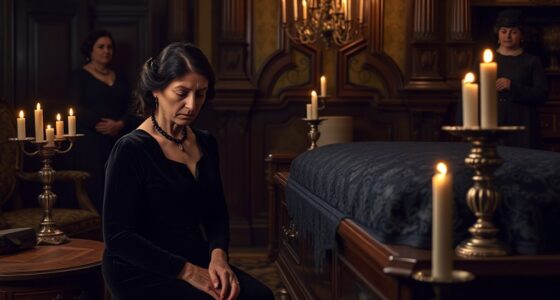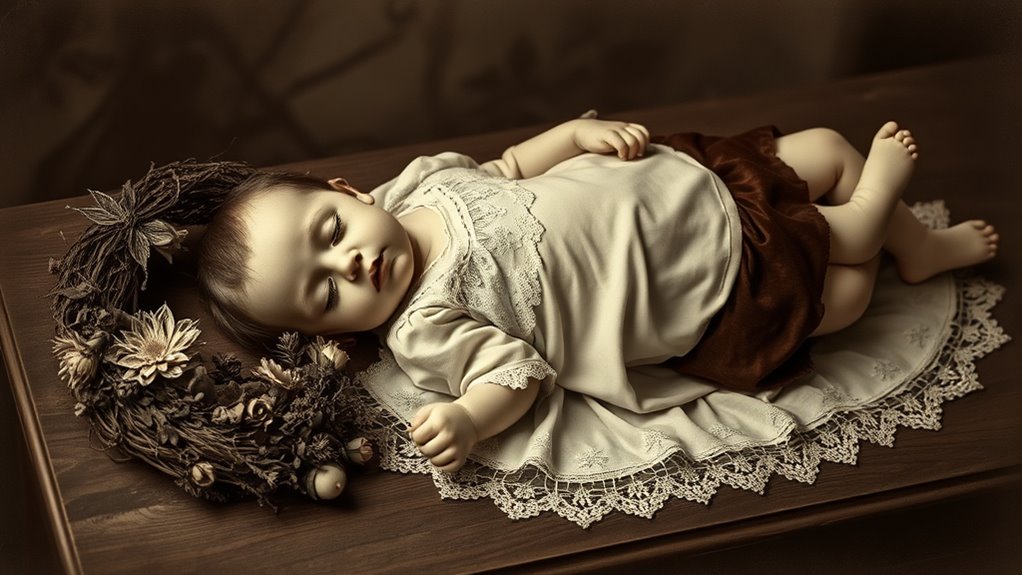

Post-mortem photography began in the Victorian era as families wanted tangible memories of loved ones who had passed away. These portraits show the deceased carefully arranged and dressed to look alive, reflecting society’s fascination with death and mourning rituals. The practice served both as a tribute and a way to cope with grief. If you explore further, you’ll discover how these images reveal deeper cultural attitudes toward life, death, and remembrance in history.

Get books and cozy reading nights delivered free — and shop member deals
- Fast, free delivery on millions of items
- Access to Prime Big Deal Days deals on October 6–7
- Prime Video, Amazon Music and more included
Key Takeaways
- Post-mortem photography originated in the Victorian era to memorialize deceased loved ones and aid in grieving processes.
- It involved carefully posed portraits of the deceased, often with eyes open, dressed in fine clothing.
- The practice reflected Victorian attitudes that integrated death into daily life and emphasized dignity and serenity.
- Photographs served as tangible tokens of remembrance, reinforcing mourning rituals and cultural ideals of eternal remembrance.
- Modern interpretations see them as symbolic acts of emotional healing and enduring symbols of human connection to loss.

Post-mortem photography, a haunting yet historically significant practice, involves taking portraits of deceased individuals, often as a way to memorialize them when other means of remembrance were limited. During the Victorian era, this practice became deeply intertwined with mourning rituals and the aesthetic ideals of the period. Victorian aesthetics emphasized beauty, stillness, and a sense of reverence, which translated into the way these photographs were composed. You might notice that post-mortem images often feature the deceased arranged with great care, dressed in fine clothing, and posed to appear as if they were alive. This meticulous presentation was rooted in the desire to preserve the memory of loved ones and to cope with the grief of losing them.
Post-mortem photos delicately preserve loved ones, blending reverence, beauty, and mourning in Victorian memorials.
In Victorian society, mourning rituals played a central role in processing loss. Photographs served as tangible tokens of remembrance, often kept in family albums or displayed prominently in the home. The images were more than simple records; they became cherished mementos that allowed mourners to maintain a connection with the departed. The photographs often captured the deceased fully dressed, sometimes with eyes open, conveying a sense of life and presence that mourning rituals aimed to preserve. This combination of mourning customs and Victorian aesthetics created a visual language that balanced reverence, beauty, and a desire for eternal remembrance.
You might find that the practice also reflected the Victorian obsession with death and the afterlife. Death was integrated into daily life more openly than today, and post-mortem photography reinforced the idea that death was a natural part of existence, deserving of dignity and respect. The images often exhibit a somber, respectful tone, emphasizing serenity and peace. They served to memorialize the individual’s life and to help families cope with their grief by holding onto a visual representation of their loved one. These photographs, with their carefully arranged settings and formal poses, embody the Victorian ideals of beauty and mourning, making the deceased appear almost alive. Recent studies in sound healing science suggest that the cultural significance of rituals like these can be understood as a way to facilitate emotional healing through symbolic acts.
Ultimately, post-mortem photography is a reflection of a time when death was more visibly woven into the fabric of everyday life. It was a way for families to honor their loved ones, preserve their memory, and navigate the complex emotions of loss. The Victorian aesthetics, with their focus on beauty and dignity, helped shape these images into enduring symbols of remembrance. Today, these photographs offer a poignant glimpse into the history of mourning and the human need to memorialize those we have lost.
Victorian post-mortem photography prints
As an affiliate, we earn on qualifying purchases.
As an affiliate, we earn on qualifying purchases.
Frequently Asked Questions
How Did Post-Mortem Photography Influence Modern Memorial Practices?
You see, post-mortem photography shaped modern memorial practices by establishing visual remembrance as a essential part of funeral rituals. It encouraged families to preserve memories of loved ones, influencing how we honor the deceased today. This tradition helped develop a more personal, intimate way to mourn, emphasizing the importance of photographs in memorials. As a result, visual remembrance remains a cornerstone of contemporary funeral rituals, fostering connection and healing.
Were Post-Mortem Portraits Accessible to All Social Classes?
You’ll find that post-mortem portraits weren’t accessible to all social classes. Wealthier families could afford these photographs, while those from lower social classes faced significant accessibility challenges due to cost and limited photographic services. This disparity highlights social class disparities of the time, making post-mortem photography an exclusive practice. As a result, it reflected societal inequalities and influenced how different classes memorialized their loved ones.
What Ethical Debates Surround Post-Mortem Photography Today?
You might find that ethical debates today focus on consent complexities and cultural sensitivities surrounding post-mortem photography. Some argue that capturing images without explicit consent disrespects the deceased and their families, while others see it as a way to honor loved ones. You should consider how cultural values influence perceptions, recognizing that these images can evoke strong emotions and ethical concerns, making respectful, informed practices essential.
How Did Post-Mortem Images Impact Grieving Processes Historically?
You see that post-mortem images historically played a essential role in mourning rituals, helping loved ones process loss. They held cultural significance by preserving the deceased’s likeness, offering a tangible connection during grief. These photographs allowed families to honor the departed, provide comfort, and maintain memories. As a result, post-mortem images deeply impacted grieving processes, turning mourning into a shared, culturally meaningful experience that reinforced bonds and collective remembrance.
Are There Surviving Post-Mortem Photographs From Specific Historical Periods?
You’ll find surviving post-mortem photographs from the Victorian era, like the haunting image of a child clutching a doll. These photographs serve as enduring memorials, reflecting funeral rituals and societal views on death. Thanks to photographic preservation, many of these images remain today, offering a poignant glimpse into past mourning practices. They’re a tribute to how societies once used photography to honor loved ones and confront mortality.
Conclusion
You now see how post-mortem photography captures both life’s fragile beauty and its inevitable end. Like a delicate flower frozen in time, these images remind you of mortality’s quiet presence. They stand as silent witnesses, contrasting the vividness of living with the stillness of death. In this way, they invite you to reflect on life’s fleeting nature, turning a somber moment into a lasting declaration of memory and meaning.
Fall Picks
fall essentials
As an affiliate, we earn on qualifying purchases.