
You should know that your memories aren’t perfect recordings but reconstructed by your brain, which can easily be influenced and lead to false memories. Neural processes involving the hippocampus and prefrontal cortex work together during recall, but they’re also vulnerable to external suggestions or internal biases. This means that even confident eyewitness accounts can be inaccurate, as false memories can seem convincing. If you continue, you’ll discover how these neural insights impact justice and how to better recognize memory pitfalls.
Listen free for 30 days with Audible
Thousands of audiobooks and originals — cancel anytime.
As an affiliate, we earn on qualifying purchases.
Key Takeaways
- Memories are reconstructed through neural activity involving the hippocampus and prefrontal cortex, making them susceptible to distortions.
- False memories can mimic genuine ones at the neural level, leading individuals to be convinced of their accuracy.
- External influences, such as suggestive questions, alter neural patterns during recall, increasing false memory formation.
- Confidence in a memory correlates with specific neural circuit activity, which can create a false sense of certainty.
- Legal reliance on eyewitness confidence is problematic, as neural processes can produce convincing but inaccurate recollections.
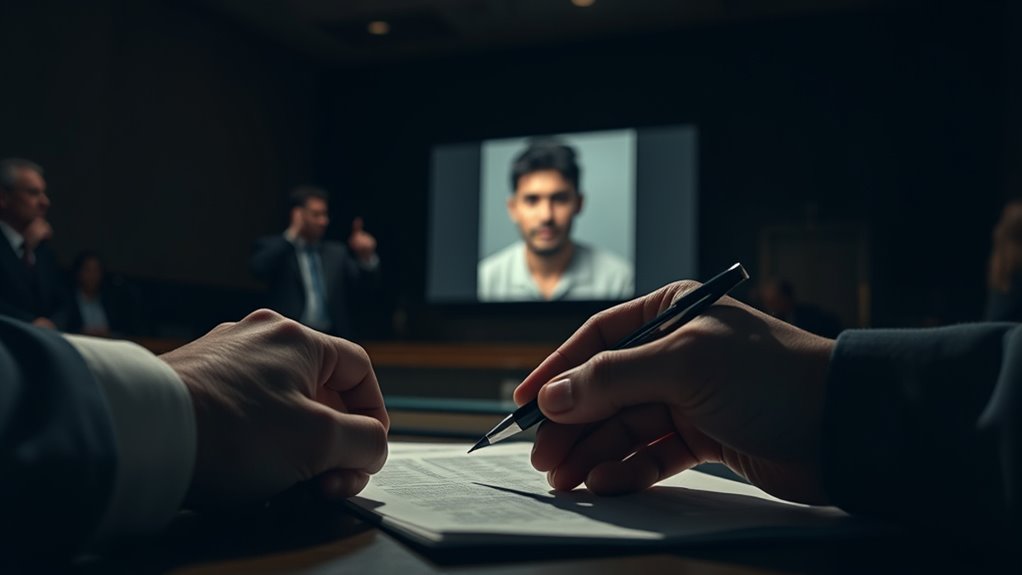
False memories can substantially undermine the reliability of eyewitness accounts, even when witnesses are confident in their recollections. This phenomenon is rooted in complex neural mechanisms that shape how our brains encode, store, and retrieve memories. When you recall an event, your brain doesn’t simply replay an exact recording; instead, it reconstructs the memory, often filling in gaps with assumptions or suggestions. These neural processes involve multiple brain regions, such as the hippocampus and prefrontal cortex, which work together to create what you perceive as a faithful recollection. However, this reconstruction process is vulnerable to distortions, especially when external influences or internal biases come into play. The brain’s memory reconstruction process can be influenced by external factors, making it susceptible to planting false details or altering existing ones. Understanding these neural mechanisms reveals why false memories are so convincing. For example, the brain’s pattern of activity during memory retrieval can resemble that of genuine memories, making it difficult to distinguish between real and false ones. When you are confident in a memory, it often correlates with heightened activity in certain neural circuits, giving you a false sense of certainty. This neural basis explains why people can be so convinced of their false memories, which makes eyewitness testimony particularly susceptible to error.
The legal implications of this are profound. Courts rely heavily on eyewitness accounts, assuming that confidence equates to accuracy. But science shows that confidence doesn’t necessarily mean the memory is correct. Misleading questions, suggestive police procedures, or even the way a witness is interviewed can alter neural activity during recall, fostering false memories. Since the brain can easily incorporate planted details or distort existing ones, innocent witnesses may be convinced of their false recollections, leading to wrongful convictions or the acquittal of guilty parties.
This knowledge compels legal systems to reconsider how eyewitness evidence is treated. It’s vital to recognize that neural mechanisms underlying memory make it inherently fallible. Law enforcement and legal professionals need to be aware of the risks posed by false memories and avoid over-reliance on eyewitness confidence. Techniques such as double-blind lineups and careful questioning aim to minimize suggestibility, but they can’t eliminate the brain’s natural tendency to create and reinforce false memories. Ultimately, understanding the neural basis of memory underscores the importance of corroborating eyewitness accounts with other forms of evidence, ensuring that justice isn’t compromised by the fallibility of human memory.

Sam and Colby XPLR Spirit Box | Paranormal Detection Equipment; Haunted Survival; Ghost Hunter Scanner; EMF and EVP Detector; Comprehensive Tool for Spirit Communication
- Designed by Viral Explorers: Created by Sam and Colby for ghost hunting
- All-in-One Detection Device: Includes radio scanning and REM antenna
- Multi-Function Paranormal Tool: Features temperature sensors, EMF meter, and display
As an affiliate, we earn on qualifying purchases.
Frequently Asked Questions
Can False Memories Be Intentionally Implanted?
Yes, false memories can be intentionally implanted. Researchers use techniques like memory suppression and exploit cognitive biases to influence your recall. They might suggest details or create scenarios that seem plausible, leading you to believe they occurred. This process shows how susceptible your memory is to manipulation, especially when certain cues or repeated suggestions are involved. You should be aware that your memories aren’t always as accurate as you think.
How Do Age and Trauma Affect Eyewitness Accuracy?
You might think age and trauma don’t matter, but in child development, they considerably influence eyewitness accuracy. Trauma can distort memory, making details unreliable, while young children’s memories are still forming, affecting memory consolidation. This means your perception of events can be skewed, especially under stress. Recognize that trauma and age can cause even honest witnesses to misremember, risking wrongful accusations or convictions. Stay aware of these factors when evaluating testimony.
Are Certain Personalities More Prone to False Memories?
You might be more prone to false memories if you have certain personality traits, like high suggestibility or fantasy proneness. These traits make you more susceptible to cognitive biases, which distort your recall. For example, if you’re easily influenced, you may accept false details more readily. Recognizing these traits can help you understand why some memories might be inaccurate, especially under pressure or in suggestive situations.
What Are Some Methods to Improve Eyewitness Reliability?
To improve eyewitness reliability, you should focus on minimizing cognitive biases and supporting memory consolidation. Encourage witnesses to provide detailed descriptions without rushing, which helps strengthen their memory. Avoid leading questions, as they can distort recollections. Repeating interviews and using cognitive interview techniques promote accurate memory recall. These strategies help reduce false memories, ensuring eyewitness accounts are as reliable as possible.
How Does Sleep Influence Memory Formation and Distortion?
Sleep acts like a gardener tending your memory garden, nurturing healthy connections and pruning false memories. When you sleep well, especially during REM, sleep memory and dream recall strengthen, making your memories clearer and more accurate. Poor sleep, however, leaves your mind foggy, increasing the chances of distorted memories. So, catch those Z’s to help your brain sift through experiences, keeping true memories rooted and false ones at bay.
Conclusion
So, next time you swear you saw that suspect running away, remember: your memory might be playing tricks on you. Eyewitness accounts are about as reliable as a cat herding contest—full of surprises and guaranteed to be wrong sometimes. Trust your instincts, but maybe keep a grain of salt handy. After all, your mind’s just trying to keep things interesting, even if it means rewriting the story of what really happened.
Flea & tick season Picks
flea and tick prevention
As an affiliate, we earn on qualifying purchases.