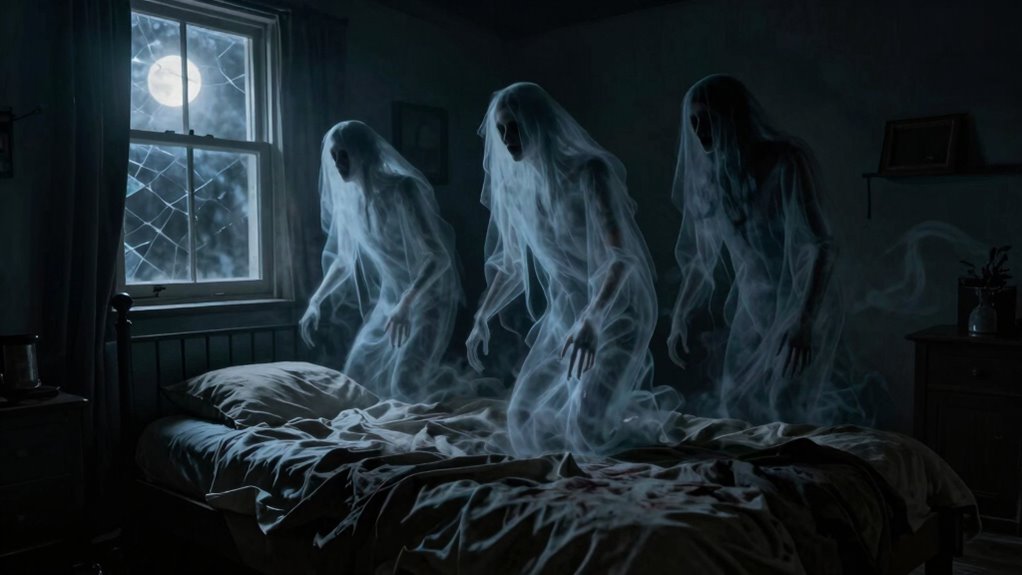

Sleep paralysis reveals that many ghost stories stem from real physiological states, like hallucinations during the shift between sleep and wakefulness. Your culture shapes how you interpret these experiences, turning fleeting sensations into tales of spirits or demons. These visions tap into primal fears and subconscious minds, blending sleep and reality. By understanding the science behind sleep paralysis, you’ll see how perception and culture influence beliefs in the supernatural—if you keep exploring, you’ll uncover fascinating insights behind these haunting stories.

Get books and cozy reading nights delivered free — and shop member deals
- Fast, free delivery on millions of items
- Access to Prime Big Deal Days deals on October 6–7
- Prime Video, Amazon Music and more included
Key Takeaways
- Sleep paralysis experiences often inspire ghost stories due to vivid hallucinations and feelings of an ominous presence.
- Cultural beliefs and narratives shape how hallucinations are interpreted as spirits, demons, or supernatural entities.
- Recognizing sleep paralysis as a physiological state can demystify ghost stories rooted in primal fears.
- Shared sleep paralysis experiences reveal how human perception and fear influence supernatural storytelling across cultures.
- Understanding the neurobiological basis of sleep paralysis helps contextualize and reduce the fear associated with ghostly encounters.
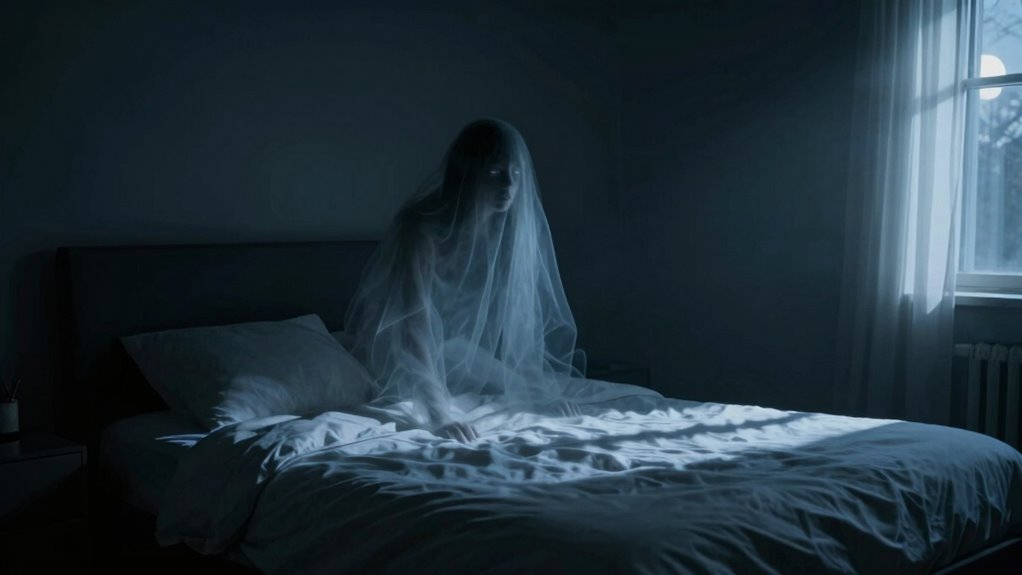
Many ghost stories and supernatural tales often share a common thread with a frightening phenomenon called sleep paralysis, where you’re temporarily unable to move or speak as you wake up or fall asleep. This experience can feel terrifying, often accompanied by vivid hallucinations of shadowy figures or ominous presences. These sensations have fueled countless ghost stories, leading people to interpret their experiences through cultural lenses that shape how they understand these encounters. But what if some of these stories aren’t just tales but reflections of real physiological states? Sleep paralysis offers insight into how our minds interpret strange sensations, especially when we’re caught between sleep and wakefulness.
During sleep paralysis, your mind is in a semi-conscious state. You might find yourself aware of your surroundings but unable to move, sometimes feeling a heavy weight pressing down on your chest. These sensations can be mistaken for supernatural attacks or ghostly visitations, especially if your cultural background influences how you interpret such events. For example, in some cultures, sleep paralysis is seen as an encounter with spirits or demons, while others interpret it as a visit from ancestors or other supernatural entities. These cultural interpretations color the experience, shaping the stories you tell afterward and the meaning you assign to the hallucinations.
Lucid dreaming plays a role here too. When you’re aware that you’re dreaming, your mind can craft vivid, often surreal images, and this overlaps with the hallucinations experienced during sleep paralysis. Sometimes, people recognize that their frightening visions are just dreams within a dream state, which can lessen their fear. However, in sleep paralysis, the barrier to full consciousness can make these hallucinations feel incredibly real. Recognizing the neurophysiological processes involved can further demystify these phenomena and reduce fear associated with them. Additionally, understanding that sleep paralysis is a natural physiological process can help individuals feel more in control of their experiences.
These stories and interpretations reveal much about human psychology and cultural influences. They show how our beliefs and fears shape our perceptions of the unknown. When you experience sleep paralysis, you’re caught in a liminal space—neither fully awake nor asleep—where your mind’s creative and primal instincts can run wild, producing the stories that have fueled ghost lore for generations. Recognizing this connection helps demystify the phenomenon, showing it as a natural, if unsettling, part of human sleep. It also highlights the importance of understanding how cultural narratives influence our perception of sleep-related experiences. Exploring the biological mechanisms behind sleep paralysis can further empower individuals to interpret these experiences without fear. Recognizing this connection helps demystify the phenomenon, showing it as a natural, if unsettling, part of human sleep. It reminds us that many ghost stories might stem from real physiological states, colored by cultural narratives, rather than actual supernatural visits.
As an affiliate, we earn on qualifying purchases.
Frequently Asked Questions
Can Sleep Paralysis Experiences Be Completely Avoided?
You can’t completely avoid sleep paralysis, but you can reduce its frequency by managing nighttime anxiety and understanding your dream symbolism. Establish a relaxing bedtime routine, limit stress before sleep, and create a consistent sleep schedule. Recognizing the link between vivid dream symbolism and heightened anxiety can help you cope better. While prevention isn’t guaranteed, these strategies decrease your chances of experiencing sleep paralysis and improve overall sleep quality.
Are Certain People More Prone to Sleep Paralysis?
Some people are particularly prone to sleep paralysis, primarily due to sleep vulnerability and dream sensitivity. If you experience irregular sleep patterns, heightened stress, or sleep disorders, you’re more likely to encounter these episodes. Those with a history of anxiety or trauma also tend to be more vulnerable. Your sleep susceptibility and sensitivity to dreaming greatly influence your likelihood of experiencing sleep paralysis, making sleep habits essential for prevention.
How Long Does a Typical Sleep Paralysis Episode Last?
A typical sleep paralysis episode lasts anywhere from a few seconds to around two minutes. During this time, you might experience intense dream manifestation and hypnagogic imagery, which can feel disturbingly real. You often find yourself unable to move, and your mind creates vivid, sometimes frightening visuals. While unsettling, these episodes usually pass quickly, leaving you with a heightened awareness of how your brain processes dreams and consciousness during sleep.
Is Sleep Paralysis Linked to Mental Health Conditions?
Yes, sleep paralysis is linked to mental health conditions and sleep disturbances. When you experience it, you might notice heightened anxiety or feelings of fear, hinting at deeper issues like depression or PTSD. Sleep disturbances, such as irregular sleep patterns, can trigger episodes. Recognizing this connection helps you understand that sleep paralysis isn’t just a spooky phenomenon, but also a sign your mental health needs attention. Stay aware, and seek help if needed.
Can Sleep Paralysis Be Considered a Form of Supernatural Encounter?
Sleep paralysis can be viewed as a supernatural encounter through cultural influences and supernatural interpretations. Many cultures interpret these episodes as spirits or ghosts visiting, fueling fear and fascination. While scientifically rooted in brain activity, your perception during sleep paralysis is shaped by cultural beliefs, causing you to see or feel supernatural entities. Embracing these interpretations can help you understand your experiences, but they remain rooted in psychological and physiological processes.
Conclusion
Understanding sleep paralysis reveals that ghost stories tap into our deepest fears, not of spirits, but of losing control. You might think it’s just superstition, but these stories reflect universal anxieties we all face—fear of the unknown and helplessness. Recognizing this helps you see that what scares us isn’t always supernatural; sometimes, it’s our own mind’s way of processing vulnerability. Embracing this can turn fear into insight, helping you find peace amid the darkness.
Evergreen bestsellers Picks
bestsellers
As an affiliate, we earn on qualifying purchases.