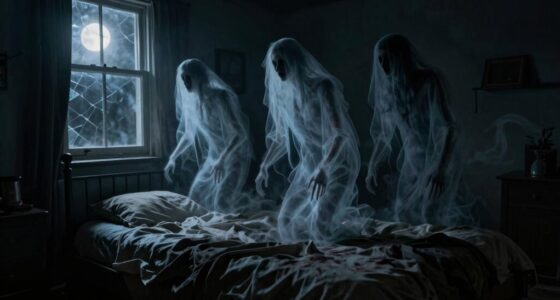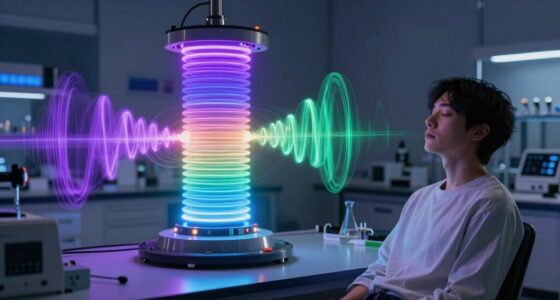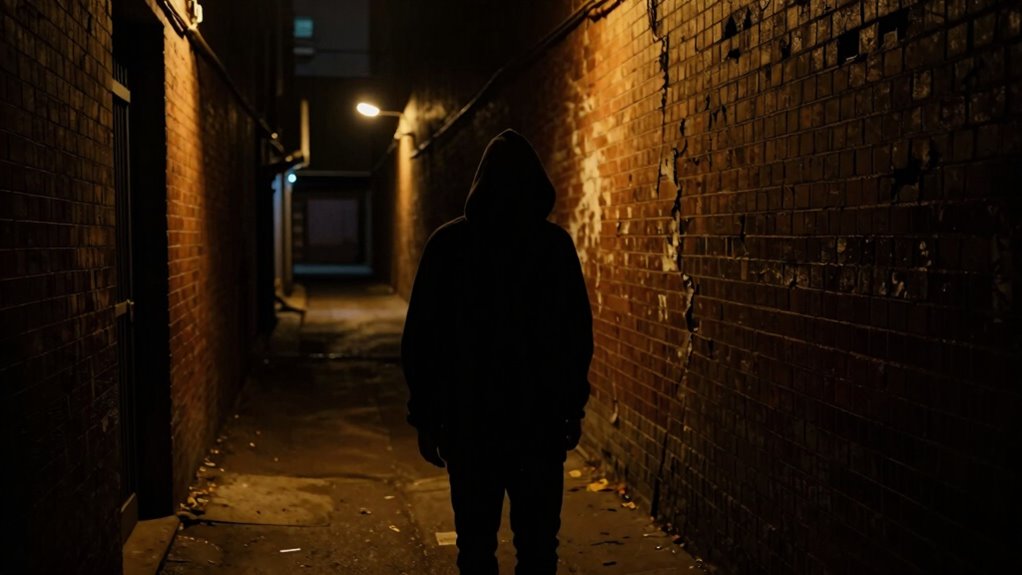

When darkness surrounds you, your visual perception becomes less reliable, making shapes, colors, and distances harder to distinguish. Your senses heighten, making you more aware of sounds, smells, and textures, but this can also lead to increased stress and feelings of vulnerability. Psychological effects like anxiety and fear may surface, influencing how you interpret your environment. If you’re curious about how your mind adapts and reacts, explore further to uncover the full picture.
Key Takeaways
- Darkness reduces visual clarity, causing distortions and reliance on other senses for perception.
- Sensory sensitivity increases, amplifying sounds, smells, and tactile cues in low light.
- Limited visibility heightens feelings of vulnerability, uncertainty, and can trigger anxiety or fear.
- The brain fills perceptual gaps with mental imagery, which may distort or exaggerate perceived threats.
- Proper lighting influences emotional states, reducing fear and improving perception accuracy in dark environments.
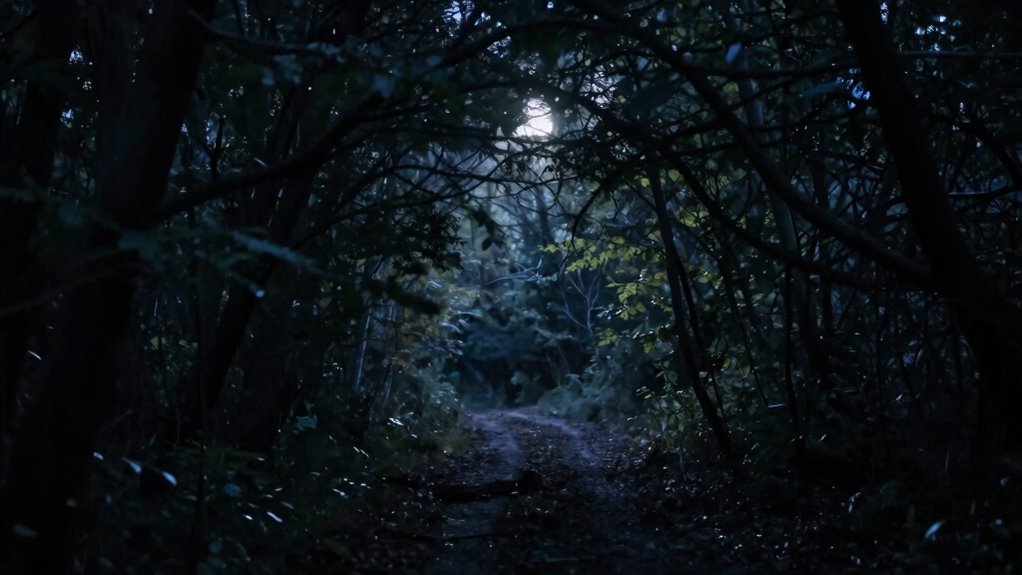
Have you ever noticed how your senses shift when the lights go out? Suddenly, everything becomes less clear, and your visual perception takes a hit. Without the aid of light, your eyes struggle to distinguish shapes, colors, and distances. Your brain has to work harder to interpret what’s around you, relying more heavily on other senses and mental cues. This change isn’t just about seeing less; it fundamentally alters how you perceive your environment. Darkness heightens your awareness of subtle sounds, smells, and tactile sensations, but it also introduces a sense of uncertainty and vulnerability that can trigger psychological effects like anxiety or fear. Your mind begins filling in gaps, often imagining threats or distortions that weren’t there in full light. This shift in perception can make familiar surroundings seem unfamiliar or threatening, even if nothing has changed physically.
The psychological effects of darkness extend beyond mere perception. When the visual cues are limited, your brain compensates by amplifying other sensory inputs, which can lead to heightened alertness but also increased stress. You might find yourself hyper-focused on sounds or the smallest movement, which can be both a survival instinct and a source of discomfort. Over time, this heightened state can cause your mind to become more anxious, especially if you’re in darkness for prolonged periods or in unfamiliar environments. Darkness can also evoke memories or fears rooted in past experiences, intensifying feelings of dread or loneliness. These psychological effects often feed back into your perception, making you more prone to misinterpreting ambiguous stimuli as threatening. For example, a shadow might seem like a figure lurking in the dark, or a creak could be mistaken for an intruder. Additionally, environmental lighting plays a vital role in regulating emotional responses, underlining the importance of proper illumination for mental health.
Your perception in darkness is a complex dance between physiological limitations and psychological responses. As your visual perception dims, your mind fills in the blanks, which can distort reality and influence your emotional state. This interplay shows how deeply interconnected perception and emotion are, especially in low-light conditions. Darkness doesn’t just obscure what’s real; it actively reshapes how you experience and interpret your surroundings. Recognizing these effects helps you understand why darkness can be unsettling and why your reactions vary so much from person to person. Interestingly, research indicates that light levels can significantly influence mood and cognitive function, highlighting how crucial lighting conditions are for mental well-being. Furthermore, understanding the psychological impacts of darkness can assist in developing strategies to mitigate fear and anxiety in low-light environments. Studies also suggest that sensory adaptation occurs in darkness, which can alter how your senses respond over time. Ultimately, your perception in darkness reveals how much your mind relies on light and clarity to maintain a sense of certainty and safety. When that’s stripped away, your entire perceptual and emotional landscape shifts, revealing the profound influence darkness has on human perception.
As an affiliate, we earn on qualifying purchases.
Frequently Asked Questions
Can Darkness Improve Night Vision Temporarily?
Yes, darkness can temporarily improve your night vision through adaptation mechanisms. When you spend time in low light, your eyes activate sensory enhancement processes, particularly in the rod cells of your retina. This natural adjustment allows you to see better in the dark over time. By avoiding bright lights and giving your eyes a chance to adapt, you enhance your night vision temporarily, making it easier to perceive in dark environments.
How Does Darkness Influence Human Emotion and Mood?
Darkness influences your emotions and mood by fostering a calm, introspective environment. It helps improve emotional resilience, allowing you to process feelings more deeply. Darkness also aids in mood regulation, reducing overstimulation and promoting relaxation. As you settle into darkness, your mind relaxes, making it easier to manage stress and anxiety. This natural shift can enhance your overall emotional well-being, encouraging a balanced, peaceful state of mind.
Are There Long-Term Effects of Prolonged Darkness Exposure?
Prolonged darkness can cause long-term effects like circadian disruption and melatonin suppression, which mess with your sleep cycles and mood. Imagine your body’s internal clock losing sync, leaving you exhausted and irritable, craving light and clarity. Over time, this imbalance may lead to serious health issues, including depression and weakened immunity. Darkness’s silent grip can reshape your well-being, making recovery a race against your own biological rhythms.
How Does Darkness Affect Sleep Quality and Patterns?
Darkness can disrupt your sleep quality and patterns by affecting melatonin production, the hormone that regulates sleep. When you’re exposed to too little light at night, your body may produce more melatonin, making you sleepy, but this can also cause irregular sleep cycles. Using light therapy during the day helps reset your internal clock, improving sleep patterns. Creating a dark environment at bedtime supports healthy melatonin levels, leading to better sleep quality.
Can Darkness Enhance or Hinder Creativity and Problem-Solving?
Darkness can be a double-edged sword for your creativity and problem-solving. When perception shifts in the dark, your mind’s cognitive adaptability opens, allowing fresh ideas to emerge like stars piercing the night sky. It can boost your imagination by reducing distractions, fostering innovation. Yet, too much darkness might hinder focus or lead to uncertainty. So, the impact depends on how you harness darkness’s quiet, mysterious influence on your mind.
Conclusion
As darkness drapes over your surroundings, your senses sharpen, and shadows dance like whispering secrets. The world narrows, colors fade into muted shades, and every sound feels amplified—your perception shifting with the night’s silent embrace. In this shifting darkness, you realize how much your mind fills in the gaps, turning unseen shapes into stories. Embrace the quiet, for in the shadows, your perception transforms, revealing the hidden depths of your awareness.