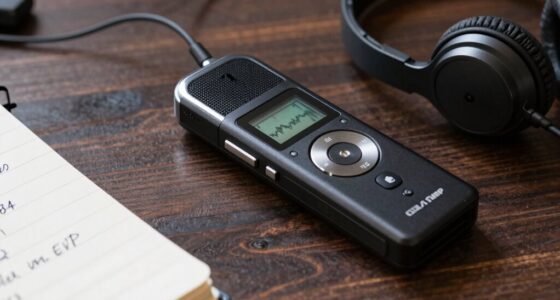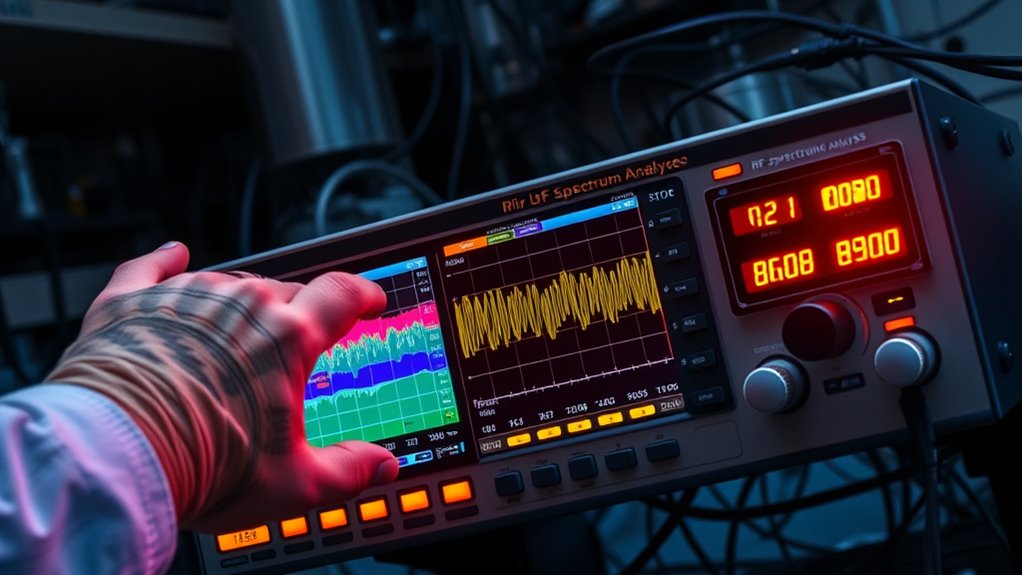

To perform RF spectrum scanning step-by-step, start by selecting the appropriate antenna—directional for focused scans or omnidirectional for broad coverage. Adjust your antenna’s position to minimize interference, and configure your scanner to target specific frequency bands or presets. Monitor signal strength and quality, recording key data like frequency and modulation. Repeating scans at different times helps distinguish persistent signals from interference. Keep practicing, and you’ll uncover more effective techniques for clear and accurate spectrum analysis.
Listen free for 30 days with Audible
Thousands of audiobooks and originals — cancel anytime.
As an affiliate, we earn on qualifying purchases.
Key Takeaways
- Select appropriate antennas (directional or omnidirectional) based on scan scope and coverage needs.
- Configure frequency bands and set parameters for targeted spectrum analysis.
- Position antennas strategically to minimize interference and optimize signal detection.
- Conduct multiple scans at different times or locations to distinguish persistent signals from transient noise.
- Record and analyze data, including signal strength and frequency, to identify patterns and anomalies.
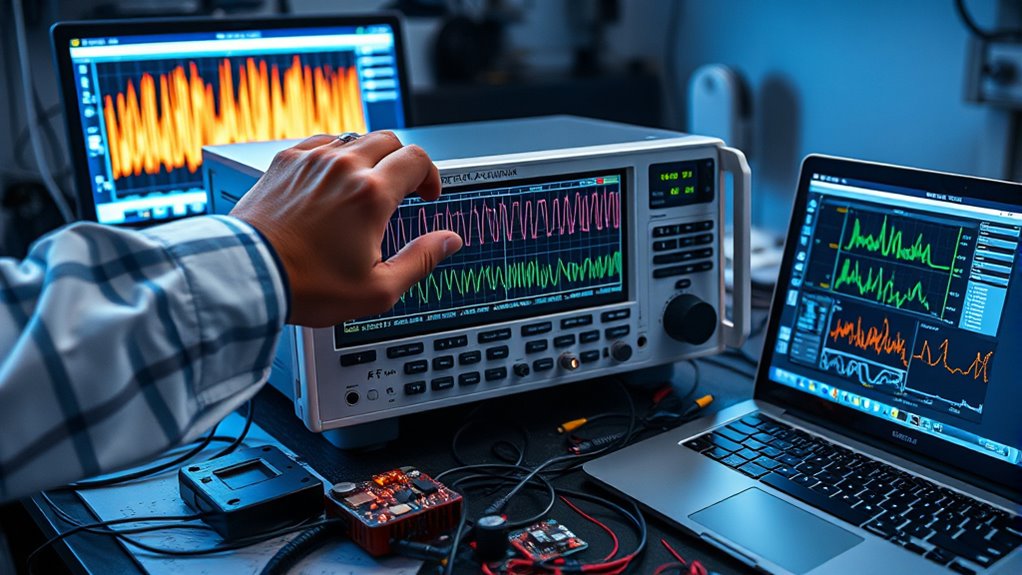
RF spectrum scanning is a essential process for identifying and analyzing wireless signals across various frequency bands. When you begin scanning, you need to guarantee your equipment is properly set up to capture the signals effectively. One of the most critical steps is antenna selection. Choosing the right antenna can profoundly impact your ability to detect signals clearly and accurately. For example, a directional antenna helps focus your scan on specific areas or frequencies, reducing noise and improving signal detection. Conversely, an omnidirectional antenna provides broader coverage, which is useful when you’re unsure where signals originate. Your choice depends on the scope of your scan and what you aim to analyze.
Choosing the right antenna is crucial for accurate RF spectrum analysis and effective signal detection.
As you perform your scan, you’ll notice that signals can sometimes be affected by interference. Signal interference occurs when unwanted signals or noise disrupt the clarity of the signals you’re trying to analyze. Interference can come from various sources such as nearby electronic devices, other wireless networks, or even environmental factors like buildings and weather. To mitigate this, you should start by adjusting your antenna to optimize reception and minimize interference. Moving the antenna to different positions or heights can help you find a spot with less noise, leading to clearer readings. Additionally, using filters or shielding can help reduce interference, guaranteeing that the signals you analyze are as accurate as possible.
Next, you’ll want to set your scanner to the desired frequency bands. This involves inputting specific frequency ranges or selecting preset bands that cover the signals you’re interested in. As you scan, pay attention to the signal strength indicators and signal-to-noise ratio. Stronger signals with high ratios are typically clearer and easier to analyze. During the scan, you should also record or log relevant data, such as frequency, signal strength, modulation type, and timestamp. This data is essential for later analysis, helping you identify patterns, sources, or anomalies in the wireless environment.
Furthermore, understanding the science behind sound wave frequencies and how they influence brainwave patterns can deepen your analysis, especially when evaluating interference or external signals. Throughout the process, keep in mind that signal interference can fluctuate over time. It’s a good idea to perform multiple scans at different times of the day or in various locations to get a detailed understanding of the spectrum. This approach helps you differentiate between persistent signals and transient interference. By carefully selecting your antenna and actively managing interference, you enhance the accuracy of your RF spectrum analysis. This meticulous process enables you to troubleshoot wireless issues, optimize network performance, or conduct security assessments effectively. Ultimately, proper antenna choice and interference management are key to successful RF spectrum scanning, giving you clearer insights into the wireless signals around you.

AURSINC ZA048 LDPA Log-Periodic Dipole Array Antenna, 400MHz-8GHz Wideband
- Compact Size: 27x23cm design for tinySA ULTRA
- Wide Frequency Range: 400MHz to 8GHz coverage
- Optimized Design: Reduced size with minimal low-frequency loss
As an affiliate, we earn on qualifying purchases.
As an affiliate, we earn on qualifying purchases.
Frequently Asked Questions
What Equipment Is Essential for RF Spectrum Scanning?
You need a wideband receiver or spectrum analyzer to perform RF spectrum scanning. An antenna suitable for your frequency range, such as a dipole or directional antenna, is essential. Signal filtering helps you isolate specific signals, so include filters to improve accuracy. These tools work together, allowing you to detect, analyze, and pinpoint RF signals effectively across various frequency bands.
How Do Environmental Factors Affect RF Spectrum Scans?
Like a sailor steering through foggy waters, you’ll find environmental factors influence your RF spectrum scans. Interference sources such as nearby electronic devices or structural obstacles can distort signals, making it harder to identify true spectrum activity. Atmospheric conditions, including rain, humidity, or temperature fluctuations, also affect signal propagation, leading to potential inaccuracies. Staying aware of these factors helps you interpret scan results accurately and adjust your approach for clearer, more reliable data.
Can RF Spectrum Scanning Detect Illegal or Hidden Signals?
Yes, RF spectrum scanning can detect illegal or hidden signals. By performing spectrum analysis, you can identify unusual signals that cause interference or don’t match legitimate sources. When you scan the spectrum, you spot anomalies or unexpected transmissions, which may indicate malicious activity or unauthorized devices. This proactive approach helps you maintain secure and interference-free communication environments by quickly locating and addressing hidden or illegal signals.
What Safety Precautions Are Necessary During RF Spectrum Scanning?
Remember, safety first! When you’re RF spectrum scanning, always wear appropriate protective gear and keep a safe distance from antennas during calibration. Use proper shielding to prevent exposure to high levels of signal interference, and make sure your equipment is correctly grounded. Avoid scanning near power lines or in thunderstorms. Following these precautions helps protect you from potential radiation hazards and guarantees accurate results without risking your health.
How Often Should RF Spectrum Scans Be Performed?
You should perform RF spectrum scans regularly, at least quarterly or as required by regulatory compliance standards. Frequent scanning helps you detect signal interference early, ensuring your equipment operates efficiently and stays within legal limits. Keep in mind that more frequent scans may be necessary if you notice unusual signal disruptions or if new sources of interference appear. Regular scans help maintain peak performance and compliance with regulations.
Conclusion
Think of RF spectrum scanning as charting a vast, uncharted sea. With each step, you navigate through hidden currents and unseen islands, uncovering signals that tell stories beyond ordinary sight. Mastering this process turns you into a skilled explorer, revealing secrets lurking beneath the surface. As you hone your skills, you transform the invisible into the known, guiding your journey through the electromagnetic ocean with confidence and clarity.
Back to school Picks
back to school
As an affiliate, we earn on qualifying purchases.