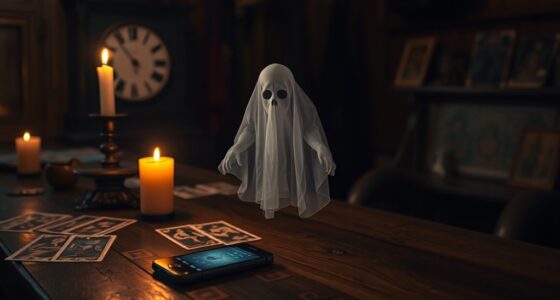

Nightmares can feel incredibly real and unsettling, but they are usually caused by natural factors like stress, sleep disruptions, or psychological issues, not haunting. While some people interpret vivid visions or sleep paralysis as supernatural encounters, most scientists see them as biological or psychological responses during sleep. If you’re experiencing frequent, intense nightmares or hallucinations, it might be helpful to explore the possible causes further—you might be surprised by what you discover.

Get books and cozy reading nights delivered free with Prime
- Fast, free delivery on millions of items
- Prime Video, Amazon Music and more included
- Member-only deals all year
Key Takeaways
- Nightmares can mimic supernatural experiences but are often caused by psychological or physiological factors.
- Vivid dreams of spirits or apparitions may reflect subconscious fears, not actual hauntings.
- Sleep paralysis hallucinations can resemble ghostly encounters, but are natural sleep phenomena.
- Repeated frightening episodes blur the line between dreams and supernatural hauntings.
- Scientific explanations generally suffice, but some interpret intense dreams as signs of supernatural activity.

Have you ever woken up from a nightmare feeling shaken, unsure if what you saw was real or just a haunting of your mind? Nightmares can leave you feeling disturbed long after you’ve opened your eyes. But sometimes, they’re more than just bad dreams—they might be linked to supernatural phenomena like ghostly apparitions or even sleep paralysis. It’s easy to dismiss these experiences as mere imagination, but for some, they’re signs of something more unsettling.
Ghostly apparitions, for example, often appear in dreams with vivid, unsettling clarity. You might dream of an entity that feels strangely familiar or terrifyingly foreign. These visions can be so intense that they linger in your mind, blurring the line between dream and reality. When you wake up, the imagery can seem hauntingly real, making you wonder if you’ve encountered a spirit or lost soul. Sometimes, these dreams are preceded or followed by feelings of an unseen presence in your room, heightening the sense that you’re experiencing a supernatural visit. While skeptics argue that ghostly apparitions are just subconscious fears projected into dreams, others believe they are actual encounters with spirits trying to communicate or make their presence known.
Vivid dreams of familiar or foreign spirits blur the line between sleep and reality.
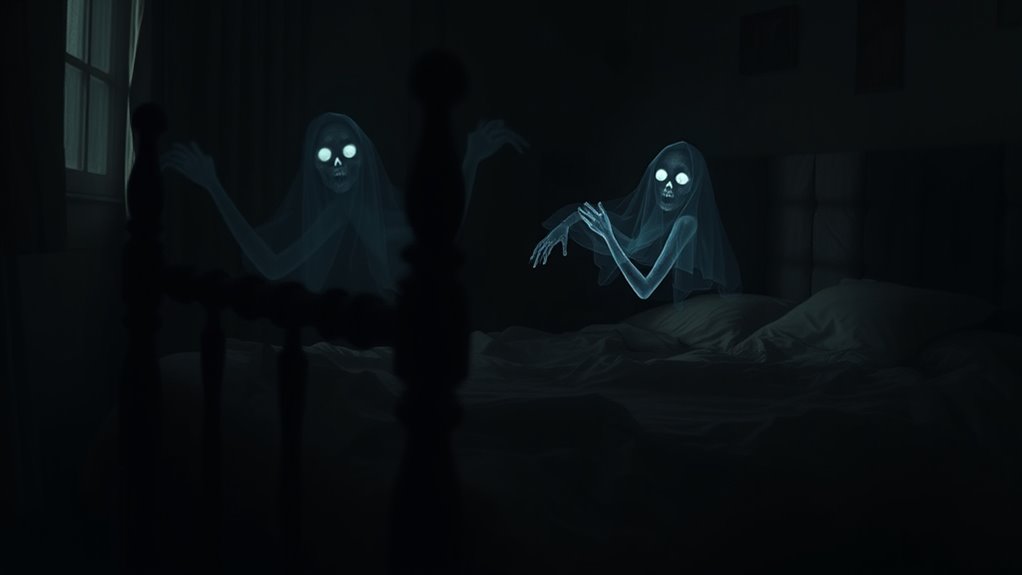
Sleep paralysis is another common culprit behind frightening dreams that feel too real to dismiss. During sleep paralysis, your mind awakens before your body does, leaving you conscious but unable to move. This state often occurs alongside vivid hallucinations—things like shadowy figures or ghostly apparitions that seem to loom at the foot of your bed. These hallucinations can be terrifying, and because you’re aware of your paralysis, it can intensify the fear, making it seem as if something malevolent is in the room. Many people report feeling a weight on their chest or sensing an evil presence, which can be mistaken for a ghostly visit. Sleep paralysis is a natural, if frightening, part of the sleep cycle, but it’s easy to interpret these episodes as supernatural hauntings, especially if they happen repeatedly or at night.
In essence, while nightmares and sleep paralysis can often be explained through scientific or psychological lenses, they sometimes feel like more than just dreams. Whether it’s ghostly apparitions or the terrifying paralysis that leaves you feeling haunted, these experiences blur the line between reality and the supernatural. Whether you believe in spirits or see these as natural phenomena, it’s clear that nightmares can sometimes carry a deeper, more haunting significance.
Additionally, understanding the technical aspects of emailing such as targeted segmentation and automation tools can help in managing communication strategies effectively, similar to how understanding sleep phenomena can clarify these haunting experiences.
As an affiliate, we earn on qualifying purchases.
Frequently Asked Questions
Can Nightmares Indicate a Paranormal Presence in My Home?
Nightmares can sometimes hint at a paranormal presence, but they’re often linked to dream symbolism or stress. If you notice recurring, unsettling dreams, consider your sleep hygiene—poor habits can trigger vivid nightmares. While nightmares alone aren’t definitive proof of a haunting, paying attention to your sleep environment and habits might help you distinguish between psychological factors and possible paranormal activity. Stay mindful of both possibilities.
Are Certain Types of Nightmares More Linked to Hauntings?
Yes, certain nightmares are more linked to hauntings, especially when they disrupt your sleep patterns or contain specific dream symbolism like shadowy figures or unsettling environments. You might notice recurring themes or vivid imagery that seem connected to your home’s energy. Pay attention to these dreams, as they could be clues or reflections of lingering paranormal activity, making it important to interpret the symbolism and observe any patterns.
How Can I Differentiate Between a Bad Dream and a Supernatural Encounter?
You can differentiate between a bad dream and a supernatural encounter by paying attention to dream symbolism and your psychological state. Bad dreams often reflect stress or anxiety, while supernatural encounters may involve vivid, unexplainable experiences that linger after waking. If your feelings of fear or unease persist beyond sleep, and the experience defies normal psychological factors, it might suggest a haunting rather than just a nightmare.
Do Night Terrors Have Any Connection to Haunting Experiences?
Night terrors aren’t directly connected to haunting experiences, but you might notice similarities like sleep paralysis and vivid dream symbolism. During night terrors, you could feel trapped or see unsettling images, which some interpret as supernatural signs. Sleep paralysis often accompanies these episodes, making you feel a presence or pressure. While these signs can seem eerie, they’re usually linked to sleep disorders rather than actual hauntings.
Can Resolving Haunting Issues Stop Recurring Nightmares?
Resolving haunting issues can stop recurring nightmares if they are linked to emotional distress or unresolved fears. You should try sleep therapy to improve your sleep habits and reduce nightmares. Dream analysis can help uncover underlying causes, allowing you to confront and process fears. By addressing the root of the problem, you increase your chances of experiencing peaceful sleep and fewer nightmares over time.
Conclusion
So, while nightmares can feel as eerie as a haunting, they’re usually just your mind’s way of processing stress or fear. Think of them like shadows cast by a flickering candle—sometimes unsettling, but not necessarily real. If your nightmares persist or worsen, it’s worth exploring deeper causes with a professional. Remember, your mind’s a house with many rooms; not every shadow hiding there is a ghost, but it’s okay to seek light and clarity.
Fall Picks
fall essentials
As an affiliate, we earn on qualifying purchases.