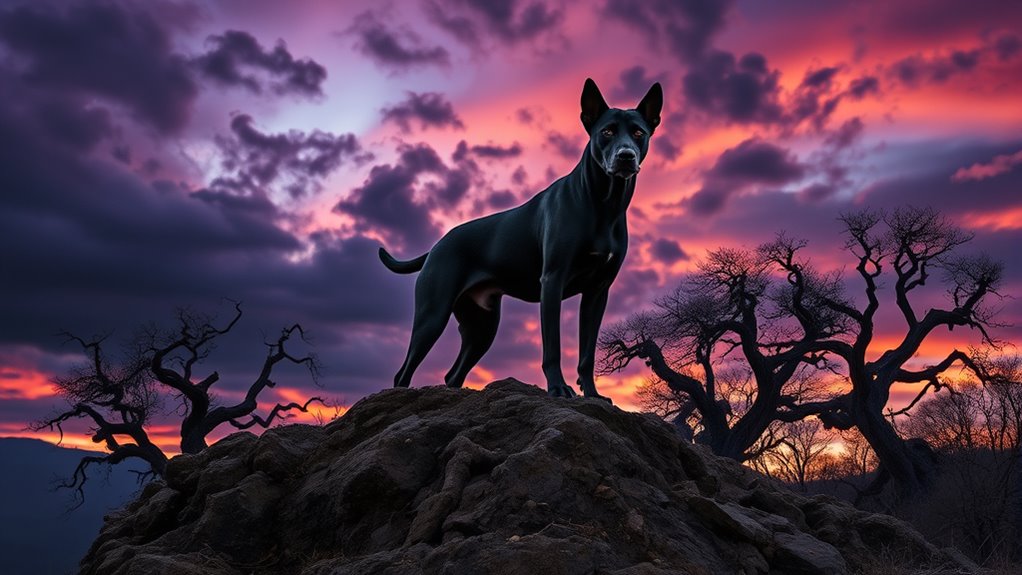

Black dogs have long been symbols of mystery and danger, originating from ancient beliefs linking them to death, spirits, and the supernatural. Across cultures, they’ve been seen as protective guides or ominous warnings, often tied to folklore and superstitions that grew stronger over time. Their dark presence embodies humanity’s dual view of them as both protectors and threats. If you keep exploring, you’ll uncover deeper stories behind these fascinating symbols and what they reveal about our fears and perceptions.
Key Takeaways
- Black dogs are symbols with origins in ancient beliefs, often representing death, the supernatural, or protective spirits.
- Superstitions associate black dogs with omens of doom, warning of danger, or guiding souls in the afterlife.
- Their dark color and mysterious presence heighten their role as representations of the unknown, danger, and the supernatural.
- Folklore and cultural stories reinforce their dual symbolism as both protectors and ominous portents.
- Historically, black dogs reflect human fears and perceptions, shaping cultural attitudes toward mystery, danger, and the supernatural.
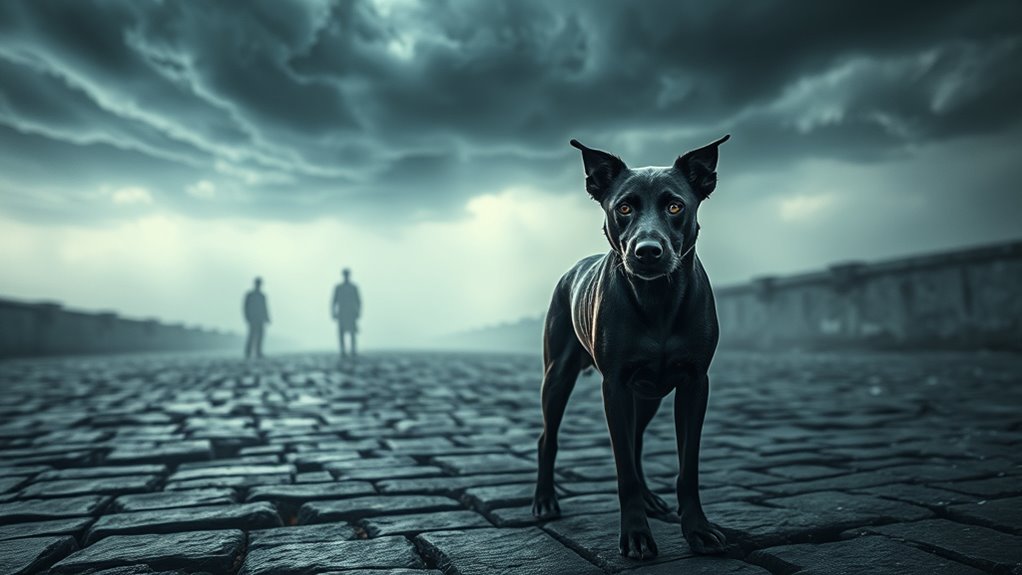
Throughout history, black dogs and other ominous signs have been seen as warnings of impending danger or misfortune. These symbols have long haunted cultures worldwide, rooted in superstitions origins that stretch back centuries. Many believe that the appearance of a black dog signals trouble ahead, but why is that? To understand, you need to look at the cultural symbolism attached to these creatures. In various societies, black dogs have represented different ideas—ranging from protectors to omens of doom. Their dark, mysterious presence often fuels fears, especially when they appear unexpectedly. These fears are deeply ingrained, passed down through generations, shaping superstitions that persist even today.
The superstitions origins surrounding black dogs trace back to ancient times. In some cultures, they were associated with death, the afterlife, or the spirit world. In medieval Europe, for example, black dogs were seen as familiars of witches or as spectral guardians of the underworld. Their black color, linked to darkness and the unknown, made them perfect symbols of mystery and danger. Many believed that encountering a black dog meant a curse or that it was a messenger from the supernatural domain. These superstitions grew stronger as stories and folklore evolved, cementing black dogs as harbingers of misfortune. Over time, this symbolism gained prominence, blending fear with reverence. Additionally, the association with the cultural symbolism of death and the supernatural further reinforced their ominous reputation.
In addition to superstitions, black dogs also hold significant cultural symbolism. In some regions, they are viewed as protectors or guides, helping souls navigate the afterlife. In others, they symbolize evil or impending death, serving as warnings to stay cautious. The duality in their symbolism reflects a broader human tendency to interpret unfamiliar or frightening signs as either protective or threatening. You might find that in literature and art, the black dog often serves as a complex symbol—sometimes a loyal guardian, other times a sinister omen. These contrasting meanings illustrate how cultures assign different significance based on context and belief systems.
Despite the modern skepticism towards superstitions, the cultural symbolism of black dogs persists. They continue to evoke a sense of mystery and caution, reminding you of humanity’s long-standing fascination with signs and omens. As you explore stories and legends, you’ll see how these symbols serve as warnings, moral lessons, or simply reflections of collective fears. Whether seen as protectors or portents of doom, black dogs remain powerful symbols rooted in superstitions origins and cultural symbolism that have shaped human perceptions for centuries. Their presence in folklore underscores a universal tendency to seek meaning in the unknown, turning mysterious creatures into enduring symbols of caution and curiosity.

Sony E 11mm F1.8 APS-C Ultra-Wide-Angle Prime for Cameras, Black
This incredibly compact and lightweight ultra-wide-angle 11mm APS-C prime offers dynamic perspectives, outstanding image quality, large F1.8 aperture...
As an affiliate, we earn on qualifying purchases.
Frequently Asked Questions
Are Black Dogs Considered Good or Evil Omens?
Black dogs are often seen as ominous in superstitious beliefs, symbolizing evil or misfortune. However, in some spiritual symbolism, they can also represent protection or guidance from the spiritual domain. It’s important to remember that interpretations vary widely across cultures. So, whether black dogs are good or evil omens depends on your cultural background and personal beliefs. Trust your intuition when interpreting these powerful symbols.
How Do Different Cultures Interpret Black Dog Sightings?
You’ll find that different cultures interpret black dog sightings through regional beliefs and cultural symbolism. In some areas, like parts of England, they’re seen as protective spirits or guides, while in others, such as in parts of North America, they’re considered ominous signs of death or danger. Your perception depends on local stories and traditions, which shape whether you see these black dogs as warnings, guardians, or foreboding omens.
What Are the Historical Origins of Black Dog Legends?
You might think black dog legends are just spooky stories, but they actually have deep roots in mythic symbolism and regional variations. Historically, these legends originate from ancient European folklore, where black dogs represented omens or guardians. Their origins reveal cultural fears and beliefs about the supernatural, with regional variations shaping their specific meanings—from protectors to portents of doom. Exploring these origins uncovers how societies interpret the unknown through mythic symbolism.
Do Black Dogs Have Any Connections to Folklore or Mythology?
You’ll find that black dogs often connect to folklore and mythology as supernatural guardians or shadow spirits. In many cultures, they’re seen as protectors or omens, guarding portals between worlds or acting as warning signs. These mysterious creatures symbolize both protection and danger, embodying the supernatural’s shadowy side. Their presence in stories highlights their role as spiritual guides or ominous portents, depending on the cultural context.
How Have Perceptions of Black Dogs Changed Over Time?
You might notice that perceptions of black dogs have evolved from ominous superstitions to symbols of protection in modern symbolism. Over time, superstitions surrounding black dogs shifted as society moved away from fear, turning them into intriguing cultural icons. Today, people often see black dogs as guardians or spiritual guides, reflecting how superstitions evolve and influence perceptions, blending historical fears with new interpretations that emphasize mystery and reverence.

UBeesize 12'' LED Ring Light with 62'' Tripod Stand, Selfie Ring Light for Video Recording, Live Streaming, TikTok & YouTube, Compatible with iPhone & Android (Black)
【12” Powerful LED Ring Light with 240 LEDs】This upgraded 12-inch ring light features 240 high-efficiency LEDs delivering 10W...
As an affiliate, we earn on qualifying purchases.
Conclusion
Now that you’ve explored the origins and meanings behind black dogs and other portents, you see how these symbols have shaped fears and beliefs across cultures. These omens remind us that sometimes, what seems dark and mysterious can hold deeper significance. Keep in mind that not all portents are what they seem—sometimes, it’s just a case of reading between the lines. After all, you never know what’s around the corner until you face it head-on.

1300 Lumens Ring Light with Stand for Desk, Computer & Laptop – Podcast & Streaming Light with Flexible Phone Holder, CRI 98+ Bright Yet Soft Influencer Light for Video Recording, Conference & Calls
1300 Lumens Full-Panel, 2.8X Brighter Than Standard Ring Light — Compared to standard ring light with stand under...
As an affiliate, we earn on qualifying purchases.

10.5" Ring Light with Stand and Phone Holder - 69" Tripod for iPhone with Light, Professional Led Ringlight for Video Recording/Make up/Streaming, Full Screen Light Ring for YouTube, Tiktok (Black)
Upgraded Panel Light: Features a larger round surface, offering superior illumination compared to traditional ring lights. This key...
As an affiliate, we earn on qualifying purchases.