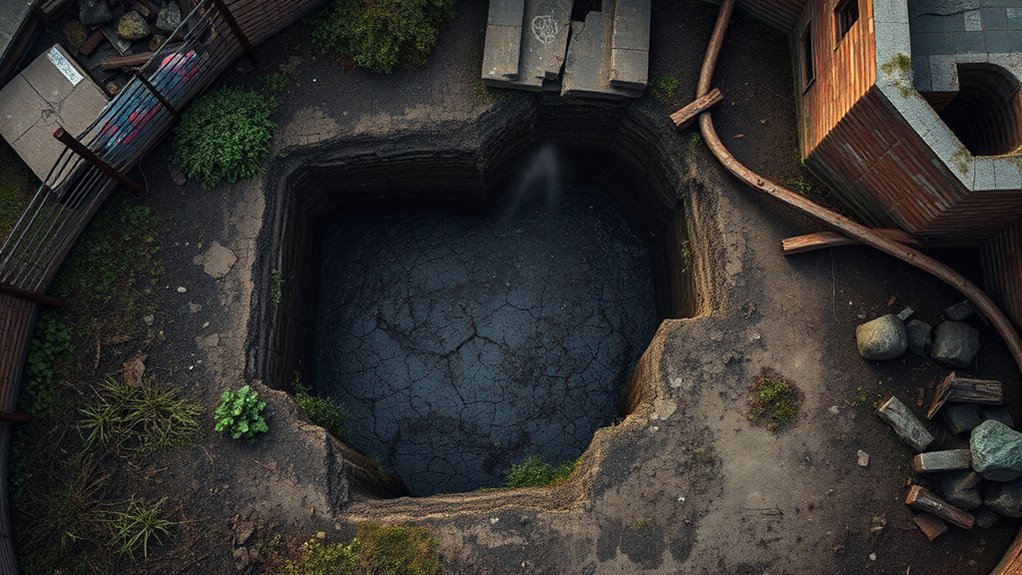

Plague pits beneath old cities are more than mass graves—they’re haunted remnants of society’s fight against deadly outbreaks like the Black Death. Legends and folklore often link these sites to curses, spirits, or portals to the underworld, reflecting collective fears and trauma. Historically, primitive sanitation and overwhelmed authorities caused mass burials that fueled these stories. If you explore further, you’ll uncover how history, myth, and societal fear intertwine around these mysterious, overlooked sites.
Key Takeaways
- Plague pits are mass graves for victims of outbreaks, often hidden beneath old city streets, symbolizing societal responses to death and disease.
- Folklore legends portray plague pits as haunted or cursed sites, reflecting cultural fears and myths about death and the supernatural.
- Medieval sanitation practices contributed to disease spread, with legends emerging to explain and process these grim realities.
- Stories about plague pits serve as cautionary tales, blending fact and myth to warn communities about disease and uncleanliness.
- These legends help societies cope with trauma, intertwining history, myth, and collective memory of urban health crises.
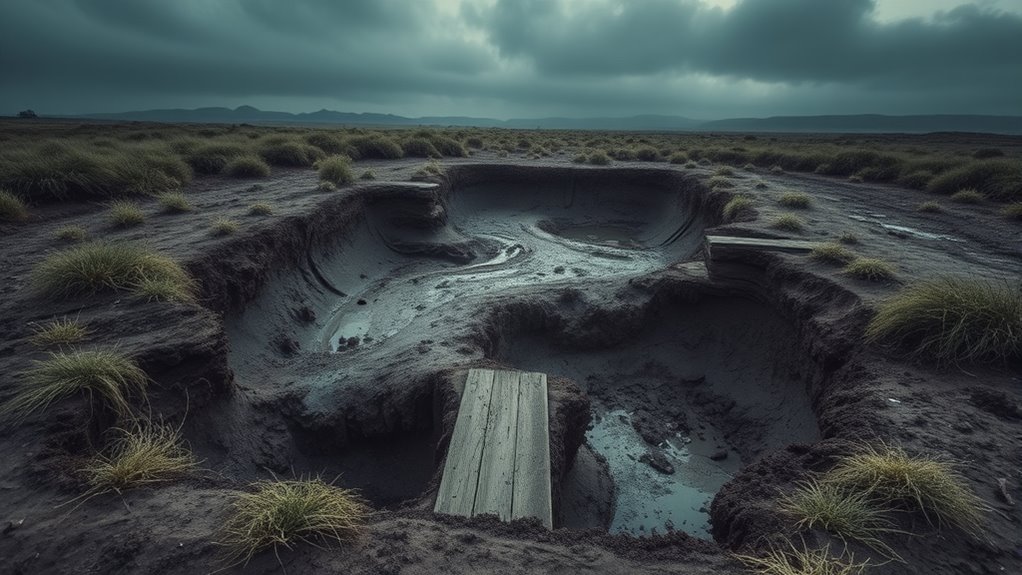
Have you ever wondered what lies beneath the surface of old cities during times of crisis? Beneath the cobblestones and historic streets, hidden remnants of past struggles tell stories that often go unnoticed. One of the most chilling aspects of urban history involves plague pits—mass graves where victims of devastating outbreaks, like the Black Death, were buried en masse. These pits, sometimes forgotten or deliberately concealed, serve as haunting reminders of how societies coped with overwhelming death and disease. But beyond their grim reality, these sites are surrounded by folklore origins, stories that have grown over centuries to explain their existence and the fears they evoke.
During medieval times, sanitation was primitive by today’s standards. People lacked proper waste management systems, and their methods for dealing with human excrement and corpses often contributed to the spread of disease. Streets were filthy, and open sewers ran alongside homes and marketplaces. When plague struck, the chaos intensified. Entire neighborhoods could be wiped out in days, and overwhelmed authorities resorted to burying the dead in large pits, sometimes right outside the city walls. These mass graves became symbolic of the horror and helplessness faced during pandemics, fueling myths and legends that persist even now.
Medieval sanitation failures led to mass graves, fueling myths of horror and helplessness during pandemics.
Folklore origins often shape how we interpret these grim sites. In many stories, plague pits are seen as portals to the underworld or cursed grounds where spirits of the dead linger, unable to find peace. Some legends suggest that the pits are haunted by vengeful souls, warning future generations of the destructive power of disease. These tales might stem from the collective need to make sense of such tragedy—turning the incomprehensible loss into stories that serve as lessons or warnings. Over time, the fear and mystery surrounding these graves transformed into urban legends, blending fact with fiction and creating cultural narratives that persist long after the last corpse was buried.
These stories also echo the medieval understanding of sanitation and health, where uncleanliness was often blamed for disease. Folklore helped communities process their fears, turning the horrifying spectacle of mass death into cautionary tales. Today, while we recognize the scientific realities of disease transmission, the legends endure, shaping our perceptions of history’s darker chapters. Additionally, understanding medieval sanitation provides insight into how societal conditions contributed to the spread of disease and the formation of these legends. The combination of medieval sanitation shortcomings and folklore origins gives us a window into how societies coped with crisis—through practical measures and storytelling that both documented and mystified their collective trauma. Understanding these origins helps us appreciate how history, myth, and urban legends intertwine, giving voice to the fears that once haunted old cities during their darkest hours.

LUMRRSK Skeleton Knight Model Kit, Medieval Fantasy Action Figure with Interchangeable Armor, Sword and Shield, Poseable DIY Assembly Figure for Adults (Silver)
Assembly Required – model kit must be built before posing or display.
As an affiliate, we earn on qualifying purchases.
As an affiliate, we earn on qualifying purchases.
Frequently Asked Questions
How Do Plague Pits Influence Modern Urban Planning?
Plague pits influence modern urban planning by shaping zoning regulations to prioritize public health. You’ll notice they prompt planners to designate specific areas for waste management and burial sites, reducing health risks. This historical awareness encourages cities to implement better sanitation infrastructure and emergency preparedness measures, ensuring public safety. Recognizing the impact of past outbreaks helps you create resilient urban environments that protect communities from future health crises.
Are There Any Known Health Risks From Old Plague Pits Today?
You might wonder if old plague pits pose health risks today. In some cases, historical disease transmission could occur if contaminated soil or remains are disturbed, raising modern contamination concerns. For example, construction near a known plague pit could release dormant pathogens. While most risks are minimal if untouched, it’s wise to oversee and manage these sites carefully to prevent potential health issues. Proper precautions ensure safety and respect for history.
What Are Some Famous Urban Legends About Plague Pits?
You’ve probably heard urban legends about plague pits haunted by ghosts or cursed by superstitious beliefs. Stories tell of ghost stories where restless spirits emerge, warning or seeking vengeance. Some believe these sites are cursed, fueling superstitions and fears. While these tales are mesmerizing, they are mostly rooted in folklore and lack scientific evidence. Still, they persist, adding a eerie, mysterious element to the history of plague pits.
How Do Archaeologists Identify and Locate Plague Pits?
You identify and locate plague pits through burial excavation and soil analysis. Archaeologists look for large, clustered graves that indicate mass burials, often with disturbed soil layers. Soil analysis helps detect high levels of human remains, pathogens, or chemical traces associated with plague victims. By combining excavation evidence with soil testing, you can accurately pinpoint these ancient burial sites and understand their historical significance.
Have Any Cultures Incorporated Plague Pits Into Their Folklore?
Imagine a medieval village’s folklore, where plague pits become haunting symbols of mortality. Some cultures, like European communities during the Black Death, incorporated plague pits into their folklore narratives, viewing them as sacred or cursed sites. These sites hold cultural symbolism, representing both tragedy and resilience. You might see stories warning against desecrating these places, blending history with myth, and illustrating how societies process collective grief through their folklore.

Haunted New Orleans: History & Hauntings of the Crescent City (Haunted America)
As an affiliate, we earn on qualifying purchases.
As an affiliate, we earn on qualifying purchases.
Conclusion
As you reflect on plague pits and urban legends, remember they’re like shadows cast by history’s darkest moments—sometimes distorted, yet rooted in truth. Imagine walking through a city where, centuries ago, a single pit held hundreds of lives, a silent affirmation to chaos. These stories remind you that beneath every legend lies a deeper reality, shaping our understanding of resilience and fear. By uncovering their origins, you see how history’s echoes continue to whisper through time.

Urban Legends, Ghost Stories, and Folklore: Haunting and Horrifying True Tales of Lore and Legend
As an affiliate, we earn on qualifying purchases.
As an affiliate, we earn on qualifying purchases.

Hands-on History: Ancient Civilizations Activities – Teacher Resource Provides Fun Games and Simulations that Support Hands-On Learning (Social Studies Classroom Resource)
Classroom Supplies
As an affiliate, we earn on qualifying purchases.
As an affiliate, we earn on qualifying purchases.