
The Battersea Poltergeist of 1956 involves a series of unexplained disturbances in a working-class household, including furniture moving and objects being thrown, reported by family and neighbors. Eyewitness testimonies, police reports, and media coverage provide limited but vivid accounts, though psychological factors and media sensationalism complicate the story. Without modern technology, investigators struggle to distinguish real phenomena from perception. Stay curious—there’s more to uncover about this mysterious case.
Key Takeaways
- The Battersea Poltergeist involved unexplained household disturbances in 1956, including furniture movement and mysterious noises.
- Eyewitness accounts from the family and neighbors, along with police reports, document the incidents but lack conclusive evidence.
- Media coverage sensationalized the events, influencing public perception and complicating objective investigation.
- Psychological factors like fear and hysteria affected witnesses’ perceptions, challenging verification of genuine paranormal activity.
- The case exemplifies the difficulty of separating supernatural phenomena from psychological influences with limited 1950s technology.
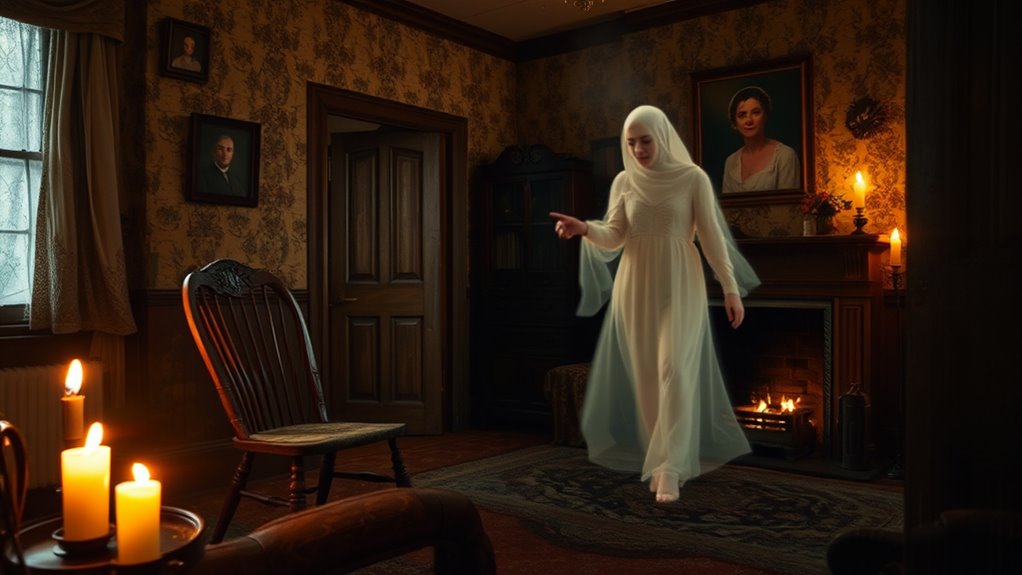
The Battersea Poltergeist of 1956 remains one of London’s most perplexing paranormal cases. It captured the attention of both the public and investigators, leaving behind a trail of questions that still haven’t been fully answered. To understand this mysterious event, it’s essential to explore the context and sources that document the phenomenon. The case involved a series of unexplained disturbances within a working-class household, including furniture moving on its own, objects thrown across rooms, and eerie noises that often defied logical explanation. These occurrences didn’t just terrify the family; they also created a significant psychological impact, leaving the household members feeling helpless and increasingly anxious. The emotional toll was so profound that it sometimes clouded their judgment, making it difficult to differentiate between genuine supernatural activity and psychological stress. This emotional strain posed unique investigative challenges, as researchers and investigators faced the difficulty of determining whether the disturbances were truly paranormal or rooted in psychological factors like hysteria or paranoia. Furthermore, the case exemplifies how psychological factors can influence perceptions of paranormal phenomena, complicating efforts to determine their true nature. Sources from the period are limited but revealing. Eyewitness accounts from the family and neighbors offer vivid descriptions of the chaos, but these reports are often colored by fear and personal interpretation. Police reports from the time recount strange noises and objects being moved, but they rarely provide conclusive explanations. The media coverage, meanwhile, amplified the mystery, sensationalizing the events and sometimes blurring the lines between fact and fiction. Researchers trying to piece together the case face the challenge of separating genuine phenomena from hoaxes or misperceptions, especially given the limited technology available in the 1950s. Investigators also struggled with the psychological impact on the witnesses, as fear and stress could influence their perceptions and reports of activity, adding layers of complexity to the case. In analyzing the sources, you notice that much of what is known comes from personal testimonies, newspaper articles, and later investigations that revisited the case with modern perspectives. These sources highlight how difficult it was to establish definitive facts, as the case was shaped by subjective experiences, media influence, and the investigative challenges of the era. The combination of psychological factors and the scarcity of objective evidence makes this case particularly intriguing. Ultimately, the Battersea Poltergeist of 1956 remains a haunting puzzle, with its sources offering glimpses into a world where the line between the psychological and the paranormal is often blurred, leaving you to wonder what truly transpired in that London household.

Sam and Colby XPLR Spirit Box | Paranormal Detection Equipment; Haunted Survival; Ghost Hunter Scanner; EMF and EVP Detector; Comprehensive Tool for Spirit Communication
- Designed by Viral Explorers: Created by Sam and Colby for ghost hunting
- All-in-One Detection Device: Includes radio scanning and REM antenna
- Multi-Function Paranormal Tool: Features temperature sensors, EMF meter, and display
As an affiliate, we earn on qualifying purchases.
As an affiliate, we earn on qualifying purchases.
Frequently Asked Questions
Were There Any Similar Poltergeist Cases in London During the 1950S?
You might find it intriguing that during the 1950s, London experienced other poltergeist cases that echo urban legends and folklore parallels. While the Battersea Poltergeist is the most renowned, similar incidents, like the Enfield Poltergeist of the late 1970s, reflect a pattern of supernatural activity reported in urban settings. These stories often blend local folklore with modern fears, creating a tapestry of mysterious phenomena in London’s history.
How Did Local Authorities Initially Respond to Reports of the Poltergeist?
When you report a poltergeist incident, local authorities typically respond with skepticism, often dismissing it as superstition or mass hysteria. In the Battersea case, the police response was initially limited, and an official investigation was rarely conducted unless there was clear danger or property damage. Authorities tend to prioritize safety over investigation, so many reports go unexamined unless they escalate to serious disturbances requiring official intervention.
What Role Did Media Coverage Play in Shaping Public Perception of the Case?
Media coverage acted as a spotlight, magnifying the mysterious events and fueling sensationalism. You see, headlines painted a vivid picture, blurring facts and fostering excitement that drew public attention. But it also sparked skepticism, as some questioned the authenticity of the reports. The media’s role became a dance of illusion and doubt, shaping perceptions by turning an eerie case into a mesmerizing story that kept everyone watching.
Are There Any Known Psychological Explanations for the Phenomena?
You might consider psychological trauma or mass hysteria as explanations for the phenomena. Psychological trauma from stress or fear can trigger physical or auditory illusions, while mass hysteria spreads through group suggestibility, causing collective behavior and perceptions. These factors can make the events seem real, even if they have no physical basis. Recognizing these explanations helps you understand how the mind can create or amplify unusual experiences.
Has the Battersea Poltergeist Been Referenced in Popular Culture or Media?
Like a shadow lurking in the corner, the Battersea Poltergeist has appeared in popular culture. You might see references in TV dramatizations or paranormal documentaries that dramatize or analyze the strange events. These portrayals help keep the story alive, sparking curiosity and debate. Whether as a spooky story or a case study, the Battersea Poltergeist continues to fascinate audiences, blending fact and fiction in media representations.
Conclusion
As you close the chapter on the Battersea Poltergeist of 1956, remember it’s like a ghostly whisper dancing through history’s shadows. The tales, sources, and context weave a tapestry of mystery that beckons your curiosity, like flickering shadows on a moonlit wall. Though time dulls some echoes, the haunting allure remains, inviting you to peer deeper into its ghostly depths. The story lingers, a flickering flame in the dark, forever teasing your imagination.