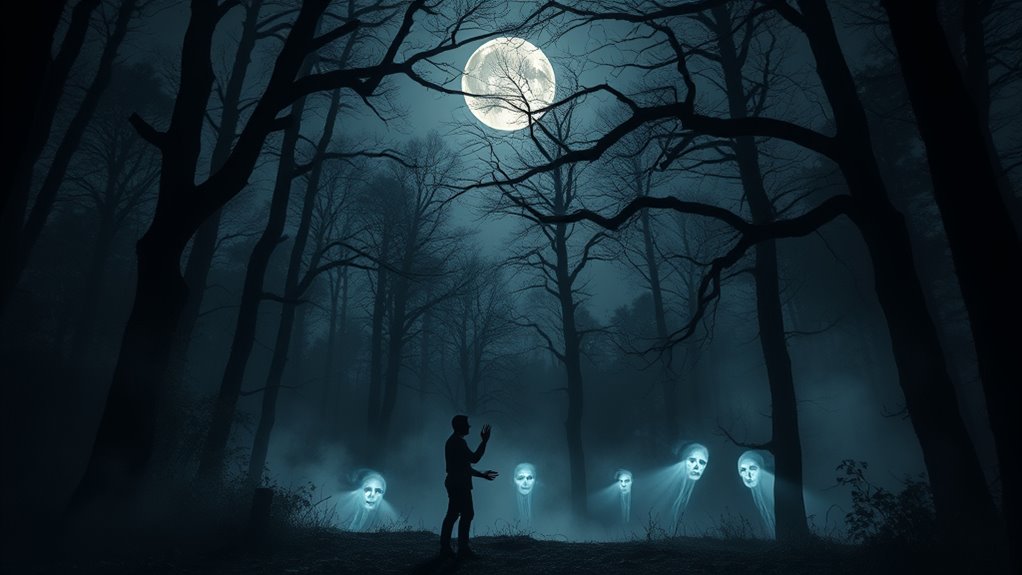

The belief that whistling at night summons spirits is actually a myth rooted in folklore, cultural norms, and misunderstandings of natural sounds. Different cultures view whistling either as inviting or warding off evil, but there’s no scientific proof that it attracts spirits. Historically, people associated strange nighttime noises with ghosts and supernatural activity, reinforcing these superstitions. If you want to uncover the truth behind these beliefs and how they developed, there’s more to explore.
Key Takeaways
- Superstitions about whistling at night originate from folklore and cultural beliefs, not scientific evidence.
- Many cultures see whistling as inviting spirits or evil, but these views are shaped by tradition, not fact.
- Scientific studies show no link between whistling at night and summoning spirits or supernatural entities.
- The belief is a cultural myth reinforced by stories, fears, and societal norms over centuries.
- Overall, the idea that whistling at night invites spirits is a myth; it has no basis in scientific reality.
Many people believe that whistling at night can summon spirits or attract supernatural entities, but is there any truth to this idea? To understand where this belief stems from, you should look into the superstitions origins and how they vary across different cultures. Superstitions often develop over centuries, rooted in fears, traditions, and societal norms. In some cultures, whistling after sunset is thought to invite bad luck or spirits, while others see it as harmless or even lucky. These differences highlight how cultural context shapes the way people interpret certain behaviors. For example, in parts of Europe, especially in rural communities, whistling at night has been linked to summoning evil spirits or attracting malevolent beings. Conversely, in some Asian cultures, whistling is believed to ward off evil spirits or bring good fortune, depending on the context. The origins of these superstitions can often be traced back to ancient beliefs, folklore, or misunderstandings of natural phenomena. People might have associated the eerie sounds of whistling in the dark with ghostly presence, especially when there was little scientific understanding of the world around them. Additionally, some theories suggest that the cultural significance of whistling contributes to these superstitions, influencing how communities perceive the act during nighttime hours. You might find it interesting that many superstitions about whistling are passed down through generations, sometimes reinforced by community stories or local customs. These stories often serve as warnings, encouraging people to be cautious during nighttime hours, which were historically more dangerous due to the lack of lighting and security. In some traditions, whistling was thought to disturb spirits or even cause them to become angry, leading to misfortune or illness. These beliefs are usually reinforced by cultural differences, where certain actions are seen as taboo or lucky depending on local customs. Despite these widespread superstitions, there’s no scientific evidence to support the idea that whistling at night invites spirits. It’s more likely that these beliefs are a product of collective imagination, storytelling, and cultural conditioning. The idea persists because humans have an innate tendency to seek patterns and assign meaning to unexplained events, especially in unfamiliar or frightening situations. Whether you see whistling as a harmless habit or a taboo varies depending on your cultural background and personal beliefs. Ultimately, the notion that whistling at night summons spirits remains in the domain of myth, shaped by historical superstitions and cultural differences rather than any tangible reality.
nighttime superstitions folklore book
As an affiliate, we earn on qualifying purchases.
As an affiliate, we earn on qualifying purchases.
Frequently Asked Questions
Are There Cultural Differences in Beliefs About Whistling at Night?
Yes, there are cultural differences in beliefs about whistling at night. In many cultures, folklore traditions warn that whistling can attract spirits or bad luck, while others see it as harmless or even lucky. Your cultural superstitions shape these views, with some societies emphasizing caution during nighttime, while others celebrate singing or whistling as part of their folklore. Understanding these diverse beliefs helps you respect different cultural perspectives on nighttime superstitions.
Can Whistling at Night Attract Specific Types of Spirits or Entities?
You should know that whistling at night can indeed attract specific spirits or entities, especially in cultures where spiritual attraction is believed to be heightened after dark. Studies suggest that the energy disturbance caused by loud noises like whistling may draw certain spirits seeking interaction or attention. This act might attract playful or mischievous spirits, but it could also disturb peaceful energies, so it’s wise to be cautious when you whistle at night.
What Are Some Historical Origins of the Myth About Whistling and Spirits?
You might not realize, but the myth about whistling and spirits has superstitious origins rooted in folklore traditions. In many cultures, people believed that whistling at night could summon or attract spirits, often seen as dangerous or mischievous. These stories likely served as cautionary tales, warning people to stay quiet after dark. Over time, this folklore evolved into the popular belief that whistling invites supernatural entities.
Is There Scientific Evidence Linking Whistling to Spiritual Activity?
There’s no scientific evidence linking whistling to spiritual activity. Instead, psychological effects like heightened alertness or fear can make you interpret sounds or events as supernatural, especially in dark, quiet environments. Environmental factors, such as eerie sounds or shadows, can also influence your perception. So, while whistling itself isn’t connected to spirits, your mind and surroundings play significant roles in how you experience and interpret nighttime sounds.
How Do Different Religions Interpret the Act of Whistling at Night?
Different religions interpret whistling at night through superstitious practices and religious rituals. Some believe it can attract spirits or invite negative energies, reflecting superstitions rooted in cultural traditions. Others see it as a form of ritualistic expression, symbolizing communication with higher powers or ancestors. You should be aware that these interpretations vary widely, influenced by cultural beliefs and religious teachings, shaping how people perceive and respond to the act of whistling at night.
Conclusion
So, next time you feel the urge to whistle at night, remember—it’s just a myth, not a magnet for spirits. Don’t let fear silence your song; instead, let your voice be a beacon of courage. After all, myths are like shadows—only as powerful as your belief in them. Embrace the truth and sing freely, for the night’s only haunted by what we let it be.