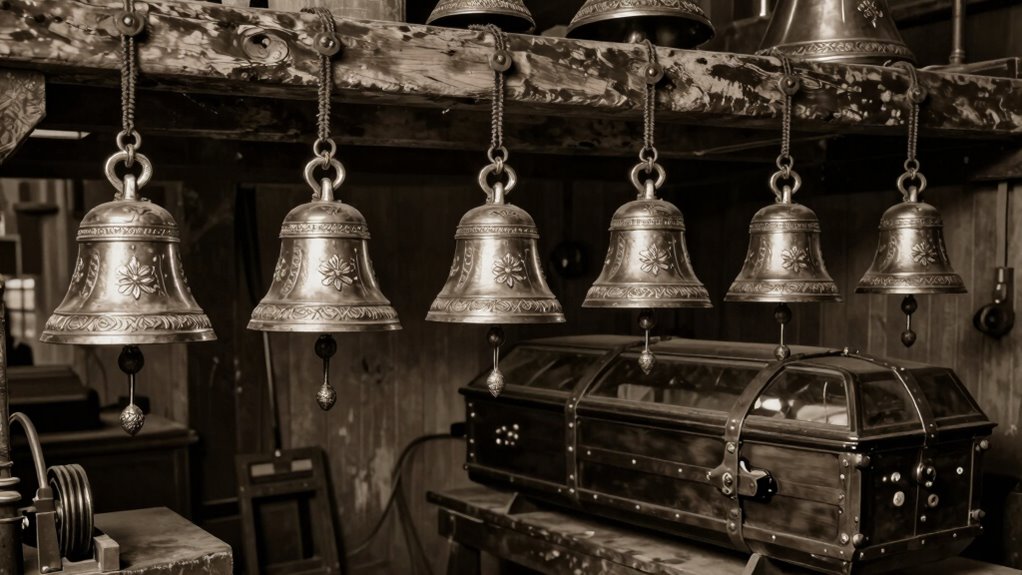

Coffin bells and safety coffins were Victorian-era inventions meant to prevent premature burial. You might find safety coffins equipped with bells, flags, or signaling devices connected to the outside, so if someone awoke, they could alert others. These devices often included breathing chambers and ventilation systems for added safety. They reveal how society’s fears of being buried alive spurred creative solutions. To learn more about these fascinating designs and their history, keep exploring this intriguing topic.
Listen free for 30 days with Audible
Thousands of audiobooks and originals — cancel anytime.
As an affiliate, we earn on qualifying purchases.
Key Takeaways
- Safety coffins were designed with mechanical devices like bells or flags to alert if the “deceased” was still alive.
- They often included ventilation and breathing chambers to prevent suffocation and allow air circulation.
- The devices emerged during the Victorian era due to fears of premature burial despite medical advancements.
- They reflected societal anxieties about death, superstitions, and the desire for extra precautions in death diagnosis.
- Today, safety coffins are historical relics, showcasing Victorian fears and inventive responses to death-related anxieties.
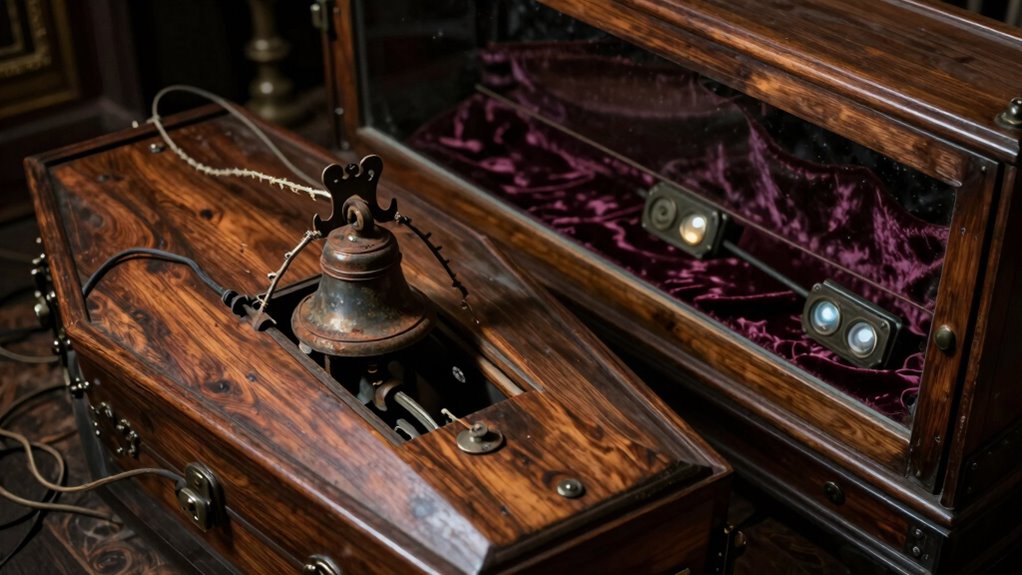
Throughout history, the fear of being buried alive has led to the invention of safety coffins and coffin bells, innovative solutions designed to alert loved ones if someone awakens underground. This fear was especially prevalent during the Victorian era, a time marked by elaborate funerals and strict mourning rituals. Victorian funerals often aimed to showcase respect and social standing, but they also fueled anxieties about premature burials. Amidst these concerns, medical advancements played a role in shaping the development of safety coffins. As medicine improved, doctors became better at diagnosing death, but uncertainties still persisted, prompting people to seek extra precautions. Medical diagnostics improved over time, but the lingering fear kept demand for these devices alive.
During Victorian funerals, coffins were sometimes fitted with mechanical devices or signaling systems—like bells or flags—that could be activated if the deceased regained consciousness. The idea was simple: if someone was mistakenly buried alive, they could alert the outside world by ringing a bell or pulling a cord. These safety coffins were often designed with a small, accessible chamber and a bell connected to the outside by a wire or cord. When triggered, the bell would ring, alerting loved ones or cemetery staff. This concept was born out of genuine fear, but it also reflected the era’s obsession with symbolism and social appearances.
Medical advancements gradually reduced the risk of premature burials, but the panic persisted for some time. People believed that certain signs—such as shallow breathing or a faint pulse—could be overlooked, especially in cases where death was ambiguous. To counter this, some safety coffins included built-in air tubes or breathing chambers, allowing the supposed deceased to breathe if they awoke. These innovations aimed to guarantee that no one would be buried alive unknowingly. Interestingly, some safety coffins also incorporated ventilation systems to improve air circulation and further reduce the risk of suffocation. Moreover, these devices often featured air circulation enhancements to ensure a steady flow of fresh air, providing an extra layer of safety. Additionally, these devices became part of a broader public fascination with death that influenced their design and purpose. The cultural context of the time often romanticized and sensationalized these fears, fueling their popularity. This obsession with death and safety led to a variety of preventative devices that reflected both scientific curiosity and societal anxieties.
Today, safety coffins and coffin bells seem like relics of a superstitious past, but they reveal much about Victorian society’s anxieties and the importance placed on death rituals. While modern medical advancements have eliminated the majority of premature burial fears, these devices serve as a reminder of how fear can inspire innovation. You can see them as early examples of life-saving technology, born from a mixture of superstition, scientific uncertainty, and social convention. Ultimately, they reflect a time when people’s greatest concern was being buried alive, leading to inventive—and sometimes bizarre—solutions that still fascinate us today.
Victorian safety coffin with bell
As an affiliate, we earn on qualifying purchases.
As an affiliate, we earn on qualifying purchases.
Frequently Asked Questions
When Were Safety Coffins Most Commonly Used?
You’ll find that safety coffins were most commonly used during the 18th and 19th centuries, often driven by historical misconceptions about premature burials. People feared being buried alive, prompting the development of safety measures like coffin bells. Today, modern safety measures have replaced these devices, but the era of safety coffins reflects early attempts to ease burial anxieties and improve safety, even if those fears were often exaggerated.
Were Coffin Bells Effective in Alerting Rescuers?
Coffin bells were somewhat effective in alerting rescuers during emergencies, especially in burial practices and funeral traditions that prioritized safety. When someone was mistakenly buried alive, a loud ring could signal distress, prompting help. However, their effectiveness depended on the proximity of rescuers and the sensitivity of the bell. While not foolproof, coffin bells served as a precautionary measure within burial practices to improve safety.
How Many Safety Coffins Are Still in Existence Today?
Like whispers in a vault, only a few safety coffins still exist today, preserved as relics of a bygone era. These artifacts serve as cultural symbols of past fears and technological innovations aimed at preventing premature burials. While rare, some are displayed in museums, reminding us of the ingenuity and anxieties that shaped their creation. Their scarcity keeps their story alive, a silent proof to human ingenuity and caution.
Did Safety Coffins Vary Across Different Cultures?
Yes, safety coffins varied across cultures, often reflecting unique cultural symbolism and burial customs. In some societies, elaborate safety features like bells or breathing tubes were common, symbolizing respect for the dead. In others, simpler designs sufficed, aligning with local beliefs about death and afterlife. These differences highlight how cultural values and traditions shaped safety measures, making each safety coffin a reflection of its specific cultural context.
What Safety Features, Besides Bells, Were Included?
Besides bells, safety coffins integrated features like breathing tubes linked to alarms, quick-opening mechanisms, and air circulation systems. These innovations aimed to prevent premature burial, aligning with burial customs that valued safety and dignity. Funeral innovations also included internal sensors and escape hatches, ensuring loved ones wouldn’t face distress if mistakenly declared dead. These safety features reflect a broader effort to respect life, combining tradition with advancements for peace of mind.
Conclusion
So, next time you hear about coffin bells or safety coffins, remember they were born out of fear and desperation. Did you ever think that these inventions might have been more about peace of mind than practicality? While they seem strange today, they reflect a time when the fear of being buried alive loomed large. Maybe it makes you wonder—what modern innovations are born from our deepest anxieties?
Baby shower & registry season Picks
baby registry must-haves
As an affiliate, we earn on qualifying purchases.