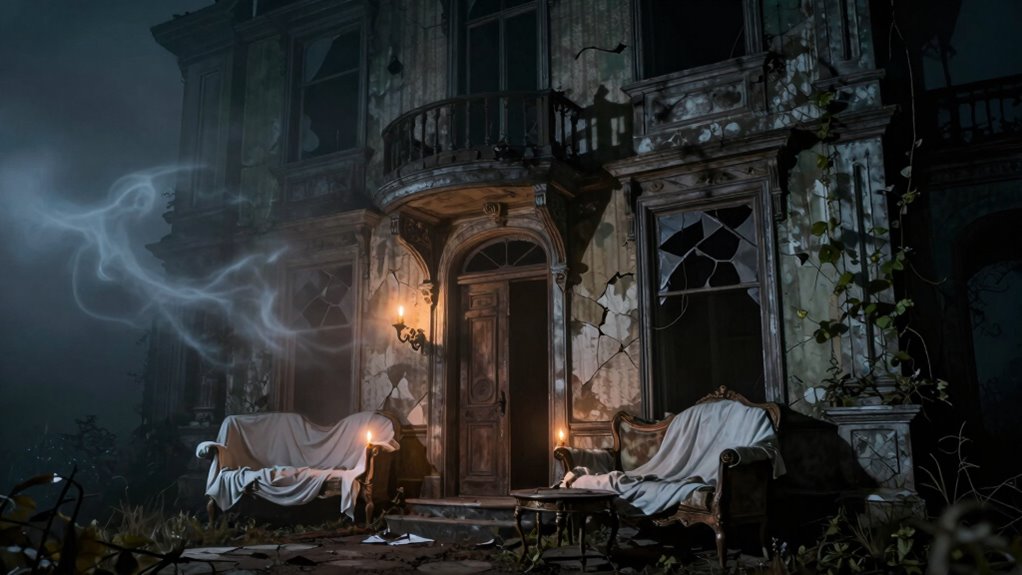

To craft a compelling haunted house story, you should include vivid sensory details that bring the setting to life, such as eerie sounds, flickering lights, and chilling drafts. Build an atmosphere filled with shadowy halls and unsettling environmental cues to deepen immersion. Develop characters with authentic reactions, fears, and backstories to create emotional stakes. Use the environment to reveal their personalities and heighten suspense. Keep the tone consistently eerie; if you’re curious about more ways to elevate your story, stay tuned.

Get books and cozy reading nights delivered free with Prime
- Fast, free delivery on millions of items
- Prime Video, Amazon Music and more included
- Member-only deals all year
Key Takeaways
- Incorporate vivid sensory details to evoke eerie sounds, sights, and sensations throughout the story.
- Establish a shadowy, atmospheric setting with creaking floors, flickering lights, and cold drafts.
- Develop complex characters with clear motivations, fears, and emotional stakes.
- Use environmental cues and supernatural elements to deepen immersion and suspense.
- Maintain a consistent, eerie tone that heightens tension and engages readers emotionally.

Creating a compelling haunted house story starts with simple but effective tips that bring your spooky setting to life. To truly captivate your readers, you need to craft a ghostly atmosphere that makes every creak, whisper, and shadow feel real. This atmosphere isn’t just about spooky visuals; it’s about immersing your audience in a world where the supernatural feels tangible. Use sensory details to evoke sounds of distant footsteps, cold drafts, or the faint glow of flickering lights. Descriptions should paint a picture that keeps readers on edge, making them feel as if they’re wandering through the haunted halls themselves. The more vivid and eerie your setting, the stronger your ghostly atmosphere becomes, instantly drawing readers into the story’s spine-chilling mood.
Create a haunting atmosphere with vivid sensory details that immerse readers in spooky, shadow-filled halls.
While setting the scene is essential, character development plays an equally important role. Your characters are the lens through which readers experience the haunting, so they need depth and relatability. Whether your protagonist is a skeptical investigator or a vulnerable newcomer, give them clear motivations, fears, and flaws. As they navigate the haunted house, their reactions should feel authentic and compelling. By developing characters with distinct personalities and backgrounds, you create emotional stakes that make the supernatural elements more impactful. Readers should care about what happens to them, which heightens the tension and makes every ghostly encounter more suspenseful.
In addition, think about how your characters interact with the environment. Do they uncover secrets that add layers to the story? Are they haunted not just by ghosts but by their own pasts? Character development isn’t just about backstory—it’s about evolving through the story’s challenges. Their fears and choices should influence how they respond to spooky situations, reinforcing the story’s tension. When you combine a ghostly atmosphere with well-rounded characters, you create a narrative that feels both eerie and emotionally engaging. Remember that incorporating relevant environmental details can deepen the immersive experience and reinforce the haunted setting. Incorporating atmospheric elements can further enhance the chilling mood and make the environment feel more authentic. Additionally, paying attention to atmospheric details can help sustain suspense and build a consistent tone throughout your story. Using sensory details not only heightens realism but also intensifies the supernatural encounters, making them more visceral for your readers.
As an affiliate, we earn on qualifying purchases.
Frequently Asked Questions
How Can I Make My Haunted House Story More Suspenseful?
To make your haunted house story more suspenseful, focus on creating ghostly atmospheres that keep readers on edge. Use suspenseful pacing by alternating quick, tense scenes with slower, eerie moments to build anticipation. Incorporate unexpected twists and keep the supernatural elements unpredictable. Show characters’ fears intensifying, and use vivid descriptions to immerse readers in the chilling environment, making every shadow and sound feel alive and threatening.
What Are Common Haunted House Story Tropes to Avoid?
Did you know that over 60% of haunted house stories rely on ghostly apparitions and cursed objects? To keep your story fresh, avoid common tropes like predictable ghost sightings or haunted furniture. Instead, focus on unique supernatural elements or complex characters. Steer clear of clichéd scares, and surprise your readers with unexpected twists. This approach makes your haunted house story more engaging and memorable, avoiding overused themes.
How Do I Develop Unique Ghost Characters?
To develop unique ghost characters, start by defining their spectral origin stories, exploring what led them to haunt the house. Give each ghost distinct personality traits—perhaps one is mischievous, another is mournful, or even humorous. Think about their motivations and past lives, which influence their behaviors. By blending these traits with compelling backstories, you create memorable, multi-dimensional ghosts that stand out from typical haunted house stereotypes.
What Settings Work Best for Haunted House Stories?
You should choose settings with rich historical context and distinctive architectural features to make your haunted house story compelling. An old mansion, a abandoned hospital, or a Victorian-era estate work well because they evoke mystery and nostalgia. Focus on details like creaky floors, hidden passages, or ornate balconies. These elements add atmosphere and deepen the story, immersing your readers in a haunted world that feels both authentic and chilling.
How Can I Incorporate Local Folklore Into My Story?
You can incorporate local folklore by researching legends and folklore motifs specific to your setting, then weaving them into your story’s plot. Investigate the truth behind these tales to add authenticity and depth, making readers curious from the start. Use local legends as a foundation for your haunted house’s backstory, creating a sense of real history that amplifies the eerie atmosphere and immerses your audience in your story’s cultural roots.
Conclusion
As you craft your haunted house story, remember that every shadow and creak symbolizes deeper fears waiting to be uncovered. Use the dark corners to mirror hidden secrets, and flickering lights to symbolize fleeting hope. Let your characters’ footsteps echo the uncertain path of confronting the unknown. With each chilling detail, you paint a world where fear and curiosity dance together, inviting readers to step inside and face their own shadows lurking within.
Halloween Picks
halloween
As an affiliate, we earn on qualifying purchases.