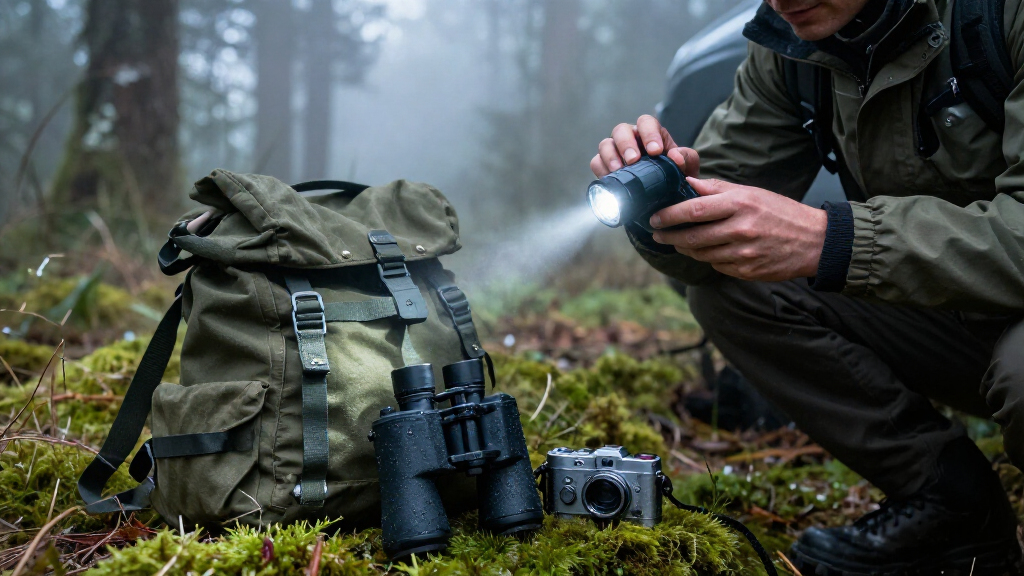
This checklist is for curious field researchers documenting possible cryptid activity, wildlife, or unusual sounds during outdoor trips. It focuses on practical tools for observing and recording conditions, while leaving room for careful notes and follow-up review. Reliable documentation starts with choosing equipment that suits the setting.

Get books and cozy reading nights delivered free with Prime
- Fast, free delivery on millions of items
- Prime Video, Amazon Music and more included
- Member-only deals all year
The sections are organized by field task: seeing in low light, checking temperature patterns, monitoring a site, capturing sound, and keeping written records. Each slot includes a named pick where provided, plus guidance to help assess fit and compatibility. Use each section as a focused buying checklist.
Before buying, consider where you expect to work, how you will carry and power the gear, and what you need to review afterward. Check the product details for included accessories and compatibility with your existing equipment. Match the tool to your actual field routine, and keep a notebook for context that recordings alone may miss.
Night Vision Monocular
A night vision monocular can support observation when a field session extends into low-light conditions. The pick for this slot is the Superior Tactical PVS-14 Gen 3 White Phosphor Night Vision Monocular. Before choosing it, think through how you will hold or mount the device, how long you expect to observe, and whether your planned route leaves a hand free for other tasks. Handling and mounting affect how comfortably you can use a monocular in the field.
A common buying mistake is assuming that a product name answers every practical question. Confirm the exact configuration, included accessories, power requirements, and any mounting compatibility in the current listing. Consider whether the viewing experience and controls suit you, and whether you can carry the device securely with your other equipment. Check the details before relying on it for a particular setup.
Plan how you will document what you see: note the time, location, weather, and viewing conditions alongside any observations. A monocular is one part of a field kit, so consider how it fits with your notebook and recording tools. Keep observations contextual to make later review more useful.
What to look for:
- Confirm the exact configuration and included accessories.
- Check how the device is powered and what supplies it requires.
- Verify compatibility with any mount or carrying setup you plan to use.
- Consider grip, controls, and ease of handling during observation.
- Plan how you will record viewing conditions alongside observations.
Superior Tactical PVS-14 Gen 3 White Phosphor Night Vision Monocular

This military-grade PVS-14 night vision monocular features Gen 3 Elbit XLSH white phosphor technology with automatic brightness adjustment and manual gain control. Designed for versatility, it can be used handheld, helmet-mounted, or as a clip-on accessory, making it ideal for hunting, camping, and surveillance.
Pros:
- High-quality Gen 3 Elbit XLSH white phosphor image intensifier
- Lightweight and compact design reduces user fatigue
- Versatile mounting options for handheld, helmet, or clip-on use
- Rugged, waterproof construction meets military standards
Cons:
- Fixed 1x magnification may not suit users needing zoom capabilities
- Requires specific batteries and maintenance for optimal performance
Best for: Researchers who want a dedicated monocular for low-light field observation
Not ideal for: Buyers who have not confirmed mounting, power, or accessory needs
Bottom line: Check the configuration and carry setup before making this monocular part of your field kit.
Thermal Imaging Camera
A thermal imaging camera gives a field researcher another way to examine a scene, alongside ordinary visual observation. The listed pick is the FLIR C8 Compact Thermal Imaging Camera – 320×240 MSX, Ignite Cloud. Consider how you will use captured images: whether you need to review them on the device, transfer them later, or include them with field notes. Image handling matters as much as the act of capturing a scene.
Do not assume that a camera’s name or resolution alone settles whether it fits your workflow. Check the current product details for controls, power, storage, transfer options, and any account or connectivity requirements associated with Ignite Cloud. Also consider how you will protect and carry the camera, and whether you can operate it comfortably while wearing the clothing or gloves you expect to use. Verify the workflow before heading out.
Thermal images need context in your records. Write down where and when an image was captured and the conditions around the observation, then keep those notes with the related files. Avoid treating an image by itself as an identification. Preserve the context so you can compare observations carefully later.
What to look for:
- Confirm storage and image-transfer options for your workflow.
- Check power requirements and how you will recharge or supply power.
- Review any account or connectivity requirements for Ignite Cloud.
- Consider control access and handling with your field clothing or gloves.
- Plan to pair each image with time, location, and conditions in your notes.
FLIR C8 Compact Thermal Imaging Camera – 320×240 MSX, Ignite Cloud

The FLIR C8 is a handheld thermal imaging camera with a 320 × 240 resolution sensor and 35° horizontal field of view, enhanced by patented MSX technology for clearer images. It offers built‑in USB‑C connectivity to the FLIR Ignite cloud for instant image upload, reporting and sharing.
Pros:
- MSX image enhancement provides sharper thermal images.
- Direct cloud connectivity allows easy sharing and reporting.
- Compact, handheld design with a robust warranty.
Cons:
- No water resistance limits outdoor use.
- Limited optical zoom (1×) and low still‑image resolution (0.08 MP).
Best for: Researchers who want thermal images as part of a documented field survey
Not ideal for: Buyers who have not checked image transfer or cloud workflow requirements
Bottom line: Make sure the camera’s storage and transfer process suits how you plan to review field images.
Trail Camera
A trail camera can help monitor a location while you are away from it. The specified pick is the TACTACAM Reveal X Gen 3.0 Cellular Trail Camera (2-Pack) with Microfib. Before buying, confirm the complete product name and package contents in the listing, including what “with Microfib” refers to. Package clarity helps avoid surprises when preparing a field setup.
Cellular monitoring depends on practical details beyond the camera itself. Check coverage at the intended location, service and activation requirements, power options, storage, and how images are accessed. Think about where you will place the camera, how it will be secured, and whether its mounting approach works with the site. A common mistake is selecting a cellular model without checking whether its connectivity fits the location. Check the site first and confirm the model’s current requirements.
Consider how you will manage more than one camera, since this pick is a two-pack. Label each unit and record placement, orientation, setup date, and any changes in your notebook. Follow applicable access rules and avoid pointing a camera toward places where people expect privacy. Consistent placement notes make the resulting observations easier to interpret.
What to look for:
- Confirm the full package contents, including the “Microfib” wording.
- Check cellular coverage and activation or service requirements at the site.
- Review power, storage, and image-access options.
- Verify mounting and security options for the intended placement.
- Plan labels and placement records for both cameras.
TACTACAM Reveal X Gen 3.0 Cellular Trail Camera (2-Pack) with Microfiber Cleanin

The Tactacam Reveal X 3.0 is a multi-carrier cellular trail camera that delivers HD photos and 1080P video directly to your smartphone via the REVEAL app. It features low-glow IR flash, built-in storage, a pre-installed antenna, built-in GPS, 3-shot burst mode, and fast trigger speed.
Pros:
- Multi-carrier support provides flexibility in choosing a cellular provider
- Built-in storage means no SD card is required
- Quick, beginner-friendly setup with preactivated SIM card
- Low-glow IR flash is virtually undetectable to humans and animals
Cons:
- Requires a cellular plan/subscription for full functionality
- Solar panel for extended battery life sold separately
- Only 1080P video resolution (not 4K)
Best for: Researchers planning to monitor a site with a two-camera setup
Not ideal for: Buyers whose location or workflow does not support cellular access
Bottom line: Confirm coverage, activation, and package contents before placing either camera.
Directional Microphone
A directional microphone can help focus an audio setup toward a chosen area, making it a useful slot to consider when documenting sounds outdoors. No specific product is named for this section, so treat it as a fit-first purchase: define what you will record, how far you expect to be from the source, and how you will monitor the result. Start with your recording plan before comparing models.
A frequent mistake is buying a microphone without checking the rest of the audio chain. Confirm the connector and power requirements, and make sure the microphone can work with your recorder, cables, headphones, and any support or wind protection you intend to use. Consider the microphone’s handling and mounting needs, and whether your kit can be set up without unwanted movement or cable noise. Check every connection against the equipment you already own.
Outdoor recording brings changing conditions, so consider how you will manage wind, moisture, handling noise, and safe placement. Test your setup in a familiar environment and note microphone direction, distance, and conditions for each recording. Capture ambient sound as context where useful. Document the setup so unusual audio can be reviewed with care.
What to look for:
- Match the microphone’s connector and power needs to your recorder.
- Check compatibility with cables, headphones, mounts, and wind protection.
- Consider handling noise and how the microphone will be supported.
- Choose a setup you can place and orient consistently outdoors.
- Record direction, distance, and conditions with each audio file.
Portable Audio Recorder
A portable recorder provides a way to capture sounds for later listening and documentation. The named pick is the Zoom F3 Professional 32-Bit Float Field Recorder. Before purchasing, consider how you will connect microphones, monitor recordings, manage files, and supply power during a field session. Compatibility with the full kit is central to choosing a recorder.
A common mistake is focusing on the recorder alone and overlooking the accessories required for a working setup. Check the input connections, supported media, power needs, included items, and file transfer process in the current product details. If you plan to use a directional microphone, confirm that its connectors and power requirements match the recorder and your intended cables. Also consider how you will protect and carry the recorder while leaving controls accessible. Review the complete chain before committing to a setup.
Plan a simple recording routine: label files, note the location and time, and document microphone placement and field conditions. Keep written notes linked to recordings so you can distinguish what you heard from what you inferred later. Consistent file notes make review more practical.
What to look for:
- Confirm microphone input and connector compatibility.
- Check media, power requirements, and included accessories.
- Review how files transfer to the device you use for listening or backup.
- Consider protection and access to controls while carrying the recorder.
- Plan a naming and note-taking routine for recordings.
Zoom F3 Professional 32-Bit Float Field Recorder
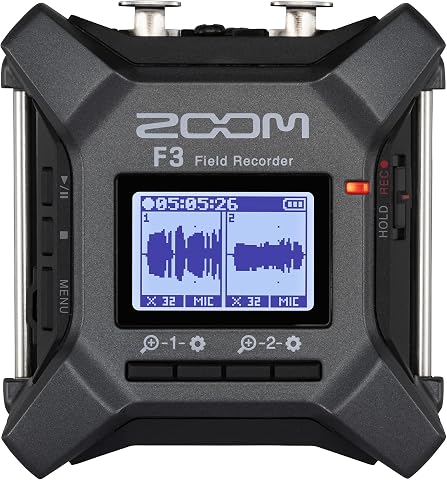
The Zoom F3 is a two-channel field recorder with 32-bit float recording, designed to capture audio without manually adjusting levels. It has dual locking XLR inputs, low-noise preamps, and flexible battery-powered or USB workflows for use on set or in the field.
Pros:
- 32-bit float recording captures quiet audio and sudden peaks without level adjustments
- Dual locking XLR inputs help secure connections
- Low-noise preamps support clean audio capture
- Flexible battery and USB power options
Cons:
- Requires two AA batteries for battery-powered operation
- Built-in storage is not specified; recording requires a microSD card
Best for: Researchers who want a portable recorder for outdoor audio documentation
Not ideal for: Buyers who have not checked microphone, media, and power compatibility
Bottom line: Confirm the recorder fits your microphone and file workflow before taking it into the field.
Weatherproof Field Notebook
A field notebook keeps observations attached to the conditions in which they were made. The named pick is the Rite in the Rain Weatherproof Tactical Field Kit. Consider whether its format suits the way you work: quick timestamps, location details, equipment settings, sketches, or follow-up questions. Useful notes need a usable format that you will actually maintain in the field.
A common mistake is choosing a notebook without thinking about how it fits into a pocket, bag, or writing routine. Check the kit contents and dimensions in the current listing, and consider whether your preferred pen or pencil works with its pages. Think about how you will keep entries organized across multiple trips, and how you will identify the right notes when reviewing recordings or images later. Test your writing setup before depending on it outdoors.
Use a consistent entry structure: date and time, location, weather or other conditions, equipment used, and a clear separation between direct observations and interpretations. Assign notes a simple reference that can be repeated in file names or image records. Link notes to evidence while details are fresh.
What to look for:
- Confirm the kit contents and notebook dimensions.
- Check which writing tools work well with the pages.
- Choose a format that fits your pocket or field bag.
- Use a repeatable structure for time, location, conditions, and equipment.
- Create references that connect written notes to audio and image files.
Rite in the Rain Weatherproof Tactical Field Kit
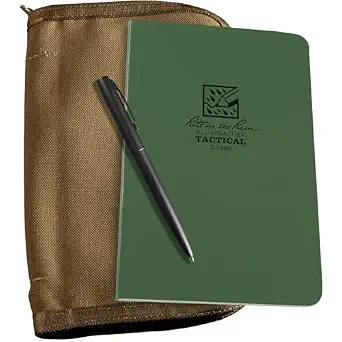
This tactical field kit includes a weatherproof notebook and pen, all housed in a durable CORDURA fabric cover. Designed for outdoor use, it is ideal for fieldwork and rugged environments.
Pros:
- Weatherproof and durable for outdoor use
- Compact size suitable for fieldwork
- Includes both a notebook and pen
Cons:
- Limited product details provided
- No information on page count or paper type
- Design may be bulky for some users
Best for: Researchers who want written context alongside recordings and images
Not ideal for: Buyers who have not checked the kit format or writing-tool fit
Bottom line: Choose a writing setup you can use consistently and link each entry to your media files.
If you are building a kit gradually, start with the tools that support your planned fieldwork: a notebook for observations, then the recording or imaging equipment that matches your documentation goals. Add site monitoring or low-light gear when the location and routine call for it. Prioritize practical fit, including compatibility, power, storage, and carrying needs.
Use the checklist as a prompt to verify details against current product listings and your own equipment. Keep expectations grounded, record conditions carefully, and treat each unusual observation as a starting point for thoughtful review. A well-kept field record makes every outing more useful.
Fall Picks
fall essentials
As an affiliate, we earn on qualifying purchases.