

During investigations, you should guarantee all logs are timestamped accurately using standardized formats like ISO 8601, and regularly verify system clocks with protocols like NTP. Automate the logging process to prevent manual errors and maintain data integrity. Establish clear audit trails that track actions and detect discrepancies, which are essential for reconstructing events and supporting credible findings. If you keep these practices in mind, you’ll strengthen your investigation’s reliability and uncover more effective timestamp management techniques.

Get books and reading essentials delivered free — and shop member deals
- Fast, free delivery on millions of items
- Access to Prime Big Deal Days deals on October 6–7
- Prime Video, Amazon Music and more included
Key Takeaways
- Ensure all systems synchronize clocks regularly using NTP to maintain consistent timestamps across logs.
- Use standardized formats like ISO 8601 for timestamp entries to avoid confusion.
- Automate logging processes to accurately capture event times and reduce manual errors.
- Protect audit trails with proper access controls to prevent unauthorized modifications or tampering.
- Regularly verify and audit timestamp accuracy to support reliable event reconstruction during investigations.
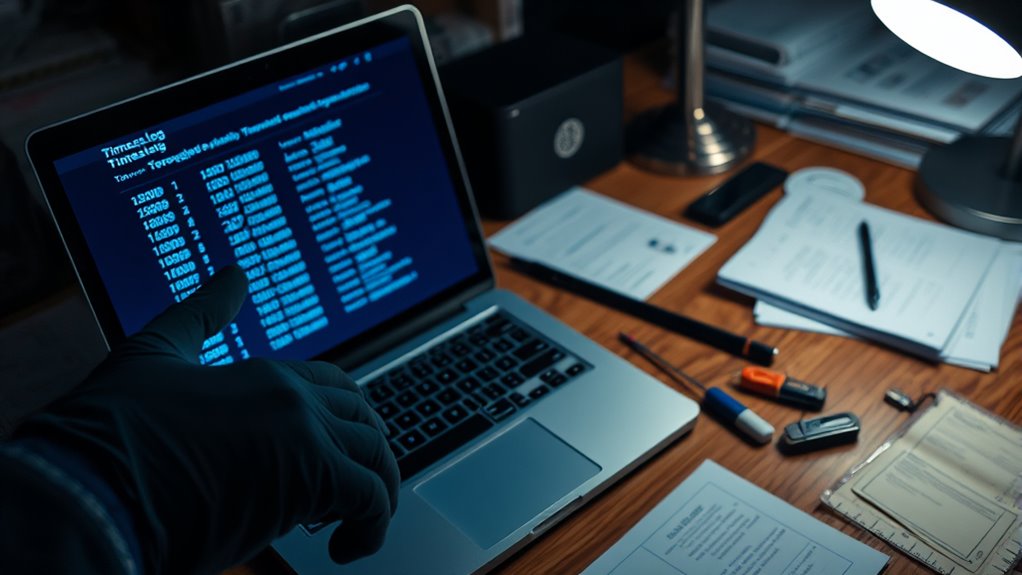
When conducting an investigation, accurately logging timestamps is essential to establishing a clear timeline of events. Precise timestamps help you piece together what happened and when, providing a solid foundation for your analysis. To achieve this, you need to rely on detailed audit trails—comprehensive records that track every relevant action and transaction. Audit trails serve as the backbone of your timestamping efforts, allowing you to verify the sequence of events and detect any discrepancies or tampering. Without a reliable audit trail, it becomes challenging to defend your findings, especially in legal or regulatory contexts. Ensuring data integrity also involves protecting your logs from unauthorized access or alterations. A critical aspect of maintaining accurate timestamps is ensuring proper time synchronization across all systems involved. Time synchronization involves aligning clocks on different devices so that their timestamps match precisely. When systems are out of sync, it can create confusing or conflicting timelines, which might lead to misinterpretation of events or overlooked activity. To prevent this, you should use Network Time Protocol (NTP) or similar synchronization tools to keep all devices on the same time reference. This consistency ensures that every log entry reflects the true sequence of events, reducing errors and increasing the reliability of your investigation. Implementing effective timestamp logging also requires attention to the environment’s technical setup. Regularly checking that all devices are synchronized and that your audit trail mechanisms are functioning correctly helps you maintain data integrity. Make it a habit to verify system clocks periodically, especially after updates or changes to your infrastructure. When you log data, always record the timestamp in a standardized format, such as ISO 8601, to facilitate easier analysis and comparison later. This standardized approach minimizes confusion, particularly when dealing with logs from multiple sources or different time zones. Additionally, consider automating your timestamp logging processes. Manual entries can introduce delays or errors, so leveraging automation tools ensures consistency and accuracy. Many forensic and security tools automatically timestamp logs at the moment of data capture, reducing the chance of human error. Combining automated timestamping with synchronized clocks and detailed audit trails creates a robust framework for your investigation, strengthening the credibility of your findings. Proper timestamp management also involves understanding the importance of meditation as a mental practice that can enhance focus and clarity during investigations. Ultimately, accurate logging of timestamps is not just about recording when something happens; it’s about establishing an irrefutable sequence of events that can stand up to scrutiny. By focusing on audit trails and maintaining synchronized clocks, you build a reliable timeline that supports your investigation. This approach allows you to reconstruct events with confidence, identify anomalies, and present compelling, well-documented evidence. Proper timestamp management isn’t just a best practice—it’s a crucial component of thorough, trustworthy investigations.
Top picks for "logg timestamp investigation"
As an affiliate, we earn on qualifying purchases.
Frequently Asked Questions
How Do Logging Timestamps Impact System Performance?
Logging timestamps can impact your system’s performance by introducing synchronization challenges and increasing storage overhead. When timestamps aren’t synchronized properly, it can cause inaccuracies, making investigations harder. Additionally, detailed timestamp logs require extra storage space, which might slow down your system if not managed well. To minimize these effects, optimize your logging practices and use efficient synchronization methods so your system runs smoothly without sacrificing important data.
What Are the Best Practices for Timestamp Accuracy?
Back in the 90s, folks knew timestamp accuracy was essential, and today, it’s no different. You should guarantee synchronization issues are minimized by regularly syncing clocks with reliable NTP servers. Keep timezone consistency across all systems to avoid confusion. Double-check that all devices record timestamps in the same format, and regularly verify their accuracy. This way, you’ll maintain precise logs that support effective investigations and prevent data discrepancies.
Can Timestamp Logging Violate User Privacy?
Yes, timestamp logging can potentially violate user privacy if not handled properly. You need to guarantee data protection by limiting access and anonymizing logs where possible. Be transparent with users about what data you collect and how it’s used. By following privacy regulations and best practices, you safeguard user privacy while maintaining effective logs for investigations. Always prioritize data security and respect user rights to prevent privacy breaches.
How Secure Are Timestamp Logs From Tampering?
Like a fortress guarding secrets, timestamp logs can be quite secure when employing cryptographic integrity measures. You guarantee tamper resistance by using digital signatures or hashing, making unauthorized changes detectable. Proper audit trail management also helps maintain log integrity, providing accountability and transparency. While no system is invulnerable, these techniques substantially reduce tampering risks, giving you confidence that your logs remain trustworthy during investigations.
Which Tools Are Most Effective for Timestamp Analysis?
You should use tools like EnCase, FTK, and Log2Timeline for timestamp analysis, as they’re highly effective in digital forensics. These tools help you verify log integrity by analyzing timestamp consistency and detecting tampering. They enable you to uncover discrepancies, establish an accurate timeline, and guarantee the reliability of your logs during investigations. Employing these tools enhances your ability to conduct thorough, precise digital investigations.
Conclusion
By logging timestamps during investigations, you create a clear trail, a steady heartbeat of your process. You capture moments, mark milestones, and build a timeline that tells your story. Each timestamp becomes a stepping stone, guiding you forward. When all is said and done, it’s about knowing where you’ve been, understanding where you’re going, and ensuring every step is accounted for. In this way, you turn chaos into clarity, confusion into confidence.
Fall Picks
fall essentials
As an affiliate, we earn on qualifying purchases.