To record high-quality ambient sound, position your microphone carefully to capture the natural environment while avoiding unwanted noise. Use stands or boom poles to place the mic at ear level or slightly above, pointing toward the main sound sources or open space. Choose quiet times or locations with minimal background noise, and an environment that reduces echoes. Add windshields outdoors, and use directional mics to focus on desired sounds. Keep experimenting with placement and environment adjustments to achieve the best results.
Key Takeaways
- Use directional microphones like shotgun mics to focus on ambient sounds and minimize background noise.
- Record during quiet times (early mornings or late evenings) to reduce external noise interference.
- Position microphones close to sound sources while avoiding environmental noise and wind; use stands or boom poles for stability.
- Employ windshields or furry covers outdoors to reduce wind noise and protect audio clarity.
- Select recording environments with favorable acoustics, minimal echo, and low background noise for authentic ambient sound capture.
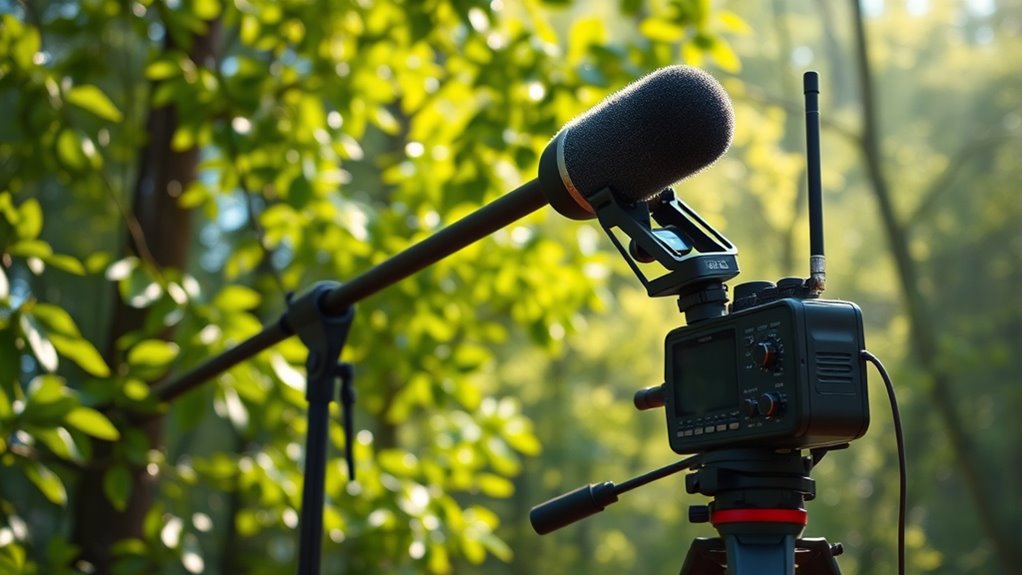
Have you ever wondered how to capture the natural atmosphere around you? When recording ambient sound, your success hinges on careful microphone placement and effective environmental noise control. Getting these right ensures your recordings are rich, authentic, and free from unwanted distractions. The first step is understanding where to position your microphone. You want to find a spot that best captures the essence of the environment without overwhelming it. For outdoor recordings, placing your microphone in a location that’s close enough to pick up the desired sounds but far enough to avoid wind or traffic noise is key. Use a boom pole or mic stand to keep the microphone steady and at the correct height. If you’re indoors, consider the room’s acoustics—aim for a corner or a space with less echo, and avoid areas with loud appliances or HVAC systems that could introduce noise.
Microphone placement determines the quality and character of your ambient sound. Position the mic at ear level or slightly above, pointing towards the main sound source or open space you wish to capture. This helps create a natural soundscape, giving your audience the feeling of being right there. Experiment with distances—sometimes a farther position yields a more spacious, immersive sound, while a closer one can emphasize specific details. Remember, the goal is to record the environment as naturally as possible, so take your time adjusting the placement until it feels right.
Additionally, staying informed about AI security developments can help you understand how to safeguard your equipment and data during the recording process, especially when using digital devices and cloud storage.
Environmental noise control is equally important. Even in the best locations, ambient recordings can pick up unwanted sounds—like distant sirens, wind, or machinery—that ruin the authenticity. To minimize these, choose a time of day when external noise is at its lowest, such as early mornings or late evenings. Use windshields or furry covers on your microphone to cut down on wind noise during outdoor shoots. If possible, set up your recording session in a quiet part of a building or in a space with soundproofing materials. You can also employ directional microphones, like shotgun mics, which focus on sounds from a specific direction while rejecting noise from other angles. This helps isolate your desired ambient sounds from background noise.
Ultimately, capturing high-quality ambient sound is about balancing good microphone placement with proactive environmental noise control. With patience and careful adjustments, you’ll record authentic, immersive soundscapes that bring your projects to life. Remember, every environment is different, so take the time to observe, listen, and tweak until you achieve the perfect balance.
Frequently Asked Questions
How Do I Eliminate Background Noise During Recording?
To eliminate background noise during recording, start by choosing the right microphone type, like a shotgun or cardioid mic, which focus on sound sources and reduce unwanted noise. Use filtering techniques, such as high-pass filters, to cut low-frequency hums. Also, position your microphone carefully, away from noise sources, and consider soundproofing your space. Combining these strategies helps you capture cleaner, high-quality ambient sound.
What Are the Best Locations for Capturing Ambient Sound?
You should seek out quiet, natural locations like forests, parks, or near water to capture rich nature soundscapes. Urban environments can work too, especially during quiet times like early mornings or late evenings, when background noise is minimal. Avoid busy streets or crowded areas, and look for spots with minimal human activity. This helps you record clear ambient sound that truly captures the essence of your chosen environment.
How Does Microphone Placement Affect Ambient Sound Quality?
Did you know that proper microphone placement can boost ambient sound quality by up to 50%? Your microphone techniques and placement strategies directly influence the richness and clarity of the sound captured. Positioning your mic at ear level or using a stereo setup guarantees a natural, immersive effect. Experiment with distance and angle, avoiding direct sound sources, to get the best ambient recordings. Good placement makes all the difference in capturing authentic atmosphere.
What Equipment Is Essential for High-Quality Ambient Recordings?
You need a variety of microphone types, like omnidirectional or shotgun mics, to capture ambient sounds accurately. Use high-quality preamps and audio interfaces to guarantee clean recordings. Opt for recording formats like WAV or AIFF for lossless quality. A sturdy stand, windshields, and headphones are also essential. This gear helps you capture rich, detailed ambient sound, making your recordings crisp and immersive.
How Can I Prevent Audio Clipping When Recording Loud Environments?
Ever wonder how to prevent audio clipping in loud environments? You should set your microphone sensitivity lower and use audio compression to control peaks. These steps keep the loud sounds from distorting your recording. Also, monitor levels constantly and consider using a limiter to guarantee nothing exceeds your maximum headroom. By doing this, you maintain clear, high-quality ambient sound without distortion, even in challenging, noisy settings.
Conclusion
Now that you know how to capture high-quality ambient sound, you’re well on your way to bringing your recordings to life. Remember, the right techniques and equipment are just part of the puzzle—patience and attention to detail make all the difference. Don’t forget, sometimes you have to read between the lines to find those hidden sonic gems. Keep experimenting, stay persistent, and soon you’ll realize that the sky’s the limit for your soundscapes.