
To maintain a proper chain of custody, you immediately label evidence with case details and secure it in tamper-evident containers. Each time you transfer evidence, you document who handled it, when, and why, ensuring all steps are signed and dated. You store evidence in secure, access-controlled areas and conduct regular inventory checks. Following these procedures guarantees evidence remains trustworthy and admissible. If you’re ready to learn more about keeping the chain intact, keep going.
Key Takeaways
- Immediately label evidence with case details and secure it in tamper-evident containers.
- Document every transfer with signatures, dates, and detailed records to maintain an unbroken chain.
- Store evidence in secure, access-controlled facilities, regularly conducting inventory checks.
- Follow strict procedures to ensure legal compliance and support evidence admissibility in court.
- Handle and transfer evidence in controlled environments, recording purpose and responsible personnel at each step.

When handling evidence in a legal investigation, maintaining an unbroken Chain of Custody is crucial to guarantee its integrity and admissibility in court. This process ensures that the evidence you collect remains unaltered and trustworthy from the moment it’s discovered until it’s presented in court. Following strict chain of custody procedures is essential for preserving evidence integrity, preventing contamination or tampering, and establishing a clear record of who handled the evidence and when. If this chain is broken or poorly documented, the evidence could be challenged or excluded entirely, jeopardizing your case.
To begin, you need to carefully document every step, starting with the collection. When you seize evidence, you should immediately label it with detailed information, including the case number, description, date, time, location, and the collector’s name. This labeling process is critical because it maintains the integrity of the evidence and provides a clear link between the item and its origin. You should also use tamper-evident containers or seals on evidence bags or containers to prevent unauthorized access or tampering. Once sealed, the evidence should be recorded in a chain of custody form, which functions as a detailed ledger tracking every transfer, movement, or analysis. Proper storage in secure, access-controlled facilities is also vital, as it further protects the evidence from environmental factors or mishandling.
Throughout the entire process, you must ensure that each person who handles the evidence signs and dates the chain of custody form, providing accountability. Whether it’s an investigator, forensic analyst, or transport personnel, each individual’s signature confirms their responsibility and helps establish an unbroken chain. When evidence is transferred from one person to another, the transfer should occur in a controlled environment, and the transfer must be thoroughly documented. This includes noting the time, date, and purpose of the transfer, along with signatures of both parties involved.
Maintaining evidence integrity also involves safeguarding the physical evidence itself. Proper storage in secure, access-controlled facilities prevents theft, loss, or damage. Regular inventory checks, along with strict access logs, reinforce the chain of custody and ensure the evidence remains untouched and intact. Any deviations, such as mishandling or environmental exposure, should be immediately recorded and addressed to uphold the chain of custody. Additionally, understanding and implementing chain of custody procedures is fundamental to ensuring that all handling steps are compliant with legal standards.

BUT-N-LOC 20 oz RPET Clear Hinged Lid Tamper Evident Container – 200 Pcs
MULTIPLE APPLICATIONS: Our 20oz clear hinged plastic containers can easily fit many kinds of foods, such as fruits,…
As an affiliate, we earn on qualifying purchases.
As an affiliate, we earn on qualifying purchases.
Frequently Asked Questions
What Training Is Required for Personnel Handling Evidence?
You need specialized training in evidence handling and chain of custody procedures to guarantee proper management. This includes understanding how to document each transfer, maintain integrity, and prevent contamination. Training often covers legal requirements, proper packaging, labeling, and storage. By completing these programs, you’ll ensure evidence stays admissible in court and that chain of custody remains unbroken, safeguarding the integrity of the investigation.
How Are Digital Evidence Chains Maintained Differently?
You’re walking a tightrope when maintaining digital evidence chains, but in digital forensics, you focus on data integrity above all. Unlike physical evidence, digital chains require meticulous logs of every access and transfer, often using cryptographic hashes to verify data remains unchanged. You must guarantee every step is documented, keeping digital evidence unaltered and admissible, because one slip-up can compromise the entire case.
What Are Common Challenges in Ensuring Chain of Custody?
You face common challenges like preventing evidence tampering and maintaining chain integrity. Ensuring no one alters or mishandles evidence requires strict protocols and secure storage. Human error, such as mislabeling or accidental contamination, also threatens the chain’s integrity. Additionally, tracking digital evidence can be complex. Staying vigilant, following procedures, and using tamper-evident packaging help safeguard the evidence and uphold its admissibility in court.
How Is Chain of Custody Documented in Court?
Think of court as a courtroom detective, piecing together a puzzle. You present evidence by demonstrating chain of custody procedures through meticulous evidence documentation. This includes detailed logs, timestamps, and signatures that act like a fingerprint, proving no tampering occurred. When you clearly show these records in court, it’s like revealing a story that’s been carefully guarded, ensuring the integrity of your case remains unbreakable and convincing.
What Are the Consequences of Chain of Custody Breaches?
If you breach the chain of custody, you risk evidence tampering suspicions, which can compromise the case. Legal repercussions include case dismissal or evidence exclusion, weakening your position. You might also face charges for tampering or obstruction. Maintaining proper custody is essential; otherwise, you jeopardize the integrity of the evidence and your case’s outcome, potentially leading to wrongful convictions or acquittals based on questionable evidence handling.

anti-modification,evidence bagTamper-Evident Evidence Bags, Clear PVC, Chain of Custody, Anti-Modification Security Seal, 100 Pack (7.5 x 4.0 Inches100 Pack)
TAMPER-EVIDENT SECURITY SEAL: The blue sealing strip reveals a permanent 'VOID OPEN' imprint on both sides if anyone…
As an affiliate, we earn on qualifying purchases.
As an affiliate, we earn on qualifying purchases.
Conclusion
Think of the chain of custody like a relay race—each runner must pass the baton smoothly to keep the race fair. Just like in a race, even a small misstep can jeopardize the entire outcome. By carefully tracking every handoff, you guarantee the evidence remains pristine and trustworthy. Remember, your diligence is what keeps justice running smoothly. Trust the process, and you’ll uphold the integrity that justice demands.

Letaya Metal Storage Cabinets with Lock Doors,Tall Locker Organizer Steel Garage Cabinets, 5 Adjustable Layers Shelves for Home, Office, Warehouse,Tool,Industrial(Black)
High-Quality Metal: Letaya metal storage cabinet with whole-in-one reinforced heavy gauge steel deluxe welded frame, 2 locking doors…
As an affiliate, we earn on qualifying purchases.
As an affiliate, we earn on qualifying purchases.
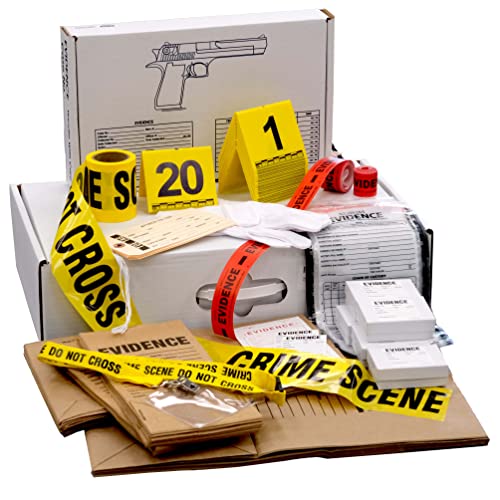
Crime Scene Forensic Supply Kit for Classrooms – Evidence Bags – Tents – Tape – Labels
Over 50 paper and plastic evidence bags, assorted sizes.
As an affiliate, we earn on qualifying purchases.
As an affiliate, we earn on qualifying purchases.