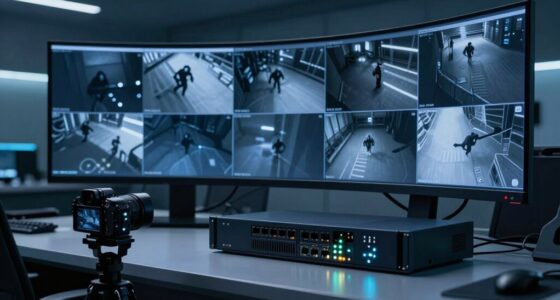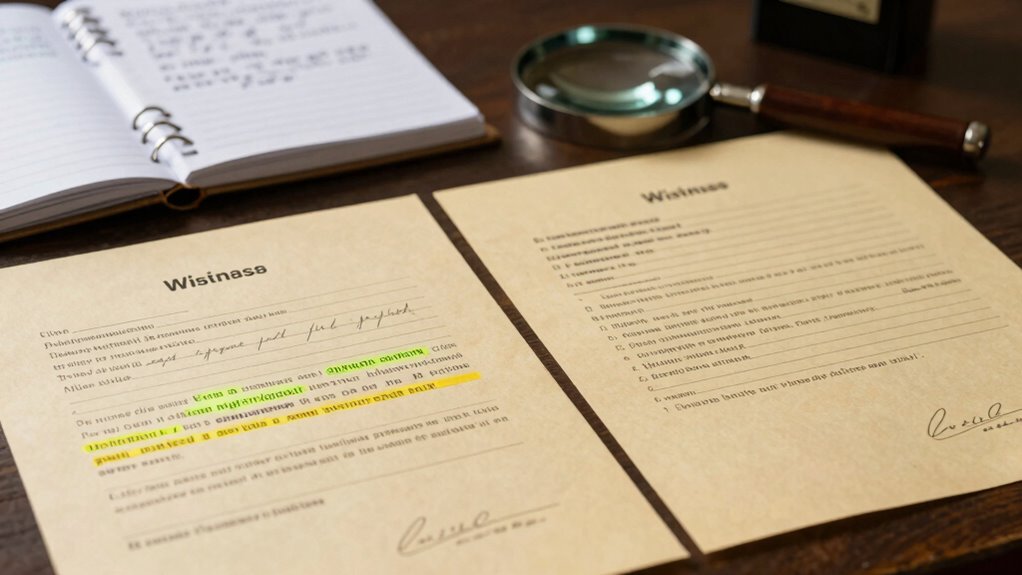

To compare witness accounts for consistency, you focus on key facts like the sequence of events and objects seen, noting patterns and common details. Be aware that memories can fade or distort over time, influenced by stress or emotions. Look for discrepancies, understanding they often reflect limitations rather than dishonesty. Pay attention to perception biases and emotional influences that shape recollections. Keep examining these aspects closely—there’s more to uncover about ensuring reliable comparisons.

Get books and cozy reading nights delivered free with Prime
- Fast, free delivery on millions of items
- Prime Video, Amazon Music and more included
- Member-only deals all year
Key Takeaways
- Identify and compare objective facts, such as event sequences and observable details, across multiple witness accounts.
- Recognize commonalities and patterns in descriptions to establish consistent elements.
- Account for memory limitations and potential distortions influenced by time, stress, and emotions.
- Evaluate discrepancies by considering perception biases and emotional influences on recall.
- Use follow-up questions to clarify and verify specific details, enhancing overall consistency.

When investigating an incident, comparing witness accounts can reveal important discrepancies or consistencies that shape the overall understanding of what happened. As you analyze these accounts, you realize that memory recall plays a significant role. People don’t remember events perfectly; their memories can fade, distort, or fill in gaps based on personal perceptions. One witness might vividly recall a bright red car, while another may remember it as orange or a different shade altogether. These variations don’t necessarily mean deception but reflect how memory recall isn’t always precise. You need to consider how each person’s recollection may be influenced by time, stress, or focus at the moment of the event. memory recall can be affected by various factors, making it essential to recognize its limitations when comparing accounts. Emotional influence heavily impacts how witnesses remember incidents. When someone witnesses a stressful or traumatic event, their emotional state can alter their perception and memory. For instance, a witness who was frightened might emphasize certain details over others or recall the event more intensely than someone who remained calm. This emotional influence can lead to discrepancies in accounts, especially if witnesses are asked to recount the same incident days or weeks later. You notice that emotionally charged memories tend to be more vivid but not necessarily more accurate. Recognizing this helps you understand that emotional responses can color a witness’s memory, sometimes making their account seem inconsistent with others who experienced the same event. To compare witness accounts effectively, you focus on key details that are less likely to be influenced by emotion or faulty memory, such as objective facts — the number of people involved, the sequence of events, or specific objects seen. You also look for patterns or commonalities that emerge across multiple testimonies, which can serve as anchors amid subjective differences. When discrepancies arise, you ask follow-up questions to clarify what each witness observed or felt at specific moments, helping to distinguish between genuine differences and artifacts of memory recall or emotional influence. Throughout this process, you remain aware that no single account provides the full picture. Instead, by carefully comparing multiple testimonies and understanding how memory recall and emotional influence shape each one, you piece together a clearer, more accurate understanding of what transpired. This approach allows you to navigate human perception, which is inherently subjective, yet still capable of revealing critical truths when examined carefully. Recognizing the role of perception biases is also crucial, as they can subtly distort how witnesses interpret their experiences. Being aware of how cognitive biases influence memory and perception helps you evaluate witness accounts more critically, ensuring a balanced assessment.
witness statement analysis tools
As an affiliate, we earn on qualifying purchases.
As an affiliate, we earn on qualifying purchases.
Frequently Asked Questions
How Do Cultural Differences Affect Witness Testimonies?
Cultural differences profoundly influence witness testimonies by shaping perceptions and communication nuances. You might interpret events differently based on cultural perceptions, affecting how you recall details. Communication styles, like indirect versus direct expression, can lead to misunderstandings or omissions. Recognizing these cultural factors helps you and others better understand and compare testimonies, ensuring that diverse backgrounds are respected and considered during investigations, ultimately leading to more accurate and fair outcomes.
What Role Does Memory Decay Play in Inconsistencies?
Memory decay acts like a gentle tide erasing footprints on the shore, affecting your recall reliability. As time passes, details fade like colors in a fading sunset, leading to inconsistencies in witness accounts. This natural process makes memories less precise, causing gaps and distortions. You might think you remember clearly, but the truth is, memory fade molds your recollections, making them less reliable and more susceptible to errors over time.
Can Emotional State Influence Witness Account Accuracy?
Yes, your emotional state can influence the accuracy of your account. Emotional bias might cause you to focus more on certain details while overlooking others, skewing your memory. Stress impact is significant too; high stress levels can impair your ability to recall events clearly, leading to inconsistencies. When you’re overwhelmed or emotionally unsettled, your memory may become less reliable, affecting how accurately you can recount what you witnessed.
How Do Language Barriers Impact Witness Comparisons?
Language barriers can muddy the waters like a foggy mirror, making it hard to see the full picture. You face translation challenges that may distort witness statements, and unreliable interpreters could unintentionally alter key details. These issues hinder accurate comparisons, risking missed nuances or misinterpretations. To guarantee fairness, it’s essential to use trained interpreters, verify translations, and understand cultural contexts, so every account remains as clear as a polished glass.
Are There Legal Standards for Assessing Witness Consistency?
Legal standards for evaluating witness consistency focus on examining witness credibility, which involves examining whether their accounts remain stable over time and align with other evidence. You should consider factors like memory, perception, and potential biases. Courts look for systematic inconsistencies that undermine credibility, but minor discrepancies are normal. Ultimately, applying these standards helps guarantee that witness testimony is reliable and fair within the legal process.
Conclusion
When you compare witness accounts, you’re like a detective piecing together a jigsaw puzzle from scattered clues. Each account adds a brushstroke to the bigger picture, revealing the truth behind the chaos. Stay sharp, notice the tiny details, and watch for patterns that stand out like lighthouse beams in the fog. Remember, consistency isn’t just a checkmark—it’s the sturdy bridge that carries your confidence from uncertainty to clarity. Keep your eyes open; the truth awaits your discovery.
Halloween Picks
halloween
As an affiliate, we earn on qualifying purchases.