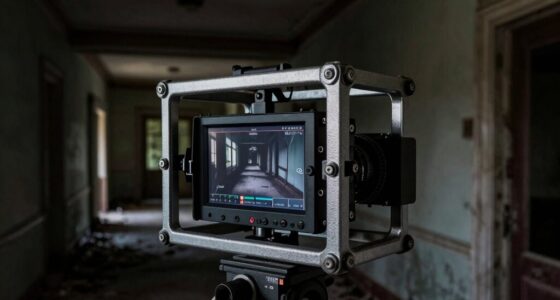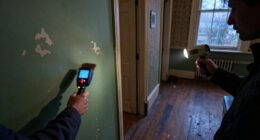
When you review photos, start by considering simple, natural explanations. Think about common scenes and environmental factors, and ask yourself if what you see could be a normal part of the scene. Be aware of biases that might lead you to see something extraordinary when it’s not. Recognizing natural variability and applying critical thinking helps you avoid jumping to conclusions. Keep exploring to discover more ways to approach photo analysis confidently and objectively.

Get books and cozy reading nights delivered free with Prime
- Fast, free delivery on millions of items
- Prime Video, Amazon Music and more included
- Member-only deals all year
Key Takeaways
- Begin with a rational assessment, considering common scenarios before assuming extraordinary features.
- Recognize natural variability and biodiversity to differentiate between anomalies and typical environmental changes.
- Maintain skepticism by asking, “Could this be a straightforward explanation?” to avoid jumping to conclusions.
- Be aware of cognitive biases that may influence initial perceptions and overlook genuine anomalies.
- Balance critical thinking with open-mindedness to accurately interpret images and prevent misinformation.

This initial step is vital because it prevents you from jumping to conclusions based solely on sensational or extraordinary appearances. You subconsciously ask, “Could this be a normal scene misinterpreted?” or “Is there a straightforward explanation?” before entertaining more fantastical ideas. This process helps maintain a sense of rationality, filtering out false positives, and conserving mental energy. At the same time, it also means that your biases can sometimes cause you to overlook genuine anomalies or extraordinary features in a photo if they don’t fit your preconceived notions. Recognizing biodiversity and understanding the natural variability within ecosystems can also help inform your judgment, making you less prone to unwarranted skepticism. Your approach to reviewing images is, thus, both logical and biased. You rely on your innate desire to find familiar, credible explanations first, which often leads to a default skepticism of the extraordinary. Recognizing this tendency allows you to be more mindful when evaluating images, especially in a world where misinformation spreads rapidly. By understanding the influence of cognitive biases on your initial reactions, you can better differentiate between what’s truly remarkable and what might simply be a common scene dressed up as something extraordinary. Developing awareness of cognitive biases can help you approach photo analysis with greater objectivity and critical thinking. Being aware of confirmation bias can prevent you from dismissing unusual features that deserve further investigation. Incorporating an understanding of natural variability can also enhance your ability to assess whether an anomaly is genuinely exceptional or just part of typical environmental fluctuations. Recognizing how perception influences your judgments is crucial for avoiding hasty conclusions. This balance is essential for making more accurate judgments about the authenticity and significance of the photos you encounter daily.
As an affiliate, we earn on qualifying purchases.
Frequently Asked Questions
How Do We Prioritize Which Photos to Review First?
You prioritize photo selection based on review criteria that highlight urgency or importance. First, you look for images with clear, relevant content that meet your criteria, such as focus or clarity. Photos that seem suspicious or unusual get reviewed first, while those with obvious explanations are set aside. This approach guarantees you efficiently identify critical images that need immediate attention, streamlining the overall review process.
What Tools Are Used During the Photo Review Process?
During the photo review process, you use tools like image analysis software to detect inconsistencies or anomalies in the photos. Metadata verification tools help you confirm details like date, location, and device information, ensuring authenticity. These tools streamline your review, allowing you to quickly identify photos that require deeper inspection, and help maintain accuracy and integrity in the verification process.
How Long Does the Review Process Typically Take?
You’ll find that the review process usually takes just a few hours, depending on the photo quality and review speed. It’s almost like watching paint dry, but at least you get to see if your snapshot passes the test. We prioritize quick turnarounds to keep things moving, yet thorough enough to catch those sneaky anomalies. So, expect a swift review, with a dash of patience for the best results.
Can Photos Be Reviewed Multiple Times for Accuracy?
Yes, photos can be reviewed multiple times for accuracy. You or reviewers examine the photo’s authenticity by analyzing image metadata and visual details. Repeated reviews help guarantee no errors or misinterpretations occur, especially if initial assessments raise questions. This process enhances confidence in the photo’s credibility, as verifying details repeatedly minimizes chances of overlooking inconsistencies or false information, ultimately confirming the photo’s integrity before final approval.
Who Is Involved in the Photo Review Decision-Making?
You’re involved in the photo review decision-making process, along with trained reviewers. They use their reviewer training to assess photo authenticity, ensuring accuracy and reliability. As you review, you’ll consider the context, look for inconsistencies, and verify details. Multiple reviews may happen to confirm findings, with each reviewer applying the same rigorous standards. Your goal is to make informed, objective decisions about the photo’s authenticity before moving forward.
Conclusion
By examining photos for ordinary explanations first, you improve your ability to spot genuine anomalies and avoid jumping to conclusions. Did you know that 80% of mysterious images often have simple, everyday causes? Focusing on common explanations not only sharpens your critical thinking but also saves time. Next time you encounter a puzzling photo, remember to start with the basics—you might be surprised how often the answer is right in front of you, plain and simple.
Halloween Picks
halloween
As an affiliate, we earn on qualifying purchases.