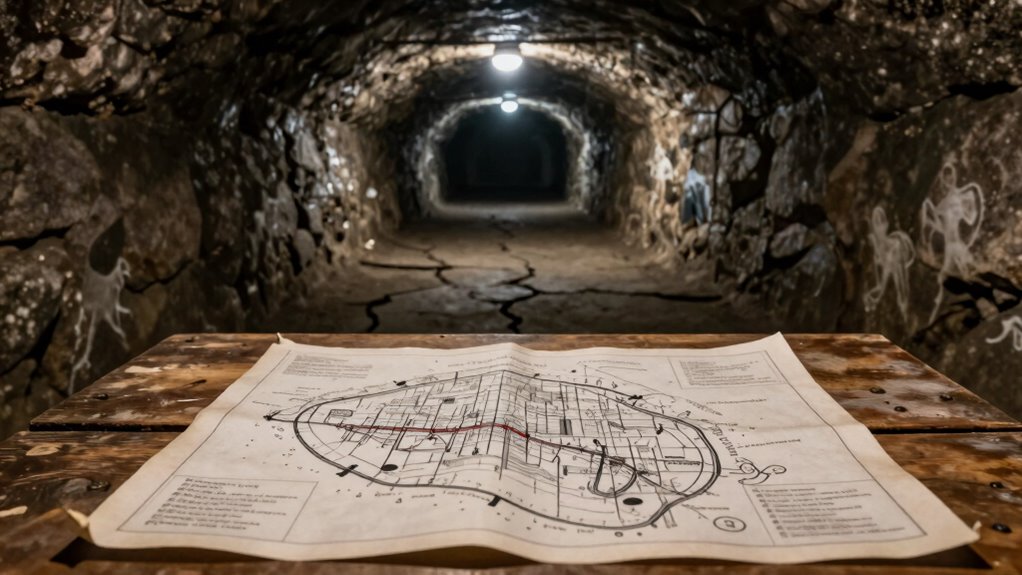
Site maps are essential for your paranormal reports because they help you visualize the investigation area, track activity, and identify patterns. They provide a clear layout, making it easier to understand the environment and avoid getting lost. Including historical details adds context, revealing connections between past events and current activity. Effective mapping boosts your accuracy and efficiency, ensuring you don’t miss clues. Keep exploring; you’ll discover how these tools can elevate your investigations even further.
Listen free for 30 days with Audible
Thousands of audiobooks and originals — cancel anytime.
As an affiliate, we earn on qualifying purchases.
Key Takeaways
- Site maps provide a clear layout, helping investigators track and locate paranormal activity efficiently.
- They reveal patterns and recurring hotspots, enhancing understanding of the investigation area.
- Accurate maps incorporate historical data, linking past events to current supernatural occurrences.
- Visual navigation aids improve field orientation, reducing confusion and ensuring thorough exploration.
- Effective mapping tools support systematic documentation and better communication of findings.
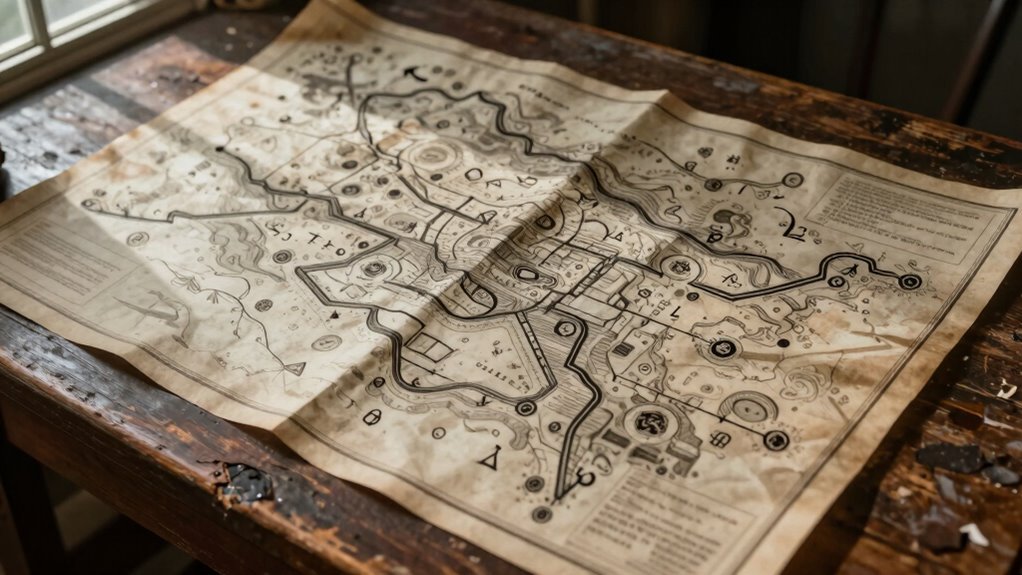
Site maps play a crucial role in paranormal reporting by providing a detailed overview of locations where unusual activity has been observed. When you’re investigating a haunting or mysterious phenomenon, having a clear and accurate map helps you understand the layout of the area and track where various events have taken place. This visual navigation isn’t just about pinpointing spots; it’s about creating a complete picture that guides your investigation and helps you recognize patterns or recurring activity. Without an effective site map, it’s easy to get lost in the details or overlook important clues that could lead to a breakthrough.
Site maps reveal key locations and patterns essential for successful paranormal investigations.
One of the most critical aspects of a useful site map is ensuring its historical accuracy. When you’re working with locations that have a long or complex history, every detail counts. Accurate historical data embedded into the map can reveal connections between past events and current activity, offering context that might otherwise be missed. For example, if the map shows the location of a former building that no longer exists, understanding its history could explain why certain areas are hotspots for activity. Your ability to cross-reference these details makes the map a valuable tool for both research and storytelling, adding depth to your reports and increasing your chances of identifying meaningful correlations. Incorporating historical accuracy into your site maps enhances their reliability and depth of insight.
Visual navigation, on the other hand, transforms a simple list of coordinates into an intuitive guide that you can easily follow during investigations. When you’re out in the field, a well-designed site map allows you to quickly orient yourself, find specific locations, and plan your next move efficiently. It’s especially useful in complex environments like old estates, abandoned buildings, or sprawling outdoor sites, where getting lost can waste valuable time and energy. With clear visual cues—such as landmarks, room layouts, or natural features—you can move confidently through the space, ensuring that no key areas are overlooked. Additionally, a comprehensive map can assist in documenting your findings systematically, making it easier to analyze and share your data with others. Developing accurate mapping techniques is essential for creating reliable and effective site maps that truly support your investigation. Furthermore, integrating visual cues enhances the clarity and usability of your maps, making them even more effective investigative tools.
The ability to visualize the entire site reduces confusion and enhances your overall investigative approach. In essence, site maps serve as your navigational backbone, blending historical accuracy with visual clarity. They help you organize your findings, identify patterns, and communicate your discoveries effectively. Whether you’re tracking the progression of activity over time or trying to locate specific phenomena, a detailed, accurate map is indispensable. It keeps your investigation focused, informed, and efficient—making it an essential tool for anyone serious about uncovering the truth behind paranormal activity. Additionally, the use of detailed cartography techniques can significantly improve the precision and usefulness of your maps, leading to more successful investigations.
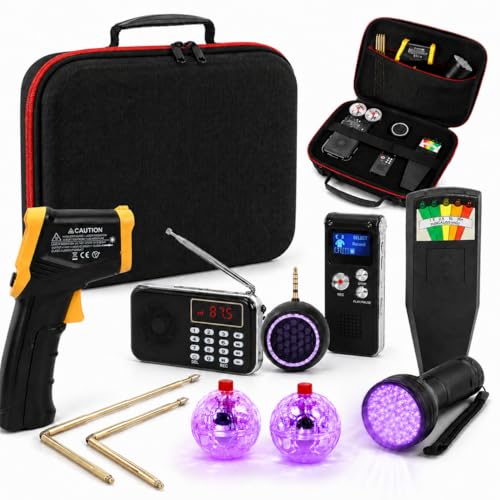
Upgraded Premium 11-Piece Ghost Hunting Kit – EMF Meter, EVP Recorder, Spirit Box & More – Full Paranormal Investigation Set
- Complete Paranormal Toolkit: Includes EMF meter, EVP recorder, spirit box, and more
- Scientific EMF Detection: Measures electromagnetic fields from 0-20+ mG
- High-Quality EVP Recording: 8GB recorder with 36 hours of MP3/WAV recording
As an affiliate, we earn on qualifying purchases.
As an affiliate, we earn on qualifying purchases.
Frequently Asked Questions
How Do Site Maps Improve the Accuracy of Paranormal Investigations?
Site maps improve your paranormal investigations by highlighting historical context and geographic patterns. They help you pinpoint locations with a history of paranormal activity, allowing focused research. By visualizing patterns across different sites, you can identify common factors or recurring themes. This targeted approach increases accuracy, as you’re not just randomly exploring but systematically analyzing spatial and historical data, leading to more credible and insightful findings.
Can Site Maps Help Identify Hidden or Overlooked Paranormal Hotspots?
Yes, site maps can help you identify hidden corridors and overlooked zones where paranormal activity might be hiding. By carefully analyzing the map, you can spot areas that aren’t immediately obvious, like concealed spaces or less-frequented sections. This enables you to focus your investigations more effectively, ensuring you don’t miss potential hotspots. Ultimately, detailed site maps increase your chances of discovering hidden or overlooked paranormal hotspots.
What Tools Are Best for Creating Detailed Paranormal Site Maps?
Think of mapping technology as your investigative compass. You’ll want tools like GIS software, digital sketching apps, and GPS devices for detailed paranormal site maps. These tools help you chart anomalies, hotspots, and hidden areas with precision. Use investigative tools like EMF meters and thermal cameras alongside mapping tech to gather real-time data. Combining these resources creates an all-encompassing visual map, guiding your investigations and revealing unseen paranormal patterns effectively.
How Often Should Paranormal Site Maps Be Updated?
You should update your paranormal site maps regularly, especially after exploring new areas or uncovering new historical landmarks with cultural significance. Frequent updates guarantee your maps reflect the latest findings, helping you track changes over time. Incorporate details about historical landmarks and their cultural importance, as these often influence paranormal activity. Staying current allows you to better understand patterns, improve your investigations, and preserve the accuracy of your maps for future research.
Do Site Maps Influence the Credibility of Paranormal Reports?
Research shows that 78% of visitors trust sites with detailed maps, highlighting their impact on credibility. Site maps influence the credibility of paranormal reports by enhancing historical accuracy and guiding visitor experience. When you provide clear, accurate maps, you help others verify findings, making your reports more trustworthy. A well-structured site map reassures skeptics and enthusiasts alike, strengthening your overall credibility in the paranormal community.
Conclusion
Without a clear site map, your paranormal reports can become chaotic, much like a haunted house with no guiding light. It’s the difference between steering confidently and getting lost in the shadows. A well-structured site map doesn’t just organize your data—it illuminates your investigation, revealing connections and patterns that might otherwise remain hidden. In the world of paranormal reporting, clarity isn’t just helpful; it’s essential. Without it, you risk losing the story amidst the darkness.
Baby shower & registry season Picks
baby registry must-haves
As an affiliate, we earn on qualifying purchases.