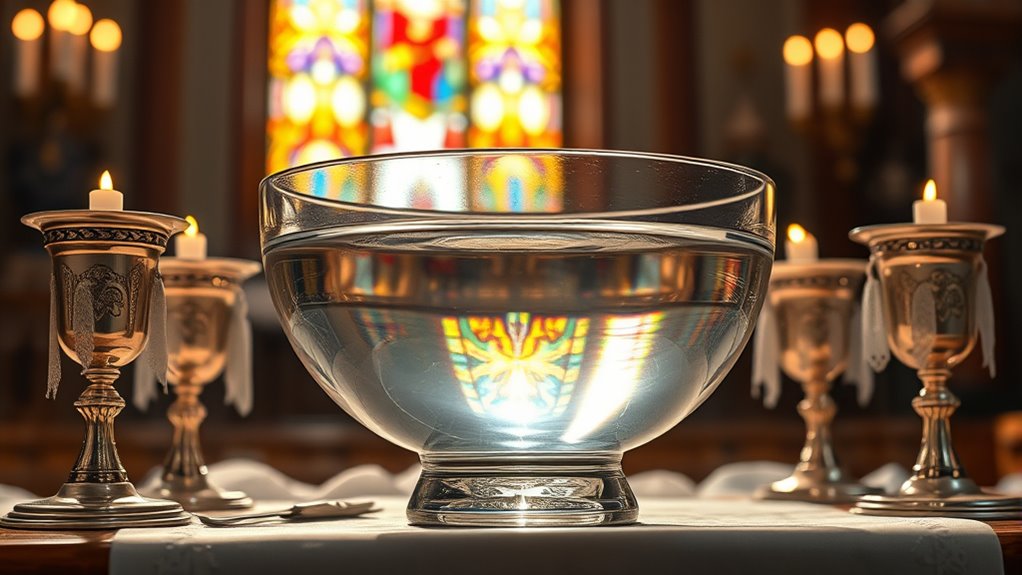

Holy water is used to bless yourself, objects, or spaces, offering spiritual protection, cleansing negative energies, and inviting peace. It symbolizes divine presence and renewal, helping you feel grounded in faith. While powerful in rituals, it’s important to respect its purpose and use it with sincerity, knowing it’s a symbolic tool rather than a cure-all. If you want to understand its proper uses and cautions, keep exploring how it can enhance your spiritual life.
Key Takeaways
- Holy water is used in blessings to invoke divine protection, purification, and spiritual renewal.
- It can cleanse negative energies and spiritual impurities when sprinkled on people or objects.
- Proper use involves respectful rituals and prayer, emphasizing faith and intention for effectiveness.
- Holy water is symbolic and not a substitute for medical or physical treatment.
- Excessive or improper use may diminish its spiritual significance; it should be used with reverence.

Have you ever wondered what makes holy water so significant in religious rituals? It’s more than just water; it’s a symbol of divine presence and a tool for spiritual connection. Many faiths use holy water during blessing rituals to invoke protection, purify spaces, and invite divine grace. When you participate in these rituals, you’re engaging in a tradition that dates back centuries, emphasizing the importance of spiritual cleansing and renewal. Holy water is believed to carry blessings from a higher power, making it a powerful element for sanctifying individuals, objects, or places. Its role in blessing rituals is to set apart what is sacred and to serve as a conduit for divine favor, offering reassurance and spiritual strength to those involved.
Holy water symbolizes divine presence, offering protection, purification, and spiritual renewal through sacred blessing rituals.
In many religious practices, blessing rituals using holy water are performed to ward off evil, remove negative energies, or simply to invite a sense of peace and sanctity. When you sprinkle holy water on yourself or others, you’re participating in a ritual that helps clear away spiritual impurities. It’s believed to act as a barrier against harm and negativity, providing a sense of protection and divine oversight. These moments of spiritual cleansing are often accompanied by prayers or invocations, which reinforce the intention behind the ritual. The act of blessing with holy water isn’t just symbolic; it’s a moment where faith and tradition come together, creating a tangible connection to the divine.
Using holy water in blessing rituals can also be a personal act of faith, helping you feel more grounded and connected to your spiritual beliefs. Whether you’re seeking protection, healing, or simply a moment of peace, the ritual of blessing with holy water can be deeply meaningful. It’s a way to turn ordinary water into a vessel of divine grace, making everyday objects or spaces sacred. When you carry holy water with you or use it during special occasions, you’re participating in a tradition that emphasizes the importance of spiritual cleansing. It reminds you to purify your heart and mind, aligning yourself with divine virtues. Additionally, understanding the halal status of holy water and related practices ensures that such rituals are respectful of Islamic beliefs and dietary standards.
However, it’s essential to remember that holy water isn’t a magical cure-all. Its power lies in the faith and intention behind its use. Caution is necessary, especially when it’s used improperly or in excess. While it’s generally safe for spiritual and ritualistic purposes, it shouldn’t replace medical treatment or be used in harmful ways. Respect the traditions and beliefs surrounding holy water, understanding that its true significance comes from the faith it symbolizes. When used thoughtfully, holy water can be a meaningful part of your spiritual journey, enhancing your connection to the divine and supporting your quest for spiritual cleansing.
holy water blessing kit
As an affiliate, we earn on qualifying purchases.
As an affiliate, we earn on qualifying purchases.
Frequently Asked Questions
Can Holy Water Cure Illnesses or Diseases?
Holy water can’t cure illnesses or diseases, despite miracle claims sometimes made. Its spiritual significance lies in blessing and purification, offering comfort and faith rather than medical treatment. You shouldn’t rely on holy water as a substitute for professional healthcare. Instead, use it as a symbol of faith and hope, understanding that healing involves medical attention, compassion, and spiritual support.
Is Holy Water Safe for Children or Pregnant Women?
Holy water is like a delicate flower, needing careful handling. You should avoid giving it to children or pregnant women without consulting a healthcare professional or religious authority. For child safety and pregnancy precautions, it’s best to limit exposure, especially if there’s any doubt about the water’s purity or ingredients. Always prioritize safety and seek guidance, as holy water isn’t a substitute for medical treatment or expert advice.
How Long Does Holy Water Remain Effective?
Holy water remains effective for an indefinite period if stored properly. You should keep it in a clean, sealed container, away from direct sunlight and extreme temperatures. Proper preservation methods, like using a sterilized vessel, help maintain its purity and spiritual significance. Regularly check the container for any contamination or cloudiness. While it doesn’t spoil, its spiritual potency is believed to last as long as it’s stored with reverence and care.
Can Holy Water Be Reused After a Blessing?
They say “Don’t count your chickens before they hatch,” and the same applies here. Holy water can be reused after a blessing, but you should store it properly for future blessing rituals. Keep it in a clean, covered container to preserve its sanctity and effectiveness. Remember, water storage is essential, and reusing holy water symbolizes ongoing faith and protection, but always respect its sacred nature.
Are There Specific Prayers for Blessing Holy Water?
Yes, there are specific prayers for blessing holy water. During blessing rituals, priests often use prayer formulations to invoke divine grace and sanctify the water. You should follow the traditional blessing rituals, which include reciting these prayers with sincerity and reverence. These prayer formulations help imbue the holy water with spiritual power, making it suitable for sacramental and protective purposes. Always guarantee the blessing is performed properly for maximum efficacy.
holy water spray for spiritual cleansing
As an affiliate, we earn on qualifying purchases.
As an affiliate, we earn on qualifying purchases.
Conclusion
Holy water can be a powerful symbol of faith and protection, but remember, it’s like a gentle breeze—meaningful when used thoughtfully. While it can bring comfort and blessings, avoid overusing it or relying solely on it for spiritual protection. Respect its significance and use it with reverence. Think of holy water as a sacred thread woven into your spiritual tapestry—adding beauty and strength, but only when handled with care and understanding.
holy water container and holder
As an affiliate, we earn on qualifying purchases.
As an affiliate, we earn on qualifying purchases.
blessing ritual set with holy water
As an affiliate, we earn on qualifying purchases.
As an affiliate, we earn on qualifying purchases.