Protective talismans and symbols are powerful tools rooted in cultural and spiritual traditions, designed to shield you from harm and attract good luck. Across different cultures, symbols like the Hamsa hand, Chinese dragons, and ancient scarabs carry deep meanings, embodying protection, power, and positive energies. Wearing or displaying these symbols connects you to shared values and beliefs, strengthening your sense of security. Exploring further reveals how these symbols have shaped collective identities and spiritual practices over centuries.
Key Takeaways
- Amulets serve as tangible links to spiritual protection, embodying cultural values and symbolic meanings.
- Symbols like scarabs and dragons historically ward off harm and invite positive energies across cultures.
- Personal beliefs and cultural backgrounds influence the choice and significance of protective symbols.
- Amulets reinforce collective cultural identity and shared spiritual beliefs passed through generations.
- The power of symbols transforms simple objects into protective tools, aligning with spiritual energies and traditions.
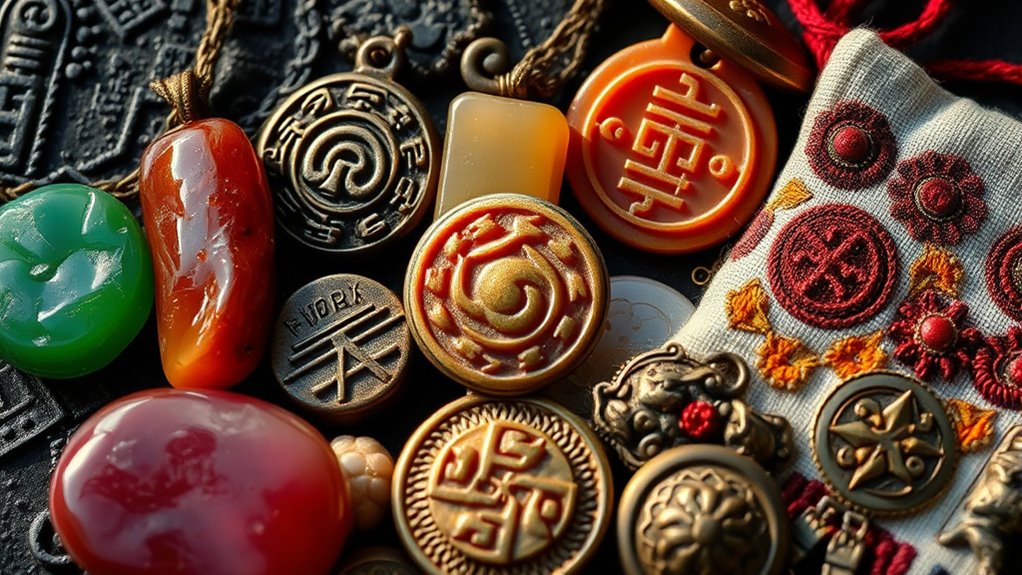
Throughout history, people have used protective talismans and symbols to ward off harm and invite good fortune. These objects and images hold deep meaning, often rooted in cultural symbolism that connects them to specific beliefs and traditions. When you carry or display an amulet, you’re not just using a simple object; you’re tapping into a rich history of symbolism that can influence your sense of safety and well-being. The amulets’ significance varies across cultures, but their core purpose remains the same: to serve as a tangible link between the physical world and spiritual protection. For instance, in ancient Egypt, the scarab beetle symbolized rebirth and protection, while in Chinese culture, the dragon represents power and good luck. These symbols are more than decorative; they embody cultural values and spiritual ideals that reinforce their protective qualities.
Protective symbols like scarabs and dragons connect culture, tradition, and spiritual protection across history and societies.
Understanding the cultural symbolism behind amulets can deepen your appreciation of their power. When you choose an amulet, you’re often selecting an object that resonates with your personal beliefs or cultural background. For example, a hamsa hand, prevalent in Middle Eastern traditions, is believed to ward off the evil eye and bring blessings. Wearing it as jewelry or hanging it in your home can remind you of your cultural roots and serve as a protective barrier. Similarly, the cross in Christianity symbolizes faith and divine protection, offering comfort and strength to its wearer. These symbols act as visual reminders of spiritual safeguards, making them more meaningful than mere charms.
Furthermore, the significance assigned to amulets isn’t just about individual protection; it also reflects collective cultural identity. Many societies create specific symbols that are passed down through generations, reinforcing shared values and beliefs. By using these symbols, you connect with a larger community that shares similar spiritual perspectives. Whether it’s a talisman engraved with ancient runes or a pendant featuring a sacred symbol, each piece carries a story and a purpose that extends beyond personal use. This collective cultural symbolism imbues the amulet with power, making it a vessel for communal hope, protection, and identity.
In essence, the amulets’ significance and cultural symbolism work together to transform simple objects into powerful tools of protection. When you choose to wear or display a talisman, you’re engaging with a tradition that has lasted for centuries—one that taps into collective beliefs and spiritual energies. These symbols serve as a reminder that you’re part of a larger story, one where faith, tradition, and cultural identity intersect to create a shield against negativity and an invitation for good fortune. Additionally, the use of specific protective symbols in various cultures enhances the effectiveness of these talismans by aligning with collective spiritual energies.
Amazon Product B09QMT52F7
As an affiliate, we earn on qualifying purchases.
Frequently Asked Questions
Can Protective Symbols Be Personalized for Individual Needs?
Yes, you can personalize protective symbols for your individual needs through various personalization techniques. By incorporating symbolic customization, you make the talisman more meaningful and effective for you. You might choose specific symbols, colors, or materials that resonate with your personal energy or intentions. This tailored approach helps reinforce your connection to the protective power of the symbol, making it uniquely suited to your specific circumstances and goals.
Are There Cultural Differences in Protective Talisman Beliefs?
Yes, cultural variations markedly influence protective talisman beliefs. You’ll find that different belief systems, like those in Asian, African, or European cultures, assign unique meanings and symbols to protect against harm. These beliefs shape how individuals choose and use talismans, making them deeply personal yet culturally rooted. Embracing these differences helps you understand the diverse ways people seek protection, highlighting the rich variety of cultural interpretations around these powerful symbols.
How Do Protective Symbols Influence Psychological Well-Being?
Protective symbols can boost your psychological well-being by reinforcing a positive mindset and strengthening emotional resilience. When you focus on these symbols, they serve as visual cues that remind you of safety and strength, helping you stay calm during stress. This mindset reinforcement allows you to better handle challenges, fostering a sense of control and emotional stability. Over time, these symbols become powerful tools for maintaining mental health and confidence.
Can Protective Symbols Lose Effectiveness Over Time?
Yes, protective symbols can lose effectiveness over time due to symbol durability issues or emotional shifts. As the item ages or gets damaged, its power may diminish. To maintain its protective qualities, you should practice renewal rituals, like cleansing or recharging it regularly. Keeping the symbol in good condition and renewing your belief in its power helps preserve its protective influence and reinforces your sense of security.
Are There Any Scientific Studies Supporting the Power of Talismans?
There’s limited scientific validation proving talismans’ power, as most studies focus on the placebo effect. When you believe a talisman offers protection, your mind may trigger real psychological or physiological benefits, making it seem effective. While this doesn’t confirm supernatural powers, it highlights how belief and perception influence your experience. Ultimately, the perceived effectiveness often depends on your mindset rather than any inherent property of the talisman.
Amazon Product B0FQ9YRYNY
As an affiliate, we earn on qualifying purchases.
Conclusion
So, next time you cling to that lucky charm or wear that protective symbol, remember it’s all about belief. Ironically, while these talismans might seem to shield you from harm, it’s often your faith and mindset doing the real work. Whether or not they actually work, one thing’s certain—you’ll feel a little safer, even if it’s just from skepticism. After all, sometimes protection is just a matter of convincing yourself you’re safe.
Amazon Product B08NDZSMMB
As an affiliate, we earn on qualifying purchases.

Video Camera, 1080P 30MP Camcorder IR Night Vision Vlogging Camera for YouTube,3.0" LCD Screen 18X Digital Zoom Recorder Camera with Remote Control, Microphone, Mini Tripod, 2 Battries, 32GB SD Card
【Video Camera Camcorder】--This 30FPS video camera recorder movies in 1080P resolution.It includes remote control, microphone, mini tripod, 2...
As an affiliate, we earn on qualifying purchases.