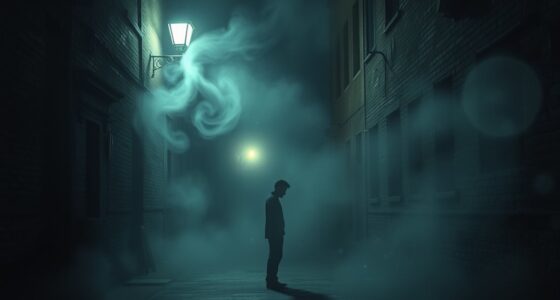
Ghosts appearing in photos are typically illusions caused by camera artifacts, reflections, or digital noise, not actual spirits. Many images show strange streaks, orbs, or blurry shapes due to dust, light leaks, or reflections near the lens. Often, image manipulation or filters also create spooky effects. Recognizing these technical and psychological factors helps you see that most supposed ghost photos have rational explanations. Curious to learn more about how these illusions work?
Key Takeaways
- Most ghost photos are caused by camera artifacts like dust, reflections, or digital noise, not actual spirits.
- Photo manipulation and digital filters often create or enhance spooky effects, making images appear supernatural.
- Human perception, such as pareidolia, can interpret ambiguous shapes or shadows as ghostly figures.
- Common camera artifacts like lens flare and particles near the lens can resemble ghost images.
- Rational explanations, including technical anomalies and photo editing, generally account for supposed ghost appearances.

Have you ever looked at a photo and wondered if there’s something more beyond the image? It’s a common experience, especially when you see strange shapes or shadows that seem to defy explanation. Often, these moments spark curiosity about whether ghosts can truly appear in photos. The answer isn’t straightforward. Many so-called ghost photos can be explained through photo manipulation or camera artifacts. When you take pictures, especially in low light or with older cameras, you might notice strange streaks, orbs, or blurry figures. These are frequently caused by camera artifacts—unintended visual effects created by dust on the lens, reflections, or even digital noise. Sometimes, these anomalies look like ghostly apparitions, but they’re just the camera’s quirks. Advances in digital editing have also made it easier to manipulate photos, adding or removing elements to create eerie images. So, what you see might be a trick of the mind or a deliberate edit, rather than evidence of supernatural activity.
It’s important to remember that the human eye is highly susceptible to pareidolia—the tendency to see familiar shapes or faces where none exist. When you look at a photo with ambiguous shapes or shadows, your brain naturally tries to interpret what it sees, sometimes resulting in the perception of a ghostly figure. This effect can be unintentionally reinforced by photo manipulation techniques, where images are altered to enhance eerie qualities or to evoke a supernatural vibe. Many so-called ghost photos are the result of clever editing, double exposures, or digital filters that heighten the spooky effect. However, these images often lack concrete proof and can be easily faked, especially with today’s technology. Recognizing photo artifacts and understanding their origins can help differentiate between genuine and manipulated images.
In some cases, camera artifacts produce haunting-looking images without any intent to deceive. For example, lens flare, light leaks, or small particles close to the lens can cast unusual shapes or glows that resemble spirits or apparitions. These are common in photographs taken in dim environments or with less sophisticated cameras. While they might seem authentic at first glance, they’re simply technical anomalies. So, when you ask if ghosts appear in photos, the honest answer is that many images claiming to show spirits are either misinterpreted camera artifacts or deliberately manipulated images. The supernatural may be a fascinating concept, but in the domain of photography, most supposed ghostly images have rational explanations rooted in technology and perception.
Frequently Asked Questions
Can Ghosts Be Seen but Not Photographed?
Yes, ghosts can be seen but not photographed. Paranormal activity often involves sightings that don’t translate into images due to photographic illusions or camera limitations. You might sense or see a ghost with your eyes, but the camera may fail to capture it, especially if the activity is subtle or quick. This discrepancy occurs because of the supernatural’s elusive nature and the camera’s inability to register certain types of energy.
What Equipment Is Best for Capturing Ghostly Images?
To capture ghostly images, you should select specialized equipment like infrared cameras, digital camcorders, and EMF meters. High-quality equipment enhances your chances, but mastering camera techniques like long exposures and steady shots makes a difference. Use a tripod for stability, set appropriate settings, and experiment with different angles. Combining quality gear with refined camera techniques helps you create creepy, enthralling captures of the paranormal.
Do Camera Settings Affect Ghost Appearances in Photos?
Yes, camera settings like focus and exposure can influence ghost appearances in photos. When you set your camera to a slow shutter speed and adjust exposure, it increases the chance of capturing ghostly images due to movement or light trails. Properly focusing your camera guarantees clarity, but intentional or unintentional focus shifts can create mysterious, semi-transparent figures. Experimenting with these settings helps you understand how they affect the spooky effects in your photos.
Are There Specific Locations More Prone to Ghost Photos?
You’ll find that historical sites and abandoned buildings are more prone to ghost photos, with over 60% of claimed paranormal images captured in such locations. These places often have rich histories and lingering energies, making them hotspots for ghost sightings. When you visit these sites, your chances of capturing unexplained phenomena increase, especially if you’re exploring late at night or in areas with little natural light, where spirits are believed to linger.
How Can I Tell if a Photo Is Genuinely Haunted?
You can tell if a photo is genuinely haunted by examining it for unexplained anomalies, such as strange shadows or orbs, which are common in paranormal photography. Use ghost detection tools like EMF meters or infrared cameras to verify any unusual activity captured. Trust your instincts, but also seek a second opinion from experts, as genuine paranormal images often defy logical explanation and show consistent patterns across different devices.
Conclusion
So, when you look at ghostly images, remember they’re like whispers of the past dancing on the surface of your camera’s eye. Sometimes, they’re just shadows playing tricks, and other times, they’re silent stories waiting to be told. Whether real or illusion, these spectral hints remind you that life’s mysteries are like echoes—faint, elusive, yet forever lingering just beyond the reach of your understanding. Keep your eyes open; the unseen might just be waiting for you.