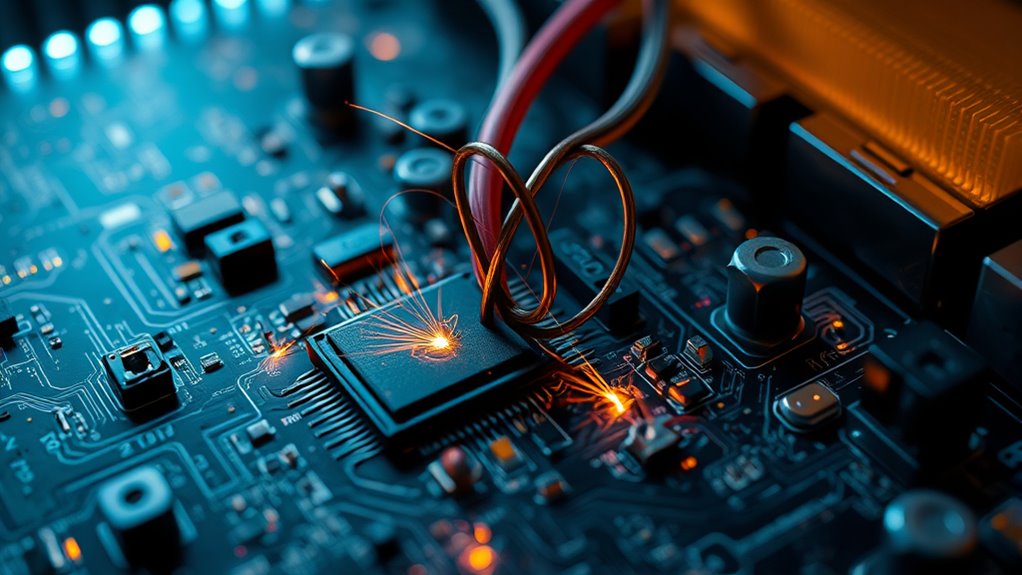

Electronics malfunction mainly because of power surges, voltage fluctuations, and manufacturing defects. Sudden voltage spikes or external events like lightning can overload your devices and cause damage. Internal flaws such as poor soldering or substandard parts also lead to failures over time. External issues like power grid problems or faulty wiring can disrupt operation too. If these aren’t identified, your devices may stop working unexpectedly. Keep exploring to discover how to protect and troubleshoot your electronics effectively.
Key Takeaways
- Power surges and voltage fluctuations can overload and damage electronic components.
- Manufacturing defects such as poor soldering or substandard parts can cause early failures.
- External events like lightning strikes or grid issues induce voltage spikes damaging devices.
- Internal flaws or design errors may lead to malfunctions over time or under certain conditions.
- Lack of protective measures, like surge protectors, increases the risk of malfunction due to electrical issues.
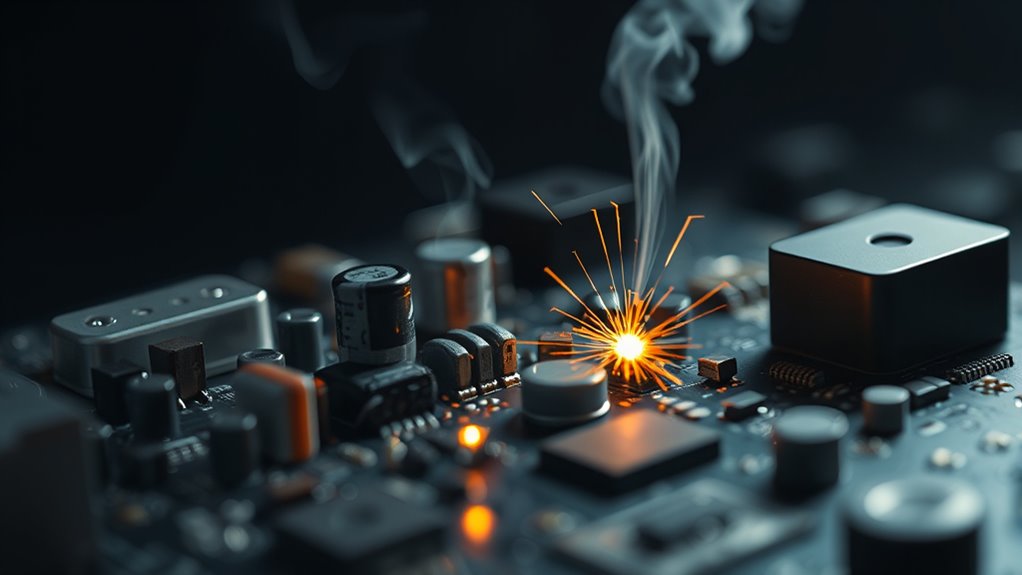
Electronics malfunction when devices stop working correctly, often causing frustration and inconvenience. You might be surprised how often this happens and what causes it. One common culprit is power surges, which are sudden spikes in electrical voltage that can overload your devices. When a power surge occurs, it forces more electricity through the circuitry than it’s designed to handle, leading to immediate damage or weakening components over time. You may experience a sudden device shutoff, strange behavior, or complete failure after a surge. Power surges can come from lightning strikes, issues with the power grid, or even turning large appliances on and off nearby. Protecting your electronics with surge protectors can substantially reduce the risk, but sometimes surges are so strong that even these devices can’t fully prevent damage. Additionally, voltage fluctuations can cause unpredictable behavior and stress on electronic components, increasing the likelihood of malfunction over time. Another considerable reason electronics malfunction is manufacturing defects. Sometimes, devices are built with flaws that aren’t immediately apparent. These defects could be poor soldering, substandard components, or design errors. They might not cause problems right out of the box, but over time, they can lead to unexpected failures. For example, a defective capacitor might work initially but degrade faster than expected, causing the device to malfunction or stop working altogether. Manufacturing defects are often hidden and only show up after extended use or under specific conditions, making them particularly tricky to diagnose. In some cases, a device might fail prematurely even though it looks perfectly fine externally. When you purchase new electronics, defects can sometimes slip through quality control, so it’s essential to keep receipts and be aware of warranty options if your device fails early. Both power surges and manufacturing defects highlight how sensitive electronics are to external and internal factors. Power surges tend to be external, unpredictable events that can damage your device instantly or weaken it over time. Manufacturing defects, on the other hand, are internal flaws embedded in the product’s design or assembly process. Understanding these causes helps you take better precautions—like using surge protectors, handling devices carefully, and choosing reputable brands with solid quality control. When your electronics malfunction, it’s often a combination of these factors or a singular issue that pushes a device past its breaking point. Recognizing the role of power surges and manufacturing defects allows you to troubleshoot more effectively and take steps to safeguard your valuable devices from avoidable failures.
Frequently Asked Questions
Can Environmental Factors Cause Electronic Failures?
Yes, environmental factors can cause electronic failures. Humidity issues, for example, can lead to corrosion or short circuits inside devices, while electromagnetic interference can disrupt signals and cause malfunctions. You might notice your electronics acting strangely or failing unexpectedly when exposed to high humidity or strong electromagnetic sources. To prevent these problems, keep devices in dry, shielded environments and avoid placing them near sources of interference.
How Often Should I Service My Electronic Devices?
Think of your electronic devices as a garden that needs regular tending. You should service them every 6 to 12 months, depending on usage, to extend their device lifespan. Regular maintenance routines, like cleaning vents and updating software, prevent issues before they start. Staying consistent keeps your devices healthy, ensuring they perform smoothly and last longer. Don’t wait for problems to sprout—nurture your tech regularly.
Do Power Surges Permanently Damage Electronics?
Power surges can permanently damage electronics if you don’t have power surge prevention measures in place. They can overload and weaken electronic component durability, leading to immediate failure or long-term issues. To protect your devices, use surge protectors and unplug electronics during storms. Regularly maintaining your power setup helps guarantee your electronics stay safe, preventing costly repairs or replacements caused by unexpected power fluctuations.
What Are the Signs of Internal Component Failure?
You’ll notice internal component failure through signs like circuit damage, such as burn marks or broken parts, and corrosion signs, like rust or discoloration. Your device might freeze, restart randomly, or show distorted visuals. If you smell burnt odors or see visible damage, it’s likely a sign of internal issues. Address these problems promptly to prevent further damage and guarantee your electronics work reliably.
Can Software Updates Fix Hardware Malfunctions?
Software updates can’t fix hardware malfunctions directly, but they can improve device performance if firmware compatibility is maintained. Updating firmware may resolve bugs and enhance compatibility, reducing certain issues. However, you should be aware of update risks, such as potential data loss or bricking your device if the update process is interrupted. Always back up your data and confirm the update is from a trusted source to minimize these risks.
Conclusion
So, next time your device suddenly stops working, remember there’s often more beneath the surface. Could it be a hidden power surge, a tiny internal fault, or something else entirely? The truth is, electronics have their secrets, and understanding them might just save you from unexpected failures. Stay vigilant, stay curious—because the real reasons behind malfunctions might be closer than you think. Are you prepared for what’s really going on inside your gadgets?